- Home
- China
- World
- Asia-Pacific
- Americas
- Europe
- Middle-East and Africa
- Politics
- Business
- Opinions
- Tech & Sci
- Culture
- Sports
- Travel
- Nature
- Picture
- Video
- Live
- TV
- Radio
- Specials
- Learn Chinese

 Europe;Ukraine
Share







Copied
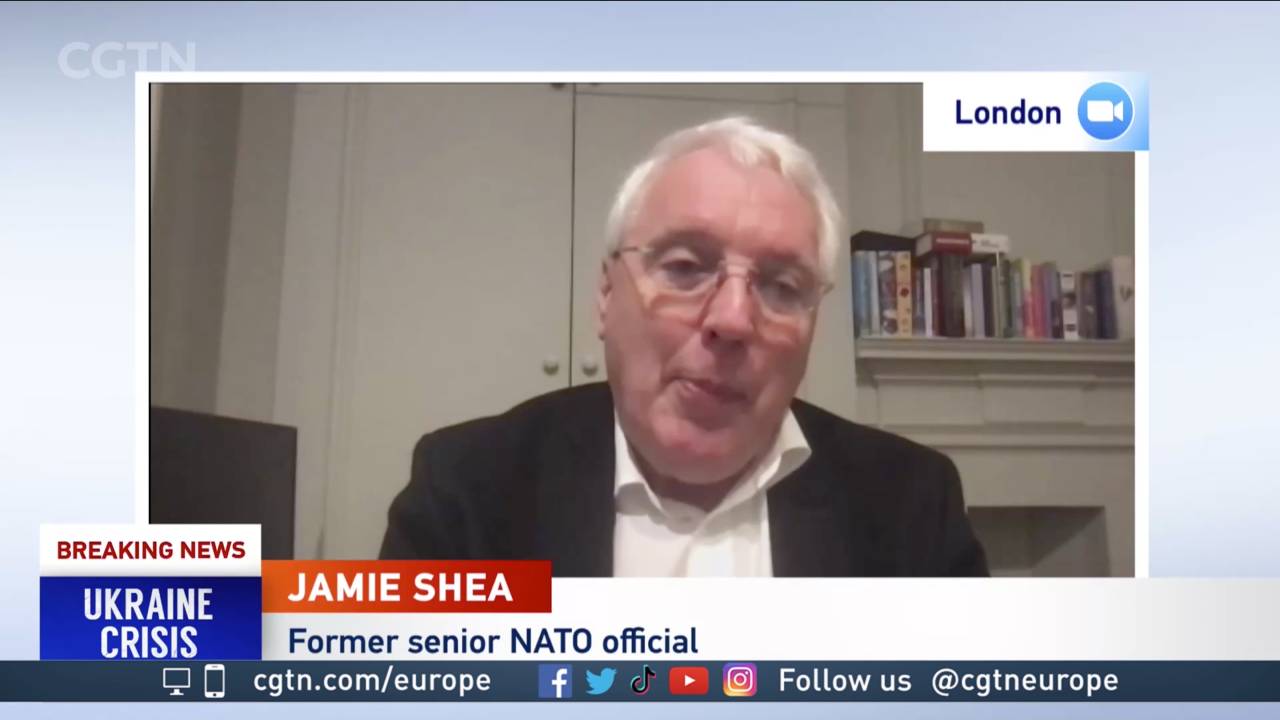
Russia has made "enormous" military mistakes, but its push to consolidate territory in Ukraine's east would take a heavy toll on any future Ukrainian economy, according to former NATO official Jamie Shea.
The one-time NATO spokesperson said Russia's military campaign had lacked "a center of gravity" in the conflict's early stages, attacking on too many fronts and in too many small groups. However, the move to regroup and expand its reach in the Donbas and Luhansk regions could debilitate Ukraine's economy long into the future.
"It stands to lose access to the sea and the ports. It will be economically paralyzed and stands to lose in Donbas many of its mining and coal producing and steel-making facilities," said Shea. "So again, not good for any future Ukrainian economy, post-conflict."
READ MORE
Who will be France's next President?
NATO's former deputy assistant secretary general for emerging security challenges was speaking to CGTN Europe's Global Business program on Thursday after a meeting between Ukraine's foreign minister Dmytro Kuleba, his NATO counterparts, and other pro-Western diplomats from countries including Australia, Japan, New Zealand, Sweden and Finland.
"NATO, the organization, is not responsible for delivering weapons to Ukraine - that's done by all of the individual NATO's allies," said Shea, regarding expectations on the body to give further military support to Kyiv.
However, he said Ukraine's top diplomat Dmytro Kuleba had been given "a good platform to make his case and state what he needs, and then it's for the allies to see how they match what Ukraine needs with what they can supply....but a lot has gone into Ukraine already."
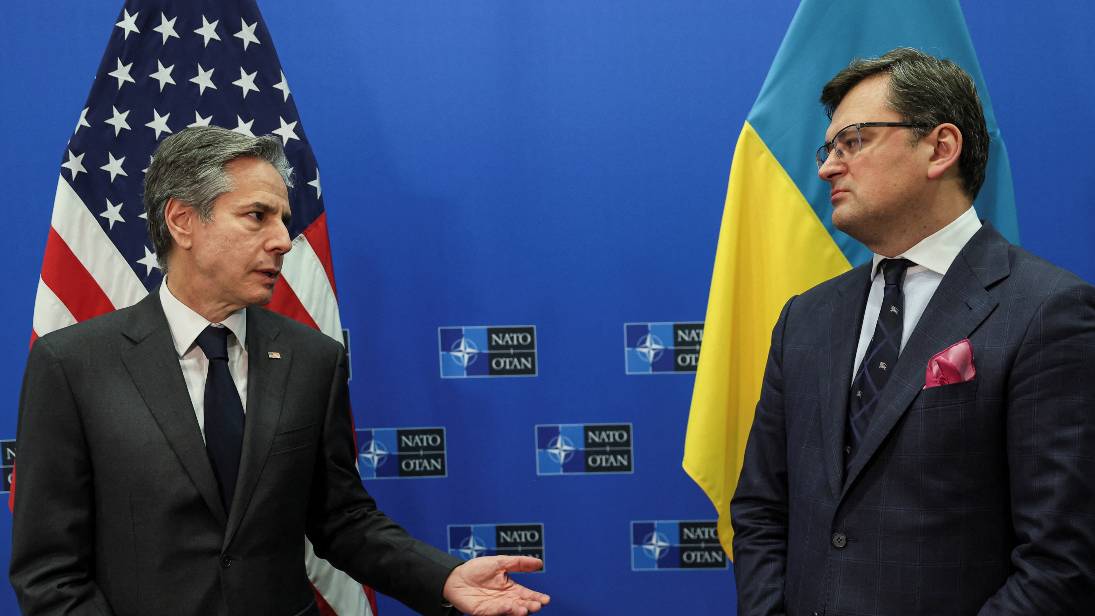
U.S. Secretary of State Antony Blinken meets Ukrainian Foreign Minister Dmytro Kuleba at NATO HQ in Brussels. /Evelyn Hockstein/Pool/Reuters
Pointing out that the U.S. had so far sent $1.7 billion worth of weapons to the country, Shea quoted US Secretary of State Antony Blinken, who said that for every Russian tank in Ukraine, NATO countries had provided 10 anti-tank weapons.
"I think the U.S. is working overtime to gather the allies together to show that the front is still united, so that everybody is singing from the same hymn sheet," said Shea. "There's always going to be the risk of cracks and fissures opening up."
As the conflict becomes ever more protracted, Shea said the two main issues are how Western allies "put things on a more permanent basis in terms of finance, training, weapons, supplies, delivery," and as the fighting intensifies, "how would you give them more sophisticated and heavier equipment?"
Yet so far, he said, the relentless diplomacy between the U.S. and their allies had shown Russian President Vladimir Putin that NATO members were not being easily divided. "We might have done that in the past, but we're not going to do it this time around."
