- Home
- China
- World
- Asia-Pacific
- Americas
- Europe
- Middle-East and Africa
- Politics
- Business
- Opinions
- Tech & Sci
- Culture
- Sports
- Travel
- Nature
- Picture
- Video
- Live
- TV
- Radio
- Specials
- Learn Chinese

 Europe;UK
Share







Copied
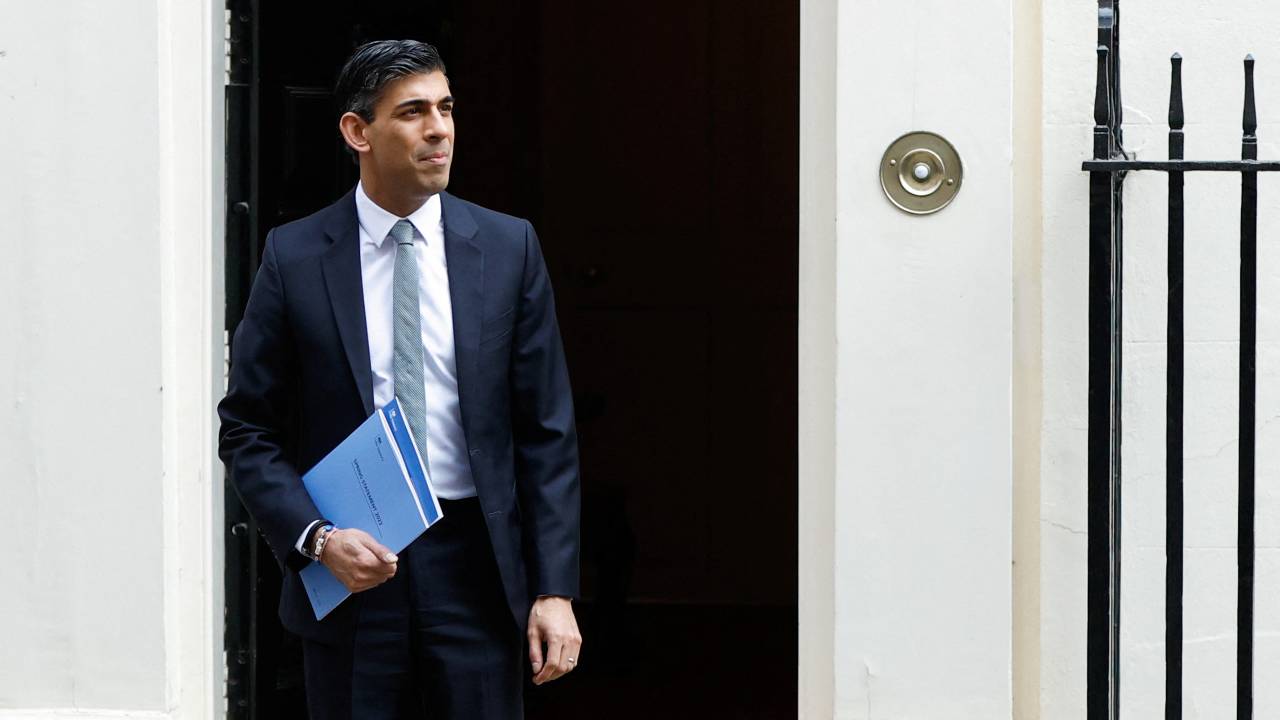
UK finance minister Rishi Sunak has unveiled his Spring Budget. /John Sibley/Reuters
British finance minister Rishi Sunak has delivered an update on the UK's budget plans, announcing cuts to fuel duty and raising the threshold at which other taxes start being paid, to help households through one of the worst living standards crises in decades.
Against the backdrop of the Ukraine conflict, fast-rising inflation and slowing economic growth, Sunak said he was increasing the threshold at which workers start to pay national insurance (social security) contributions by 3,000 pounds ($3,958.50) this year.
In total, around $23.2 billion will be injected into the economy in the coming financial year, including a focus on speeding up the transition to green energy in a bid to offset reliance on fossil fuels as prices continue to skyrocket amid the Ukraine conflict.
KEY BUDGET POINTS
"The actions we have taken to sanction (Russian President Vladimir) Putin's regime are not cost-free for us at home," he told parliament. "The invasion of Ukraine presents a risk to our recovery – as it does to countries around the world.
"That's a 6 billion pound personal tax cut for 30 million people across the United Kingdom," he said, adding the cut was equal to more than 330 pounds ($435) a year per worker.
However, the UK government will stick to Sunak's plan to increase national insurance contributions from next month, which he says will be used to fund spending on health and social care after the COVID-19 pandemic.
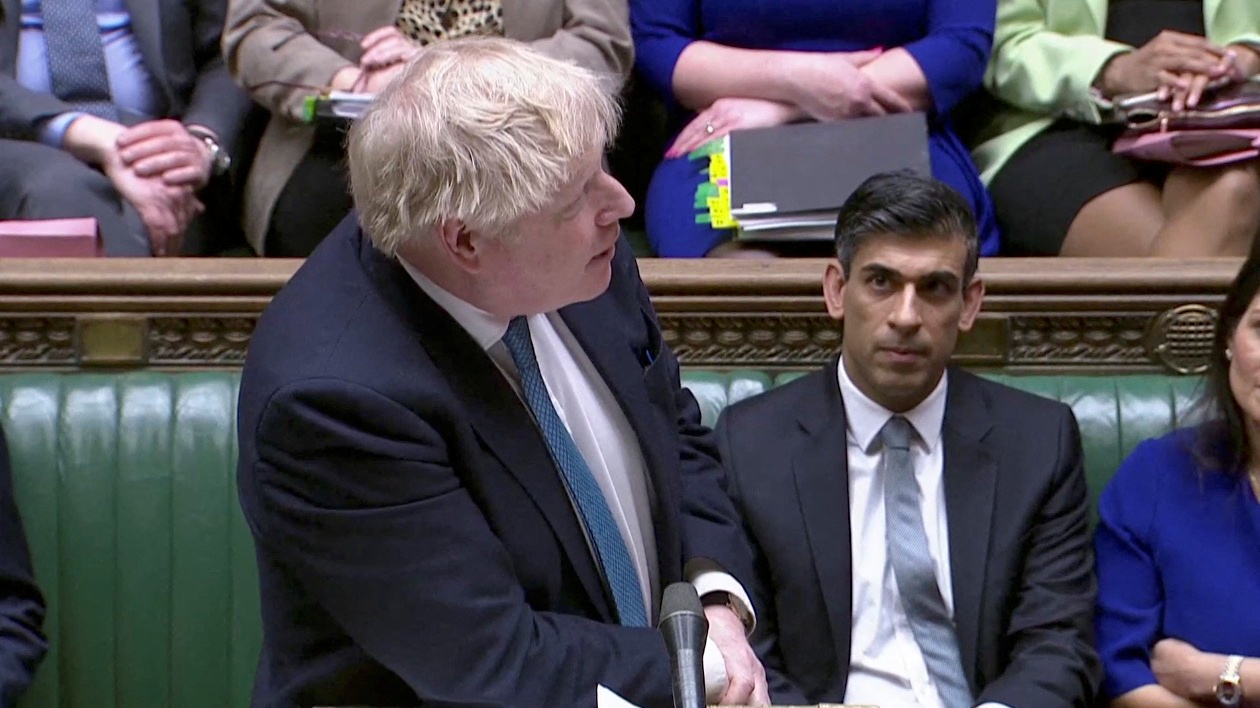
UK leader Boris Johnson and Rishi Sunak are under pressure to tackle the UK's cost of living crisis. /Reuters TV
Economic outlook
Sunak said that the government's official economic forecaster, the Office for Budget Responsibility (OBR), "has not accounted for the full impacts of the war in Ukraine and we should be prepared for the economy and public finances to worsen, potentially significantly."
He added that their initial view, "combined with high global inflation and continuing supply chain pressures," means the UK economy is forecast to grow significantly slower than thought.
The OBR said British consumer price inflation was expected to peak at nearly 9 percent in the final quarter of 2022, leading to the biggest bite to living standards since the 1950s.
Gross domestic product was estimated to go up a further 1.8 percent next year, down from an official prediction of 2.1 percent.
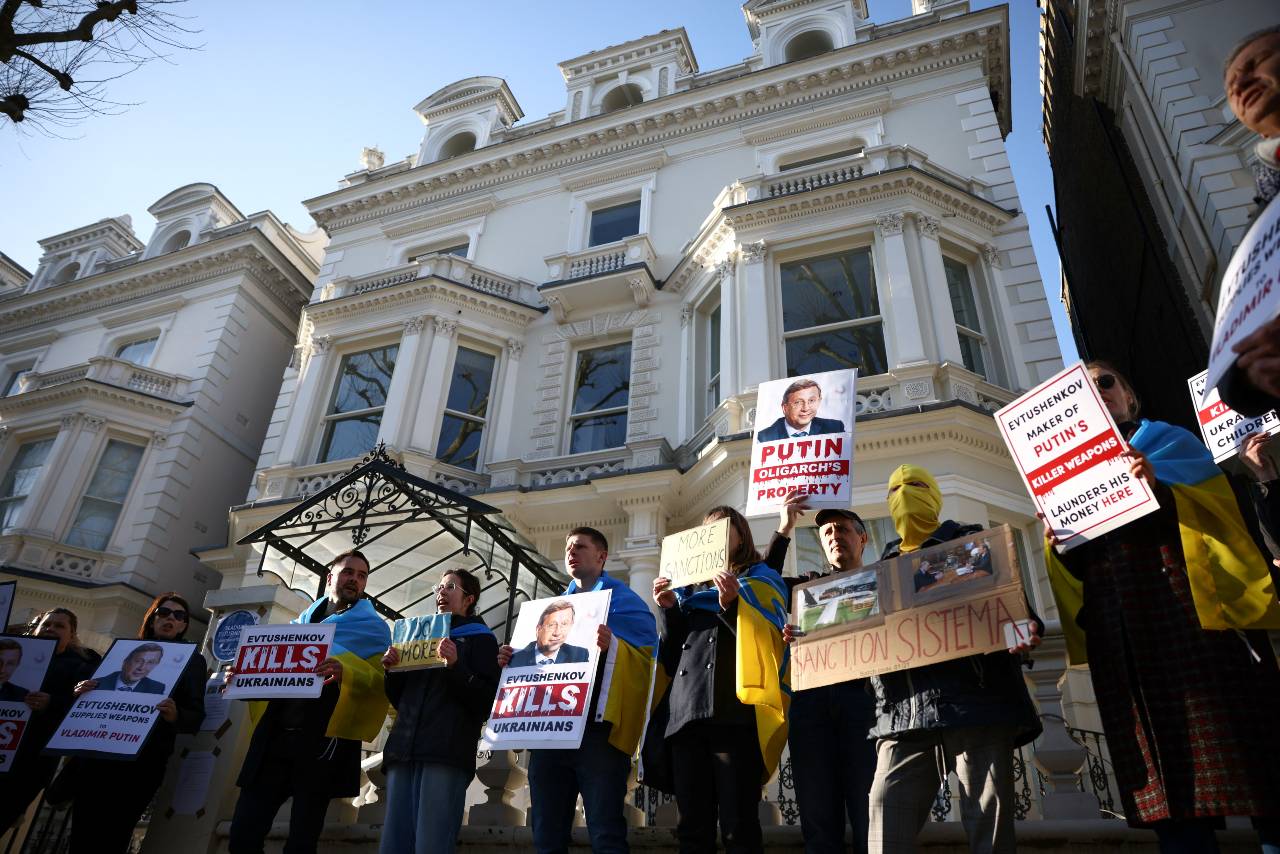
Demonstratorsm call on EU leaders to ban imports of Russian gas outside a European Council meeting in London. /Johanna Geron/Reuters
The OBR warned that should "wholesale energy prices remain as high as markets expect, energy bills are set to rise... pushing inflation to a 40-year high of 8.7 percent in the fourth quarter."
UK annual inflation shot up to a 30-year high at 6.2 percent in February, according to official data released on Wednesday, driven by commodity prices skyrocketing due to the Ukraine war and the knock-on effects of pandemic lockdowns.
"The war's most significant impact domestically is on the cost of living," said Sunak, adding that COVID-19 and global factors had already meant goods and energy prices were high, although "broadly in line with the Euro area."
"Disruptions to global supply chains and energy markets combined with the economic response to Putin's aggression mean the OBR expects it to rise further, averaging 7.4 percent this year," Sunak added.
READ MORE:
Cost of living crisis
Sunak and Prime Minister Boris Johnson have been under pressure, including from Conservative Party politicians, to do more to help households struggling with the rising cost of living.
With a grim economic forecast already in the offing last month, Sunak announced a package worth $11.9 billion to help millions of low and middle-income households with energy bills.
However, many household incomes are set to shrink further in April owing to a planned tax hike on UK workers and businesses to reportedly fund care for older people.
At the same time, a cap on domestic gas and electricity bills will be increased because of a spike in wholesale energy costs.
In a bid to offset the damage, Sunak announced a cut in fuel duty of 5 pence per litre, to start later on Wednesday and last until March next year, calling it "the biggest cut to all fuel duty rates – ever."
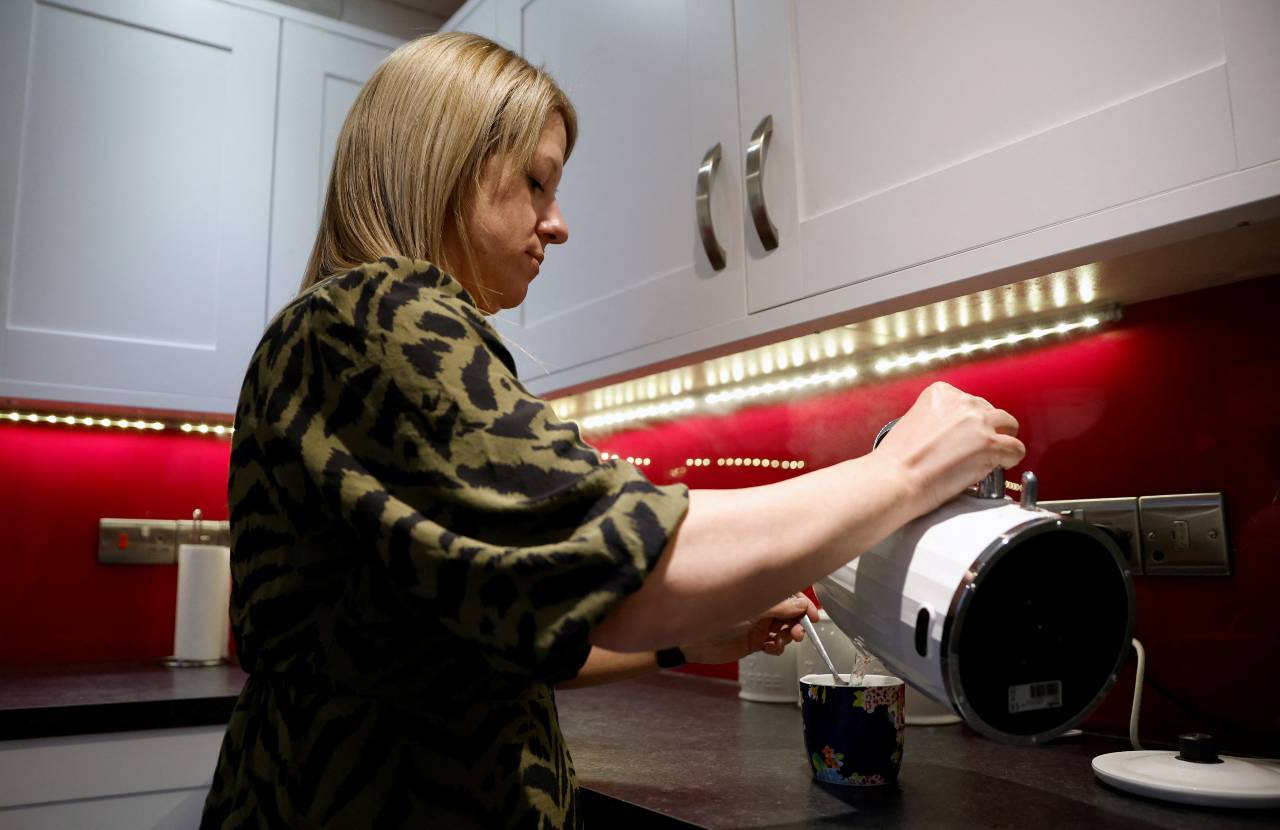
In an additional measure to target the green transition, crucial amid the UK's decision to stop using Russian gas, the minister said he would remove VAT on green materials like solar panels, heat pumps or insulation for the next five years.
"We'll also reverse the EU's decision to take wind and water turbines out of scope – and zero-rate them as well," he said. He also announced that the Household Support Fund, given to local authorities to help struggling families amid rising living costs, would be doubled to 1 billion pounds.
Sunak added the basic rate of income tax would be reduced by one pence in the pound in 2024, coming into effect at around the time of the next UK general election election.
"Together with the freeze, it's a tax cut this year for hard-working families and businesses worth over 5 billion pounds," he said.
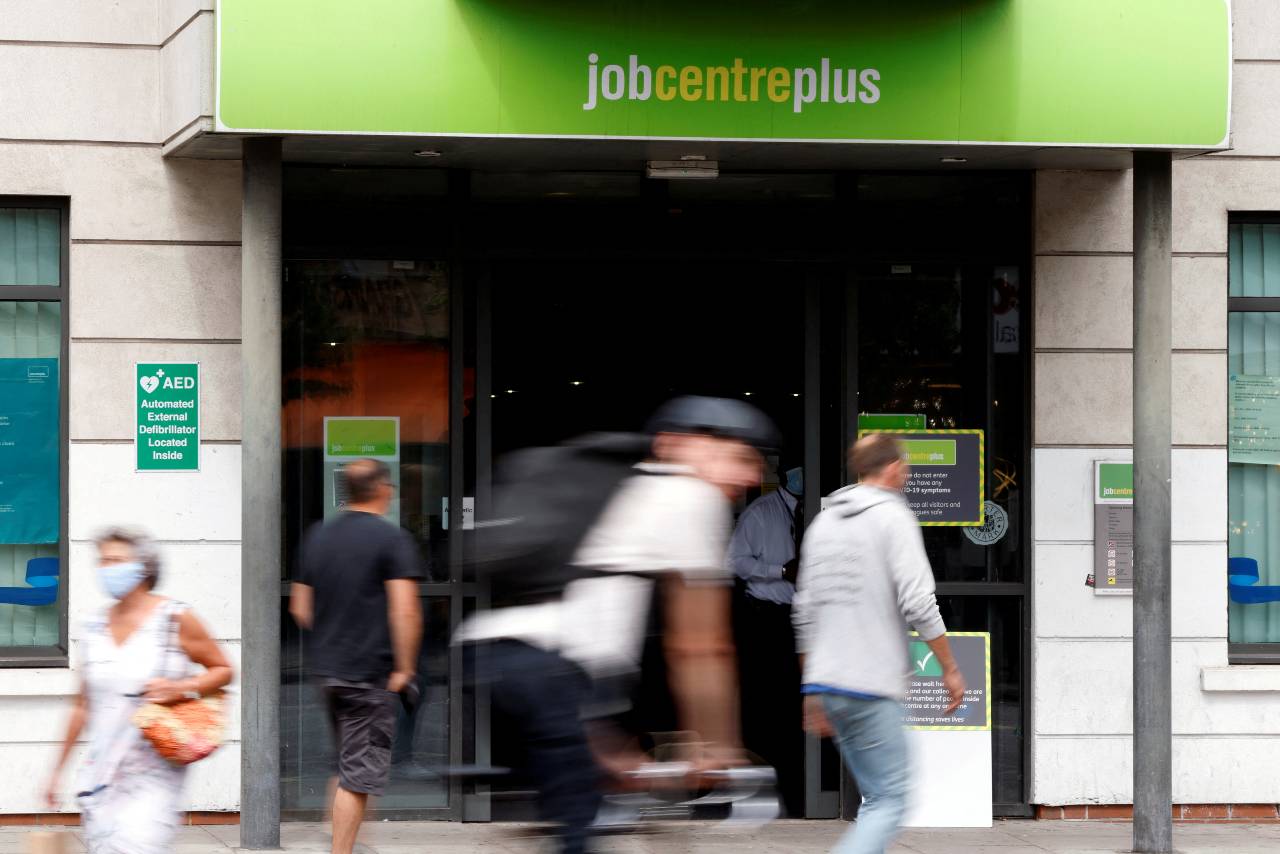
People walk past a branch of Jobcentre Plus, a government run employment support and benefits agency in London. /John Sibley/Reuters
Is it enough?
However, the OBR said Sunak was undoing just one sixth of the tax rises he had previously implemented and that the measures provided little help to Britons who are not in work and cannot afford a car.
"Higher inflation will erode real incomes and consumption," the OBR said Wednesday.
It said that "with inflation outpacing growth in nominal earnings and net taxes due to rise in April", real living standards are set to fall by a record amount this year.
The main opposition Labour party hit out at Sunak for failing to help out many financially-struggling families.
"For all his words it is clear that the chancellor does not understand the scale of the challenge," said Rachel Reeves, Labour's finance spokesperson.
"He talks about providing security for hard-working families but his choices are making the cost of living crisis worse."
