- Home
- China
- World
- Asia-Pacific
- Americas
- Europe
- Middle-East and Africa
- Politics
- Business
- Opinions
- Tech & Sci
- Culture
- Sports
- Travel
- Nature
- Picture
- Video
- Live
- TV
- Specials
- Learn Chinese


Share







Copied
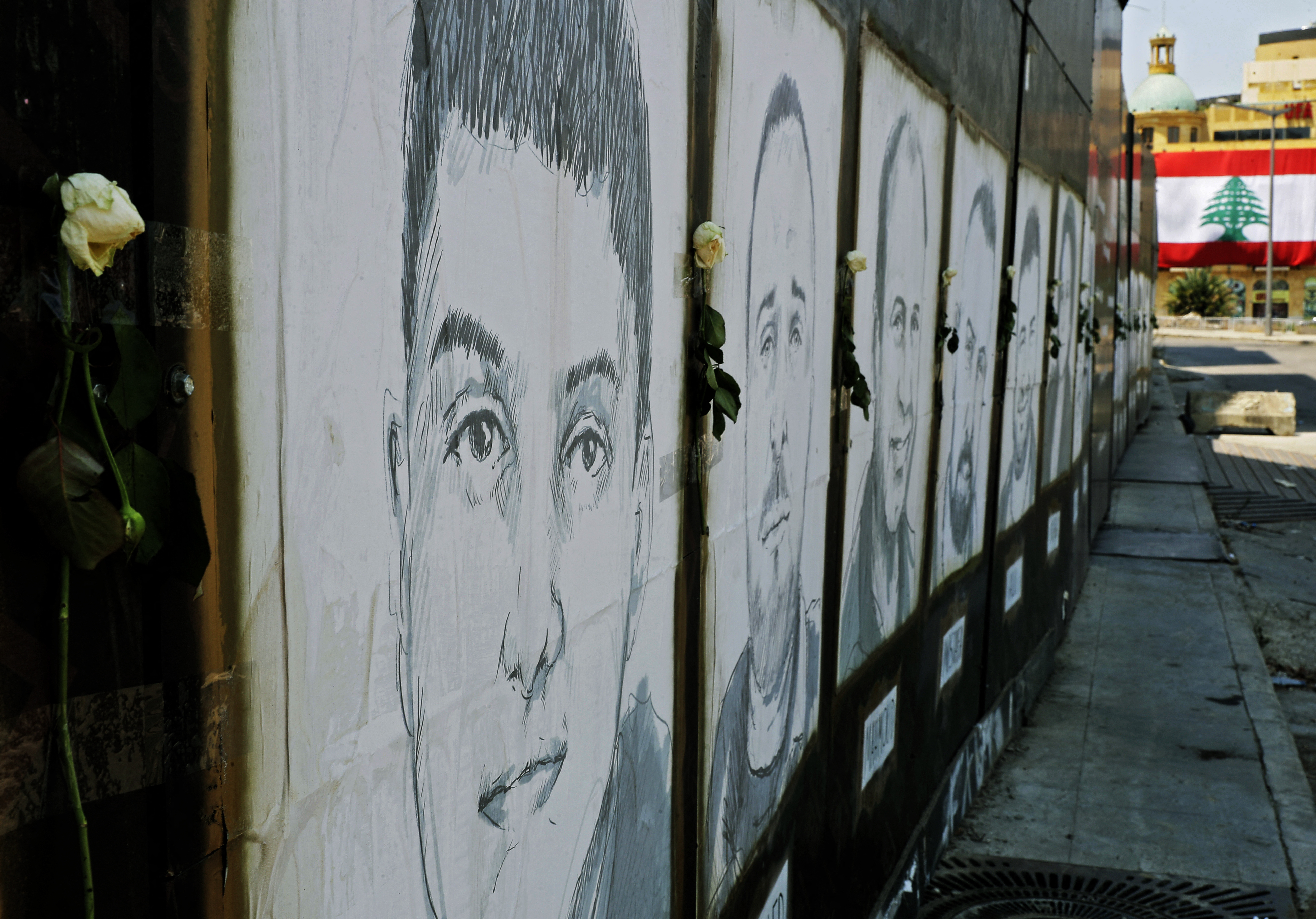
White roses are seen on portraits of victims of last year's Beirut port blast in the Lebanese capital. /Joseph Eid/AFP
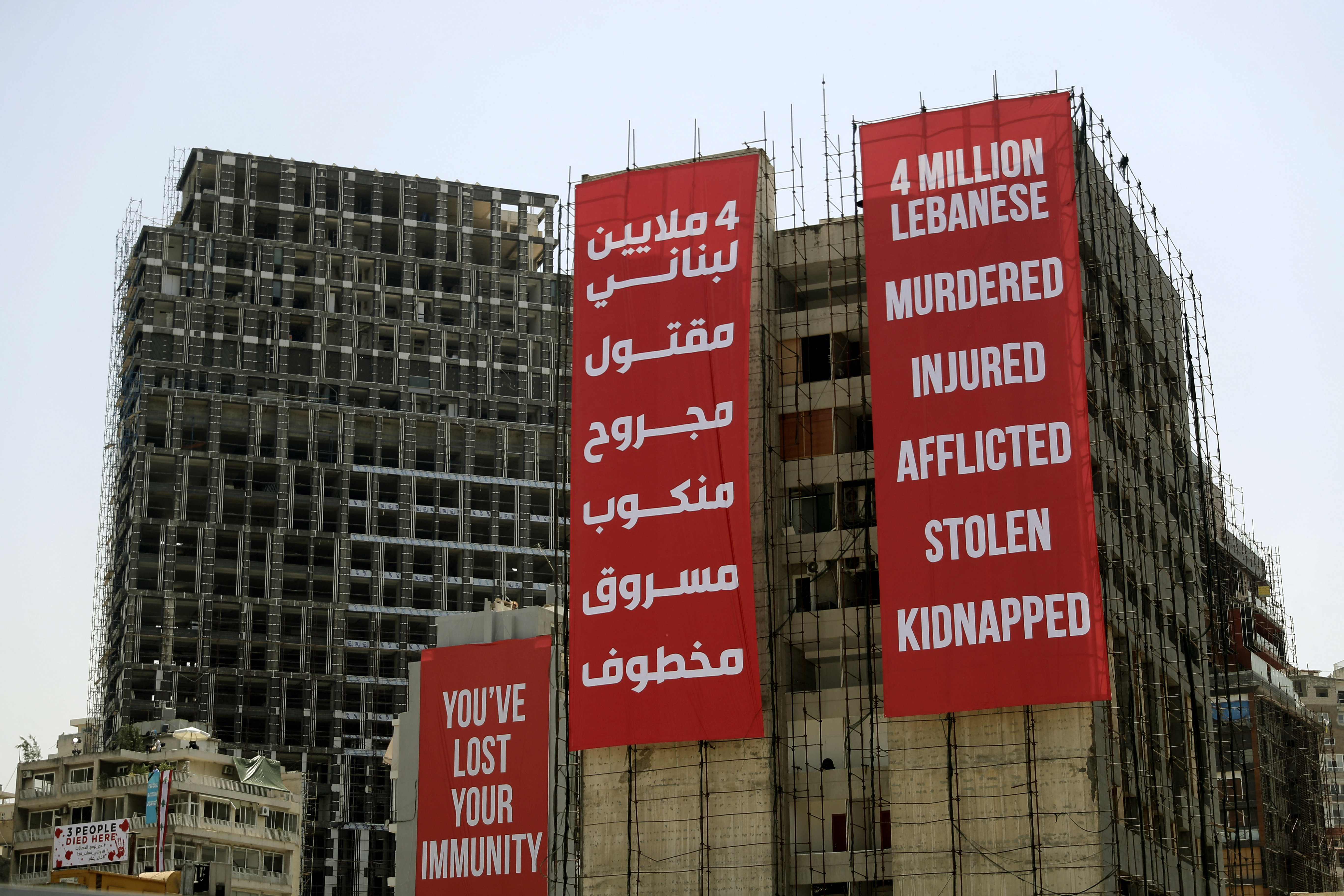
Banners hang on a building damaged during last year's port blast. /Joseph Eid/AFP
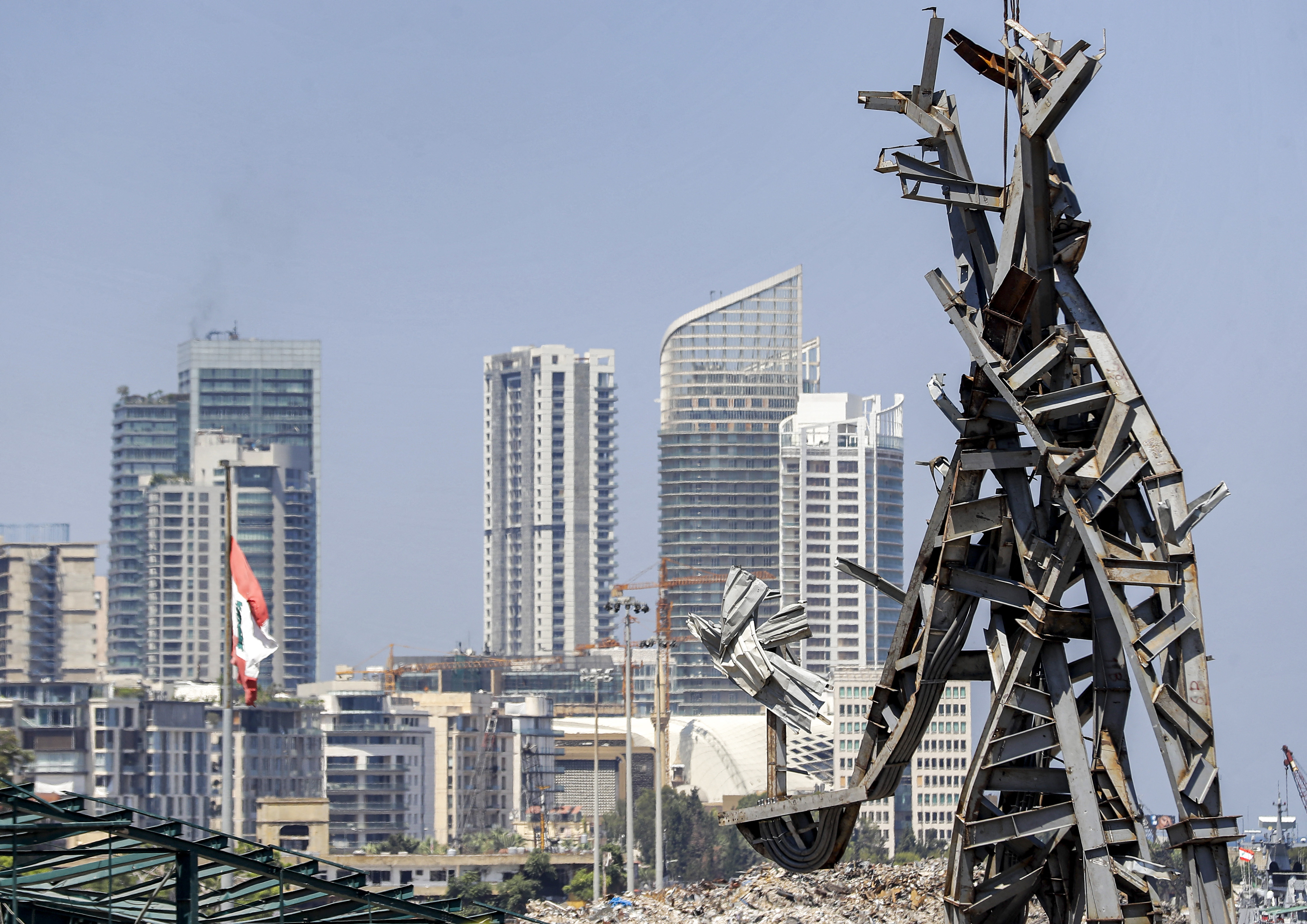
A 25-meter-tall steel sculpture called 'The Gesture' by Lebanese artist Nadim Karam, made from debris from the aftermath of the blast. /Joseph Eid/AFP
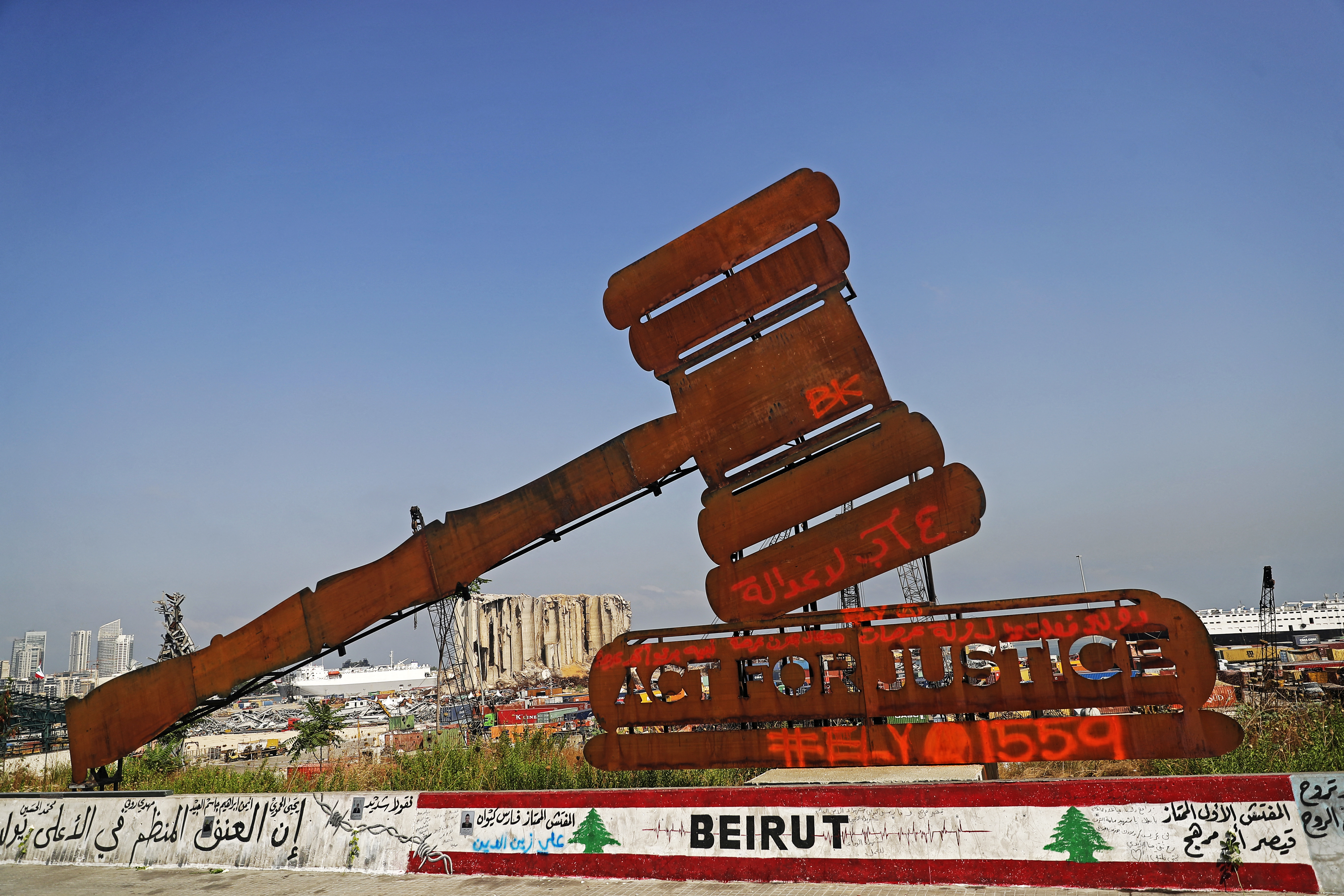
A gavel monument symbolizing justice is seen in front of the damaged grain silos at the port. /Joseph Eid/AFP
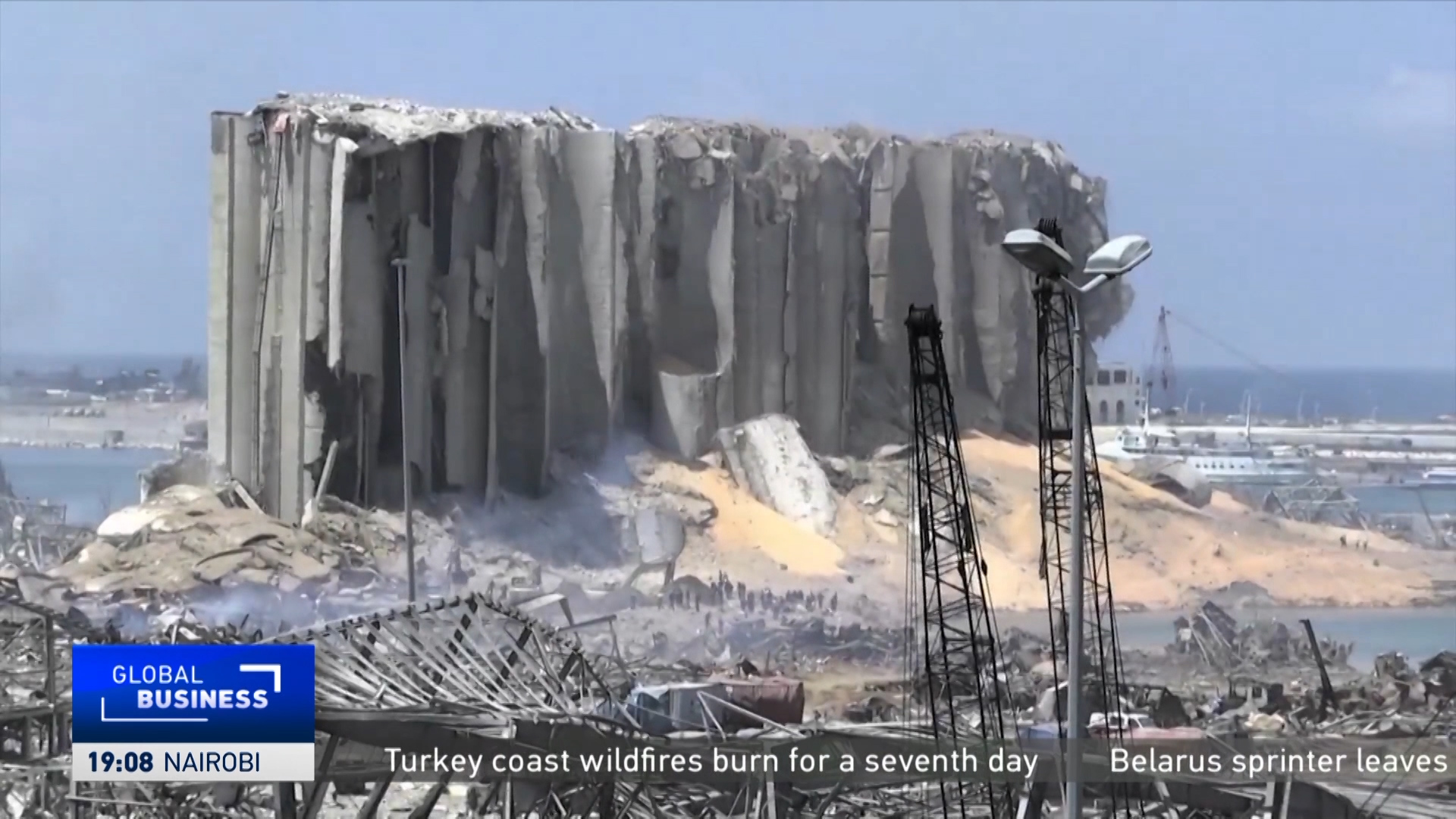
A year after a deadly explosion in Lebanon's capital Beirut, which killed at least 214 people and left thousands seriously injured, people have been remembering the catastrophic event on a national day of mourning.
Shortly after 6 p.m. on August 4, 2020, a stock of ammonium nitrate fertilizer stored at the city's port exploded and left swathes of the Lebanese capital looking like a war zone. Going down as one of the largest non-nuclear blasts in history, entire neighborhoods were destroyed and long-term economic damage was caused to the economy of a country where more than half of the population lives below the poverty line.
Many people were planning to stay home to mark the day. But protests were planned as people demand transparency about last year's event and justice for crimes that remain unpunished.
In Beirut, security forces surrounded the port as families of the dead and survivors gathered to honor those who lost their lives the a blast, which was felt as far away as Cyprus.
READ MORE:
'Magnificent' baby pandas born in France
COVID-19 could be in rats beneath cities - study
Germany returning looted artefacts
One worker at the port's grain silos, Jeffry Chartouni, told AFP that he is still boiling with indignation after seven of his colleagues died in the blast, asking himself how authorities for years had not told them about tons of explosive material stored right next to their offices.
"They should have warned us. With just a phone call, I could have told the guys to flee," the 32-year-old said.
"The security officials, the government, the customs, of course they all knew... They need to be held to account, from the very top of the ladder to the lowest rung."
Thousands of Lebanese also marched on Wednesday to protest impunity over the country's worst peacetime disaster.
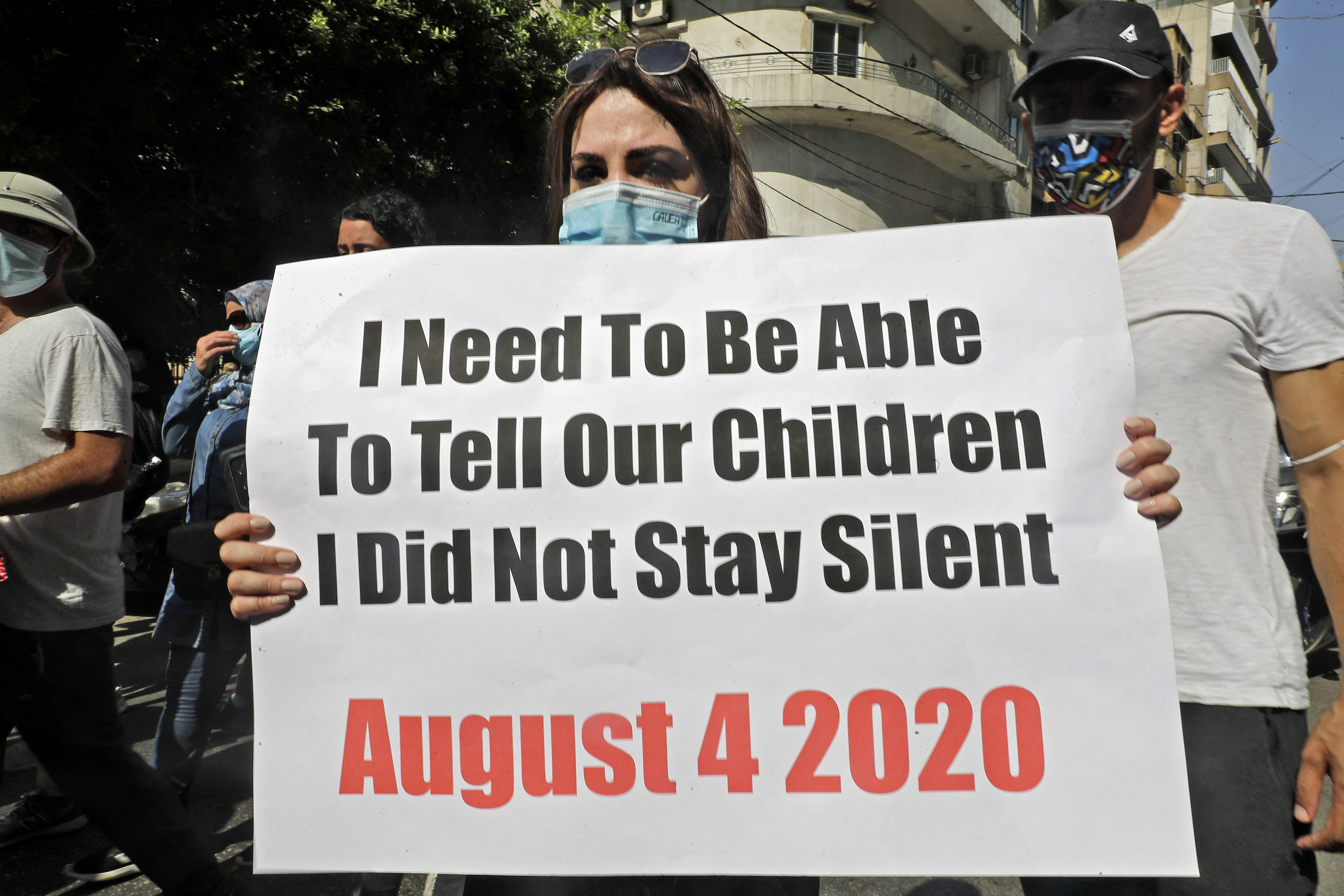
A demonstrator marches with a sign which says, 'I need to be able to tell our children I did not stay silent.' /Joseph Eid/AFP
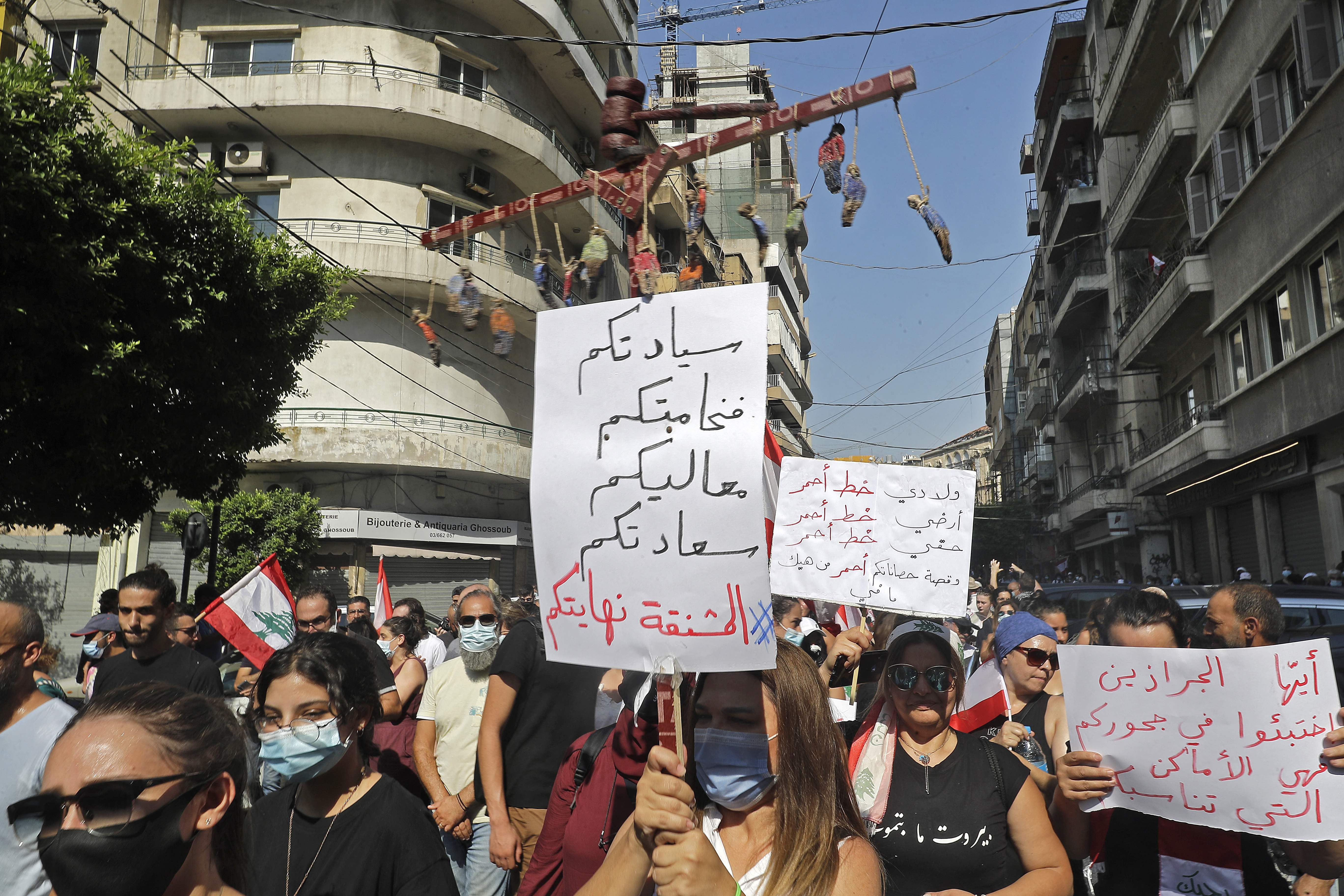
A demonstrator marches with a miniature gallows and a sign reading in Arabic underneath 'your excellency, your highness, your honor, your sereneness, the gallows is your end.' /Joseph Eid/AFP
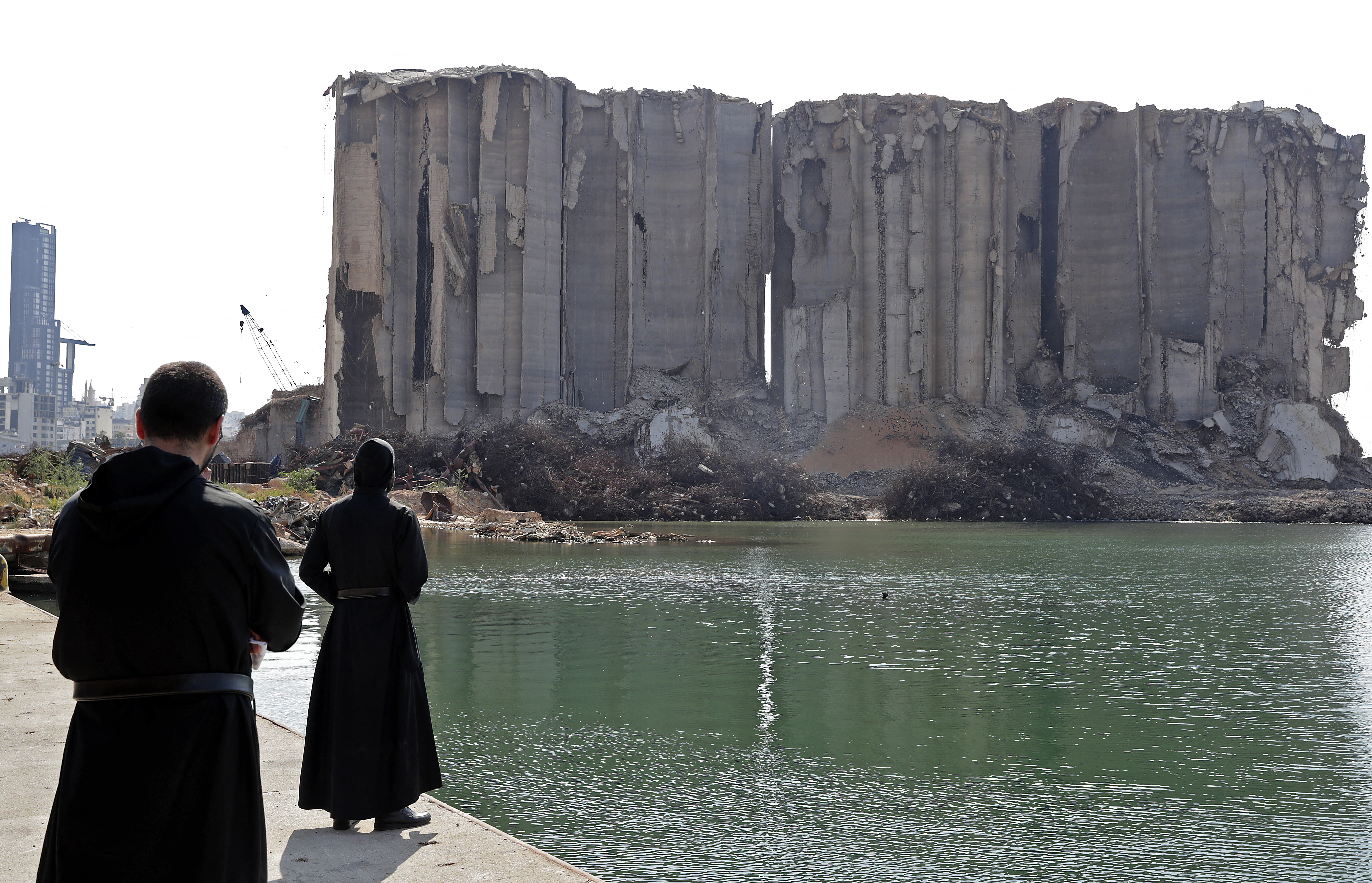
Maronite clergymen pray near the damaged grain silos at the port of Lebanon's capital. /Anwar Amro/AFP
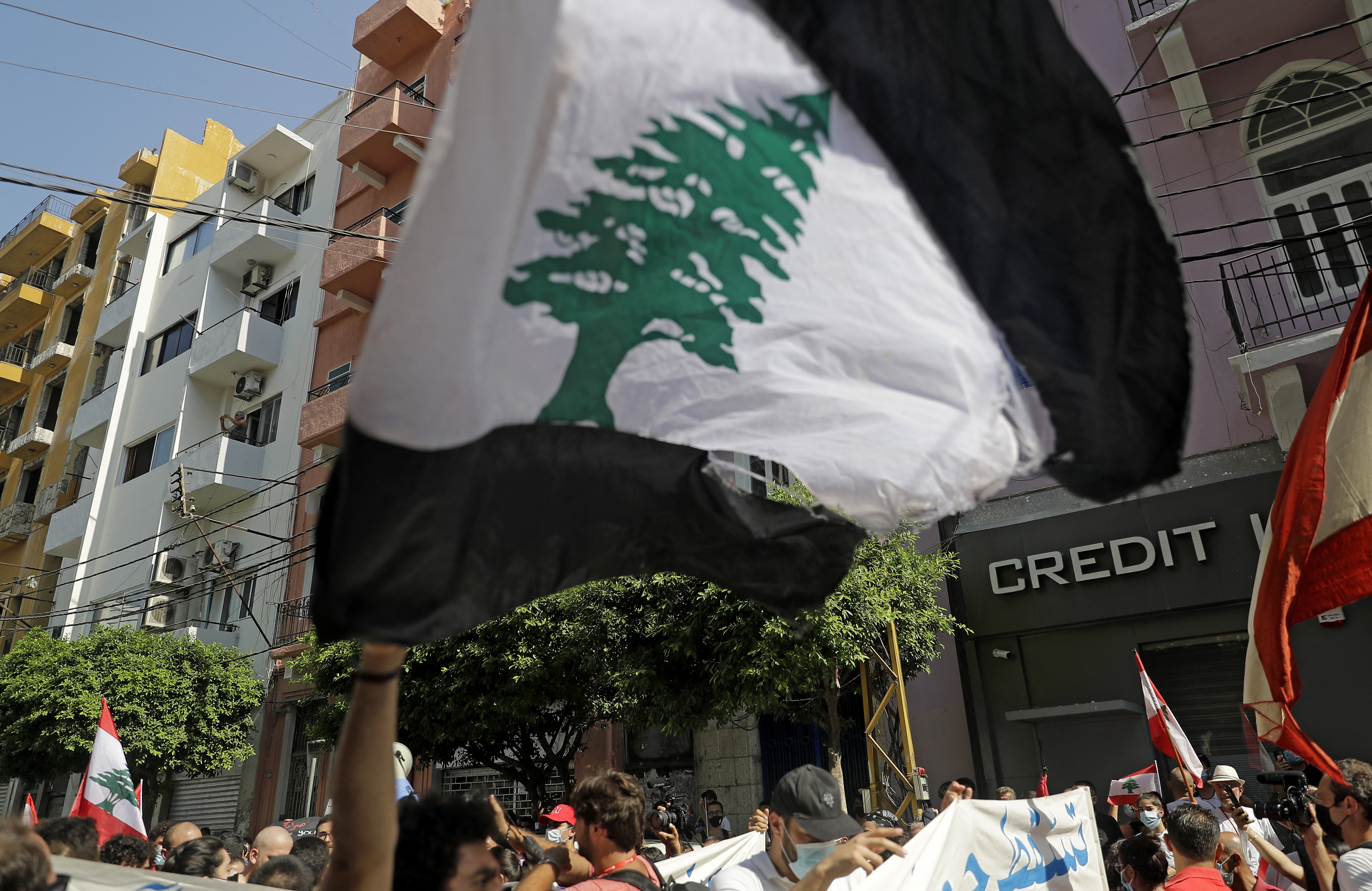
Demonstrators march with Lebanese national flags in the Gemmayze neighborhood as they head towards the port of Lebanon's capital. /Joseph Eid/AFP
According to foreign and Lebanese intelligence reports seen by AFP, hundreds of tons of fertilizer was stored in the same warehouse as tons of fireworks and rolls of detonating cords, among other dangerous materials. Reports dating back to last year suggest welding work caused the original fire.
However, more thorough investigations have yet to ascertain how the shipment got there in the first place and how the deadly assortment of hazardous materials was left in the same location for years.
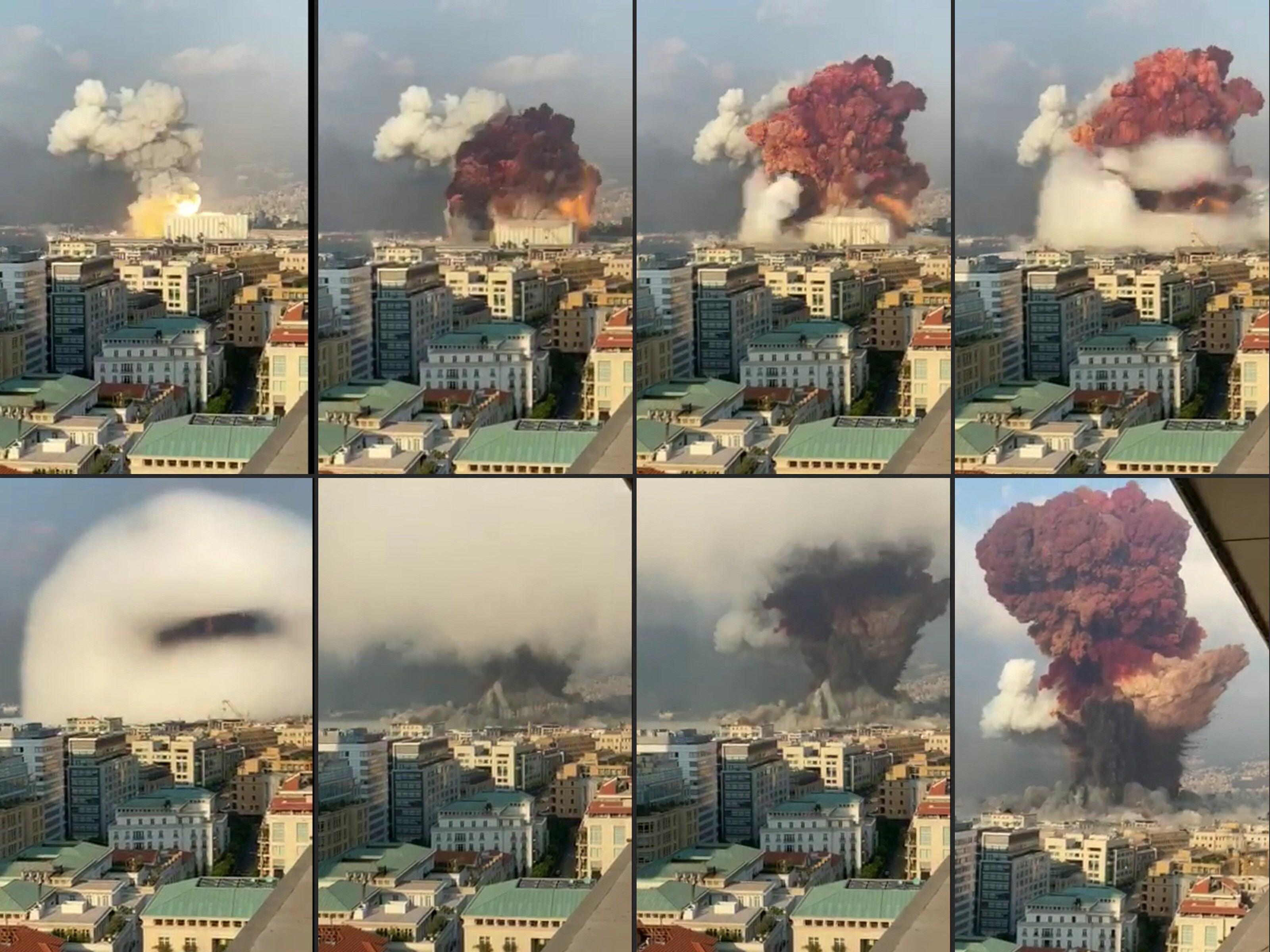
A sequence of photographs shows a fireball exploding while smoke billows during the huge chemical explosion. /Gaby Salem/ESN/AFP
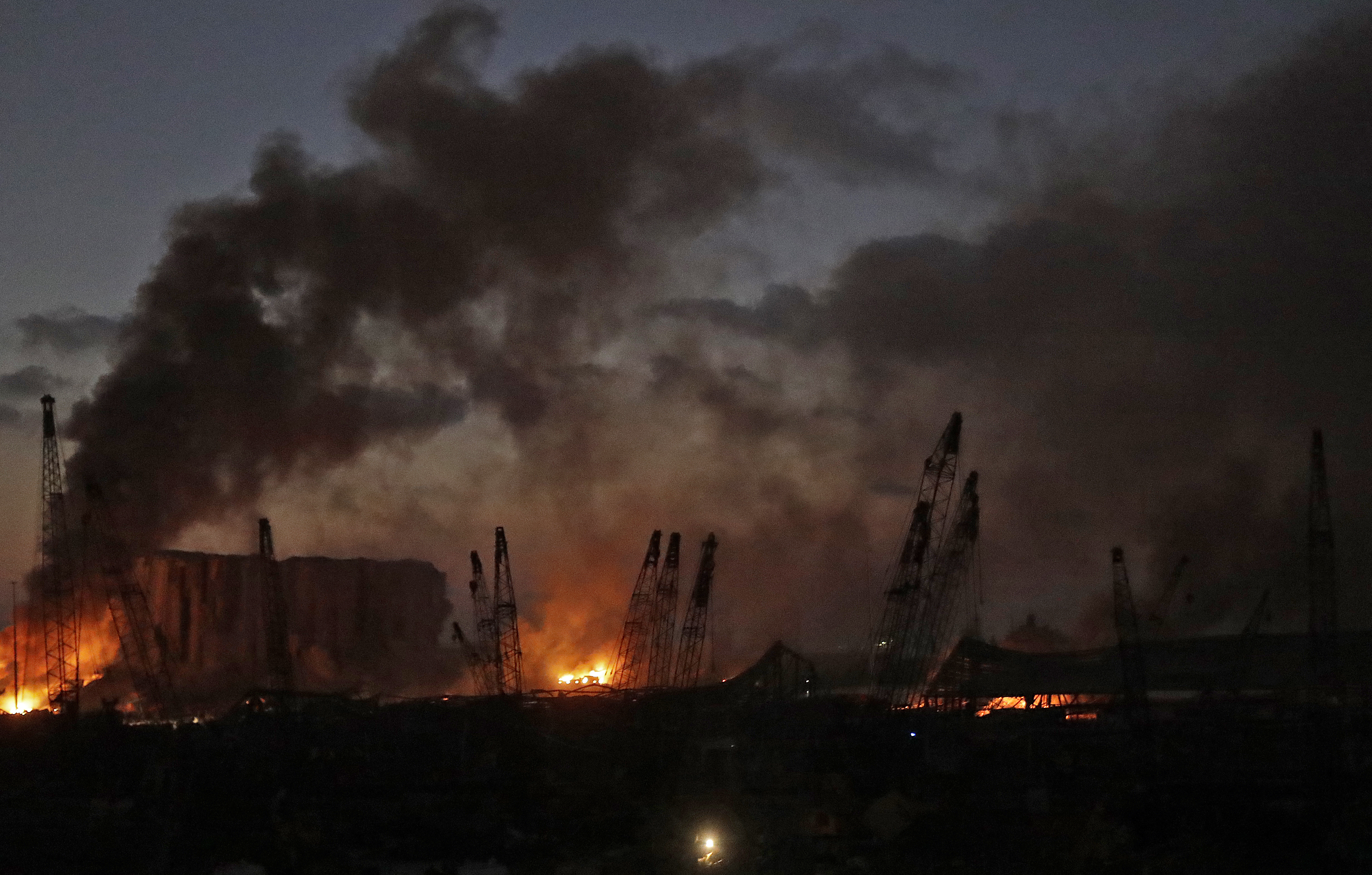
Lebanon's capital Beirut is photographed shortly after the massive explosion. /Joseph Eid/AFP
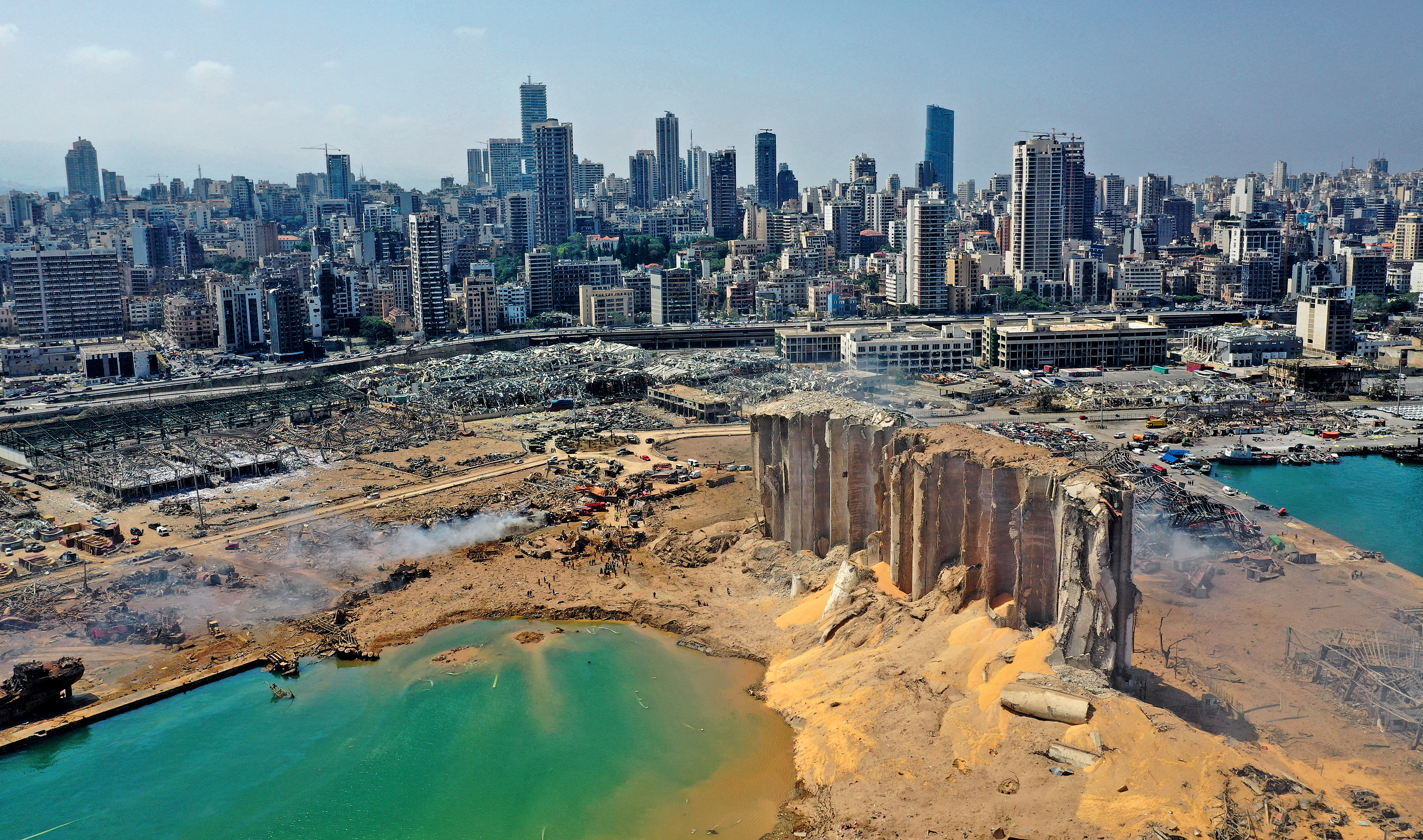
An aerial shot shows damage at Beirut port's grain silos and the area around it. /AFP
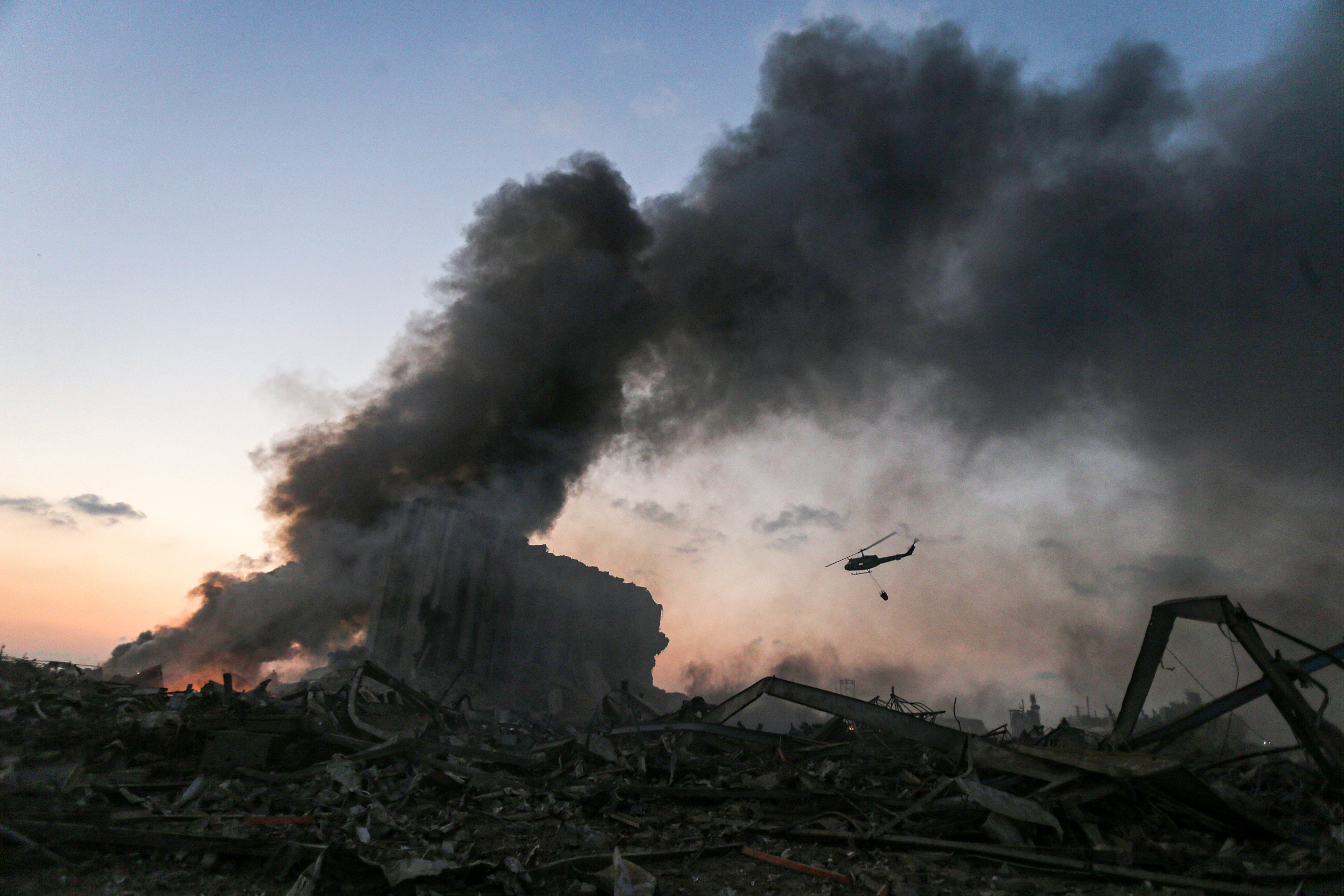
A helicopter douses a fire at the scene of the explosion in Beirut. /STR/AFP
Lebanon's lawmakers are currently facing intense international pressure and threats of sanctions.
Former colonial power France's President Emmanuel Macron has pledged $118 million, while warning Lebanese leaders they "owe their people the truth and transparency" over what happened. Charity Amnesty International has also accused the Lebanese authorities of "shamelessly obstructing" justice within three days. And families of the victims warned they were willing to "break bones" in upcoming protests.
"We are done with routine and peaceful demonstrations... beware our anger," said Ibrahim Hoteit, a spokesperson for the families.
