- Home
- China
- World
- Asia-Pacific
- Americas
- Europe
- Middle-East and Africa
- Politics
- Business
- Opinions
- Tech & Sci
- Culture
- Sports
- Travel
- Nature
- Picture
- Video
- Live
- TV
- Documentary
- Radio
- Specials
- Learn Chinese

 Europe;Spain
Share







Copied
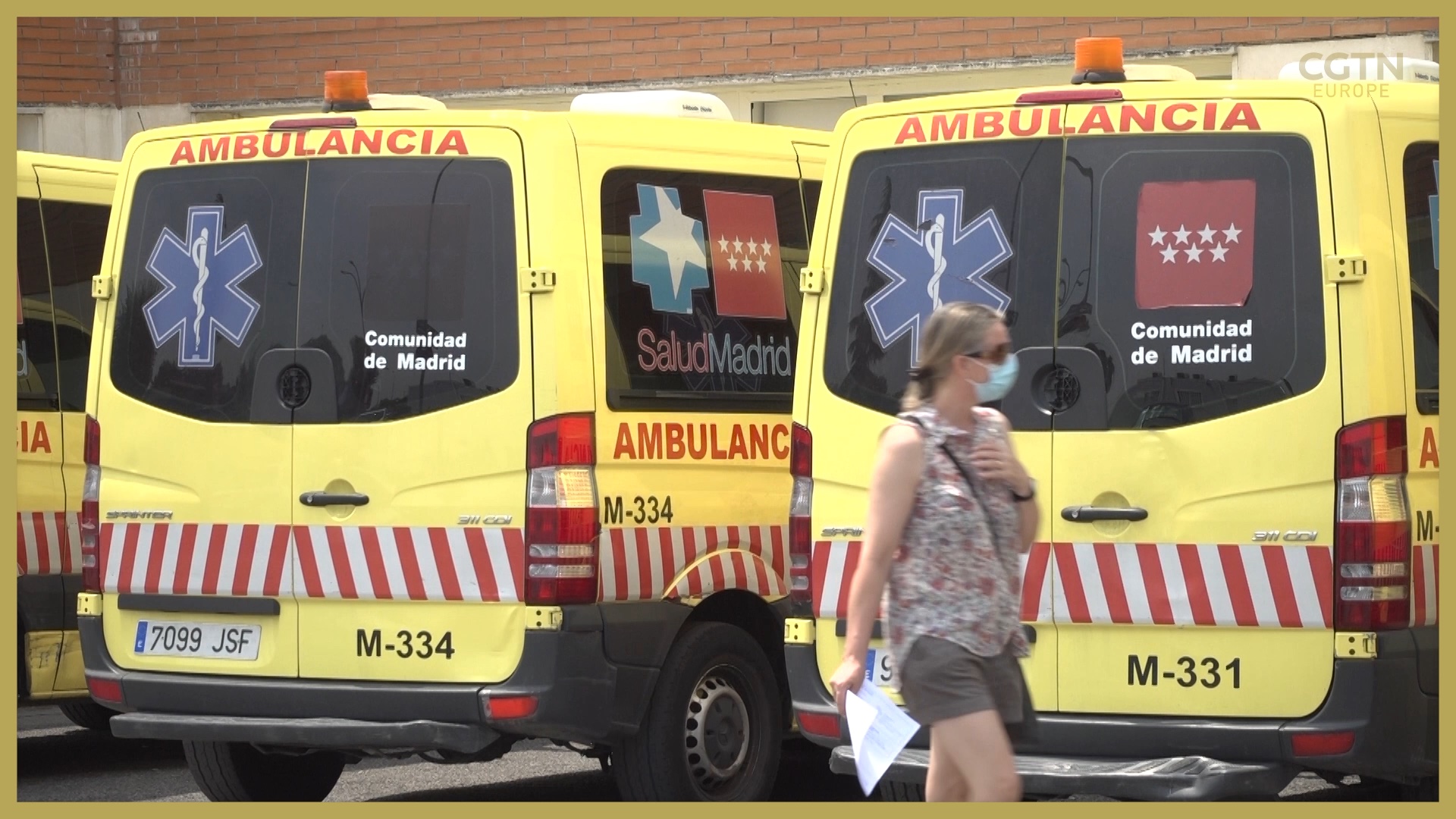
In Spain, it's been called the "silent wave." Unlike Omicron, two new variants have not garnered much media attention.
They're called BA.4 and BA.5, and although they haven't caused more severe illness they have pushed up the number of hospitalizations across the country. It's believed they are the most transmissible COVID-19 variants to date.
Mask use is still compulsory on public transport in Spain. The Ministry of Health has been concerned enough to recommend that people start wearing them again for indoor use, but that's not an easy task during the summer months.
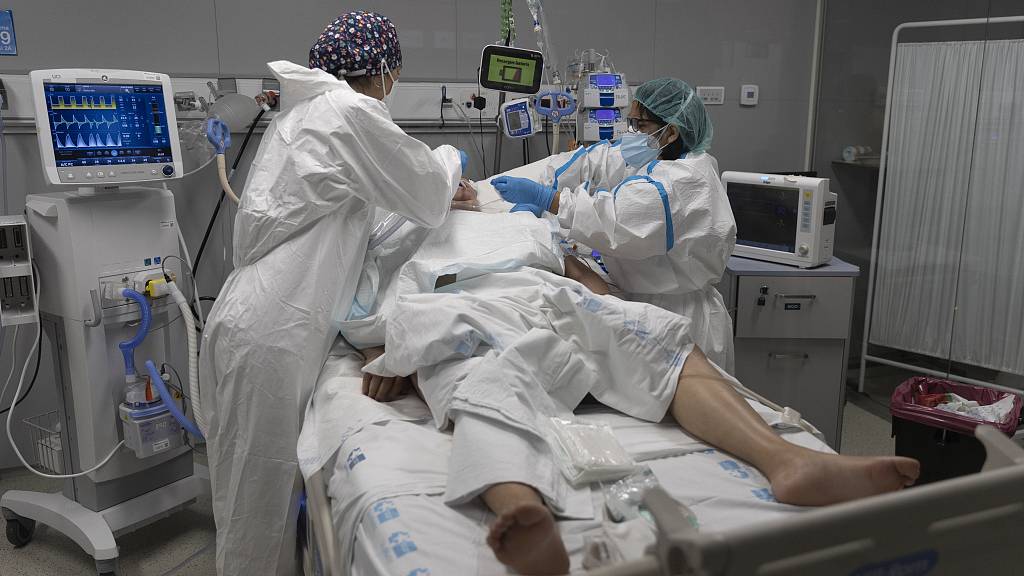
A Madrid patient in intensive care with COVID-19 in January 2022. /Eduardo Parra/Europa Press via Getty Images
The country has suffered a couple of extreme heatwaves and prolonged Covid fatigue.
Ester Armelar, a chief parademic, told CGTN she and her colleagues were in full support.
READ MORE
From Galileo to Webb: a stargazing history
Deciphering the Stonehenge calendar
Lynx cut off by Poland's border wall
"It is very infectious, there has been a lot of infections due to close contact at work and in houses between family members," she said. "Some of them have required a visit to the doctor. It was clear because we received way more emergency calls on COVID-19."
A study published on June 10 on medRxiv, a Yale and British Medical Journal–affiliated website, suggested that BA.5 may affect the lower respiratory tract, "with a potential increase in disease severity and infection within lung tissue."
There is no indication in Spain that the new variants pose any more danger than Omicron, but accessing accurate numbers is difficult. Spain now only collects information from the over-60s, as it wound down its exhaustive data collection system earlier this year.
Mutating rapidly
The two sub-variants first detected in South Africa back in February have now become dominant in many countries throughout the world.
The U.S. has reported that BA.5 has an extremely high infection rate, because its mutation allows it to escape anti-bodies generated by current vaccines or previous infection.
Ester Armela said it was likely we would never be truly free of COVID-19 and it was a question of managing the illness.
"Us health workers believe and hope that we can learn to live with COVID-19, the same way as we coexist with flu, or gastroenteritis," she said. "There's no other choice and I think both people and health workers will do it fine."
Comparisons with the prevalence of previous variants is difficult. Restrictions have been lifted in many countries and attitudes have changed, but staying ahead of a constantly mutating virus has always been the toughest challenge.
Once again, it seems the latest variant may have the upper hand.
