- Home
- China
- World
- Asia-Pacific
- Americas
- Europe
- Middle-East and Africa
- Politics
- Business
- Opinions
- Tech & Sci
- Culture
- Sports
- Travel
- Nature
- Picture
- Video
- Live
- TV
- Documentary
- Radio
- Specials
- Learn Chinese

 Europe;UK
Share







Copied

The final will be on July 31 at London's iconic Wembley stadium. /Carl Recine/Reuters
Women's Euro 2022 tournament will kick off at 8pm today when hosts England play Austria at Old Trafford in Manchester.
The 16 teams that have qualified have been drawn into four groups of four.
They will play their fixtures at 10 venues across nine cities in England, with two London stadiums chosen as venues for the tournament. Other venues are in Brighton & Hove, Milton Keynes, Rotherham, Sheffield and Southampton.
The final will be held on July 31 at London's iconic Wembley stadium.
Germany has had the most success in the tournament, having won seven of the nine tournaments since 1991.
READ MORE
#MyFirstJob: How industry leaders started out
With women's football more popular than ever, it is an excellent time for England to be hosting the Euros.
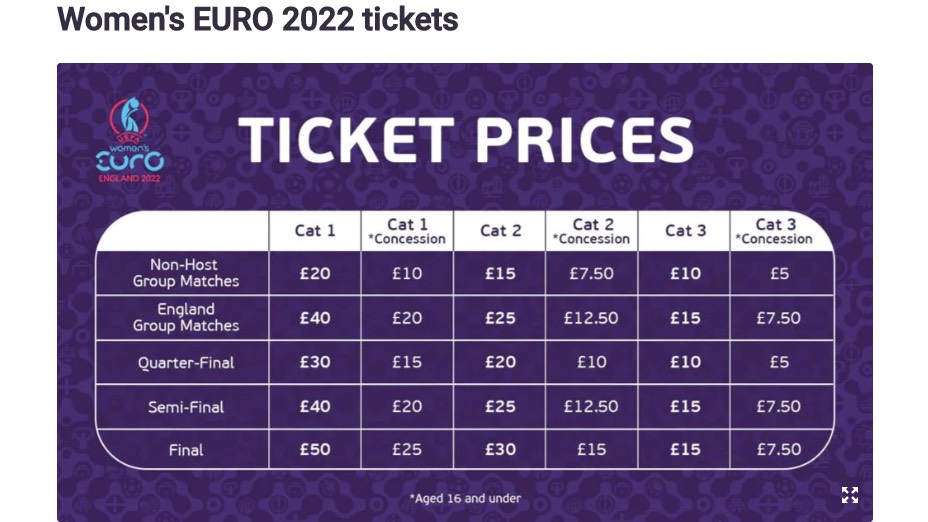
According to the Union of European Football Associations (UEFA) 500,000 of the 700,000 available tickets have been sold for the tournament, with the final at Wembley completely sold out. The event is on track to more than double the 240,000 attendees at the last edition in the Netherlands in 2017.
UEFA is also expecting a global audience of around 250 million for this tournament, which will see 31 matches across ten UK venues broadcast in close to 200 territories.
/UEFA website
It is, however, important to note that this is not women's football first brush with popularity.
In the UK, women's football was once more popular than the men's game. The UK had several women's clubs in the 1890s.
Preston was known for women's football in the early days, home to Dick, Kerr Ladies F.C., which was one of the earliest known women's association football teams in England., formed in 1894.
It earned a lot of money for charity.
'Unsuitable for females'
In the late 1960s, however, the Football Association (FA) banned women's football from its grounds on the basis that the game was "quite unsuitable for females".
The women's teams were no longer allowed to play on official FA grounds, bringing this golden era of women's sport to a brutal end.
A few decades later, in 1997, the FA shared plans to develop women's football to an elite level. By 2002, football had become the top participation sport for women and girls in England.
According to FIFA there are 29 million women and girls playing football worldwide and the aim is to increase this number to 60 million by 2026.

If women's football is easily accessible on TV, the viewership could increase by 300 percent to 350 percent. /Carl Recine/Reuters
A 2021 survey of more than 5,000 football fans by RunRepeat showed
• If women's football is easily accessible on TV, the viewership could increase by 300 percent to 350 percent.
• Around 34.4 percent of UK male fans and 27.1 percent of UK female fans are keen to watch if the leagues are on TV
• UK male football fans form 61.9 percent viewership of women's football leagues in the country
• In the U.S., the viewership is equally divided between men and women and in the EU, female fans form the majority of viewers of women's football.
In more recent steps taken towards making women's football more accessible and popular, the FA announced a record-breaking three-year deal worth around £8 million-a-year, with UK's Sky Sports and the BBC for the broadcast rights to the Women's Super League (WSL), ahead of the 2021/22 season.
As the biggest broadcast deal of any professional women's football league in the world, it has spurred on the game's growth in the last year or so.
