- Home
- China
- World
- Asia-Pacific
- Americas
- Europe
- Middle-East and Africa
- Politics
- Business
- Opinions
- Tech & Sci
- Culture
- Sports
- Travel
- Nature
- Picture
- Video
- Live
- TV
- Radio
- Specials
- Learn Chinese

 Europe;Lviv, Ukraine
Share







Copied
A truck carrying humanitarian supplies from Holland unloads its precious cargo at a vast distribution warehouse on the outskirts of Lviv, in western Ukraine. It's one of half a dozen such government-run warehouses around the city, receiving daily deliveries from Europe.
Charities and individuals have donated almost everything here. The UN's World Food Program has its own storage facility; Chinese aid has also arrived in Ukraine. A second truck arrived while we were filming, carrying supplies from Austria.
READ MORE:
The Premier League's only Chinese owner
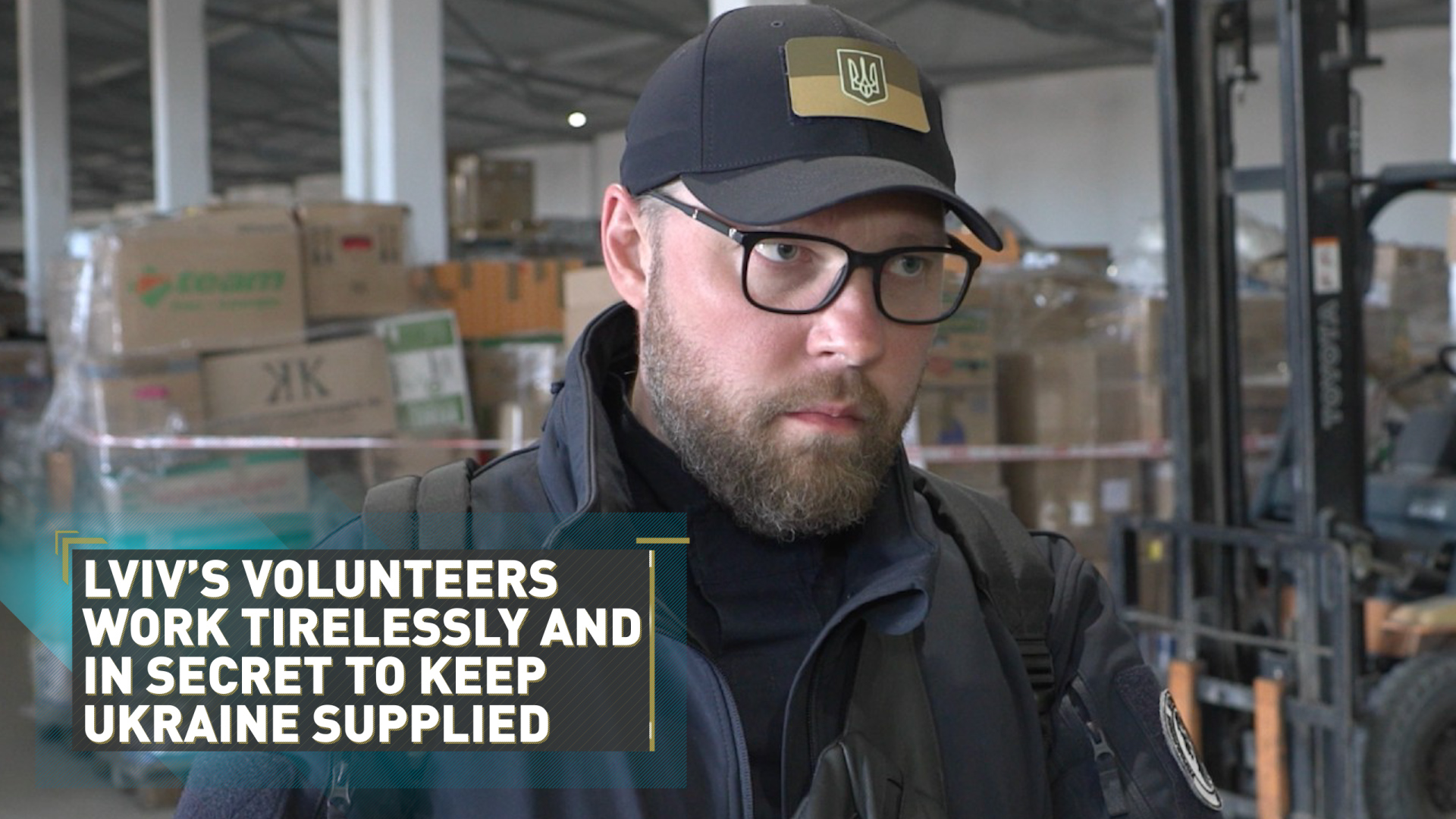
The warehouse is a constant hub of activity. As soon as the trucks arrive, dozens of volunteers start unpacking and sorting through the products. They are then split into various categories: food, clothes, children's clothes, baby items, bedding, toiletries, food, and medicines.
Each category is then stacked onto pallets and labeled ready for distribution, so people know what they are getting once it arrives.
'We need medicine'
Oleksiy Shevshuk is in charge of organizing and distributing all of the humanitarian aid arriving in the government warehouses. "We are thankful for everything the European Union does for us. And we are ready to receive equipment and everything that will be necessary to rebuild our country in the near future." He said.
I asked him about what sort of supplies they most need right now. "We need medicine, we need food, and we need medical equipment to help people. We really need emergency equipment for hospitals treating the injured." Shevshuk told me.
There is plenty of food arriving here, much of it tinned but minimal fresh products or grains. "We now need something to prepare and cook: flour, corn, vegetables. We need hot food, porridge, soup - that would be good." He explained.
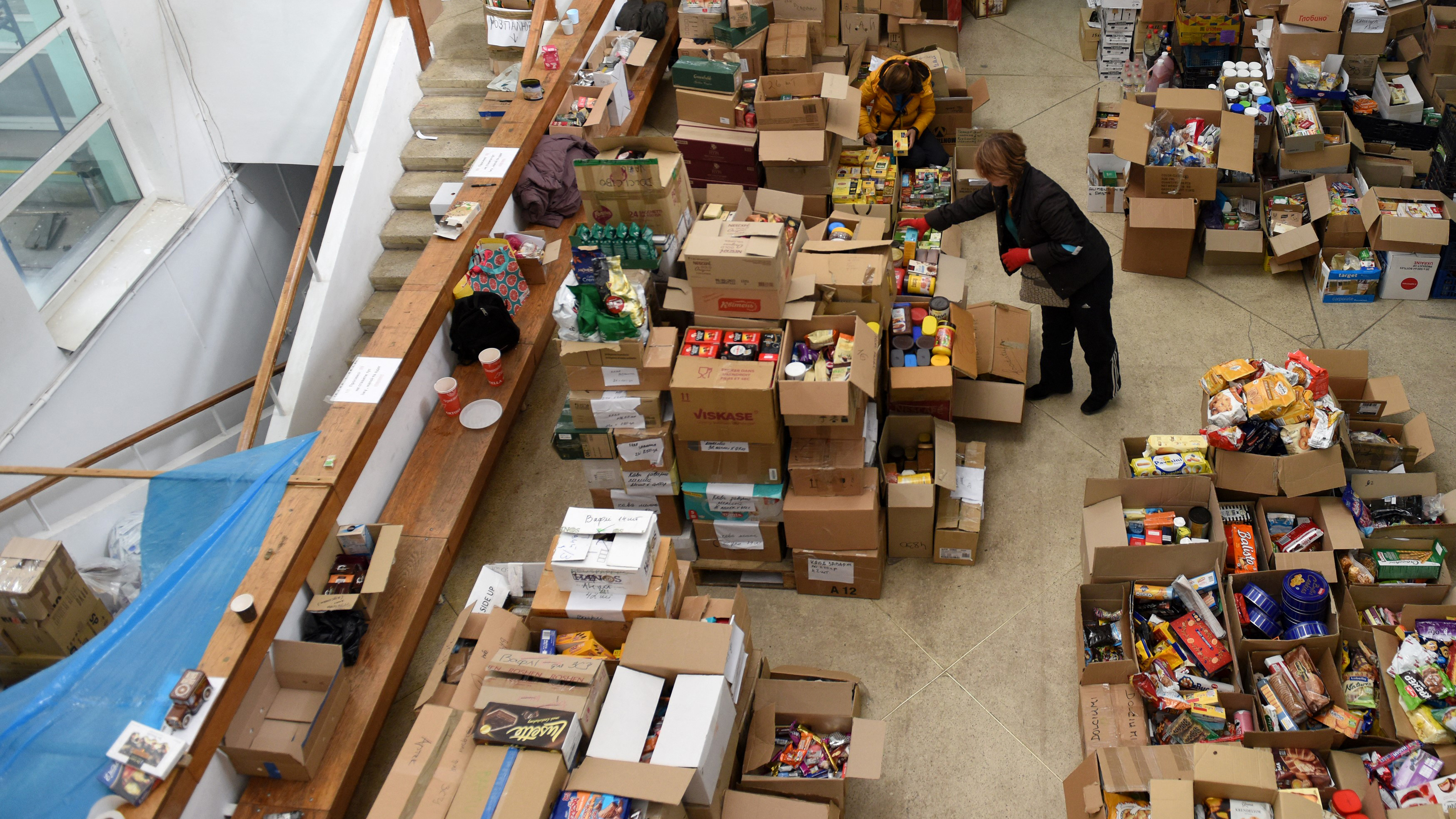
Volunteers of a humanitarian centre sort clothes donated for evacuees in the western Ukrainian city of Lviv. /AFP/Yuriy Dyachyshyn
Ten million people displaced
The needs in Ukraine are enormous. The United Nations estimates that around 10 million people have fled their homes, almost a quarter of the population. While 3.5 million refugees have arrived in the European Union, the remaining 6.5 million are internally displaced within the country.
Then there are all those who remain, trapped in towns and villages, besieged and bombarded by the Russians. There are about a hundred people busy at work here at any one time and almost all of them are volunteers.
Ivana Seniv quit her job as a teacher to come here the day the war started.
"At first, we received significantly less support, but more and more trucks come every day from very different countries. Of course, this makes us happy. We receive not only humanitarian aid but also letters and drawings from children wishing for us to win the war with Russia sooner." She told me.
Secretly moving supplies
As quickly as supplies arrive, they are sent out across the country. At the end of the giant warehouse, a smaller truck was being loaded. This one was destined for the besieged city of Chernihiv, 700 kilometers to the north, near the Belarusian border. How they get the supplies past the Russians is a secret they would rather not reveal.
It doesn't always go as planned. The Ukrainian authorities say a humanitarian convoy headed for the worst-hit city on the south coast, Mariupol, was captured by Russian forces with the Ukrainian emergency workers taken prisoner.
