- Home
- China
- World
- Asia-Pacific
- Americas
- Europe
- Middle-East and Africa
- Politics
- Business
- Opinions
- Tech & Sci
- Culture
- Sports
- Travel
- Nature
- Picture
- Video
- Live
- TV
- Radio
- Specials
- Learn Chinese


Share







Copied
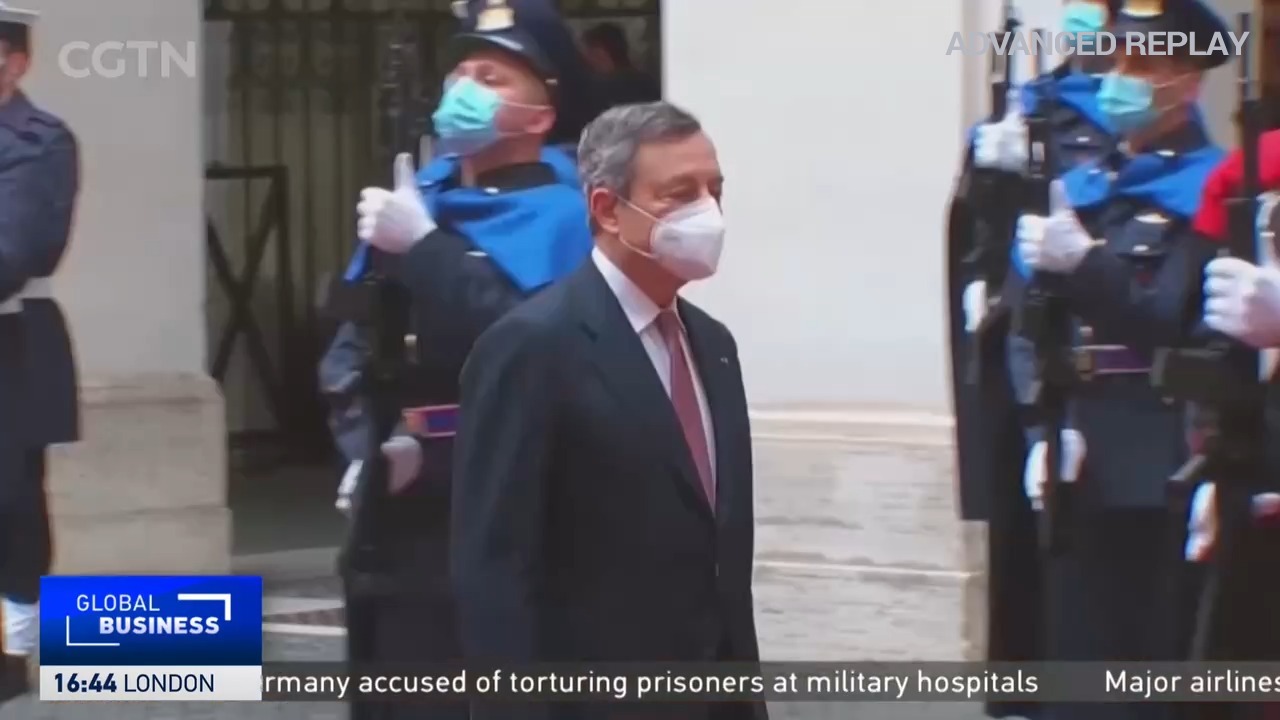
It's stalemate in Italy's presidential election, as three rounds of voting have failed to yield a consensus candidate to replace outgoing President Sergio Mattarella.
In the initial rounds, most of the 1,008 lawmakers and regional delegates cast blank votes as both political blocs struggled to reach a compromise.
Giovanni Orsina is the Dean of Rome's Luiss University School of Government and says the process is unpredictable and riddled with challenges: "So we must imagine a game with a lot of players, with very few rules and every player trying to extract as much as possible. It's bound to be complicated."
READ MORE
Training with the Ukraine military
Prime Minister Mario Draghi is considered one of the leading contenders, but his appointment to the top job is problematic on several levels.
Cristina Fasone, an associate professor of comparative public law at Luiss said: "This is unique indeed because it has never happened before even though there is no constitutional prohibition to that happening and, in this case, it would cause a governmental crisis."
Therefore, a key theme of backroom talks is who could replace him as PM and hold the coalition government together until general elections next year.
Europe watches on
The international community is also watching closely as the former head of the European Central Bank is considered key to Italy's economic stability and the successful roll-out of the multi-billion-dollar EU recovery fund.
"Italy is the first beneficiary of new money within this fund and many think that Mario Draghi is an assurance of continuity in this respect," says Fasone.
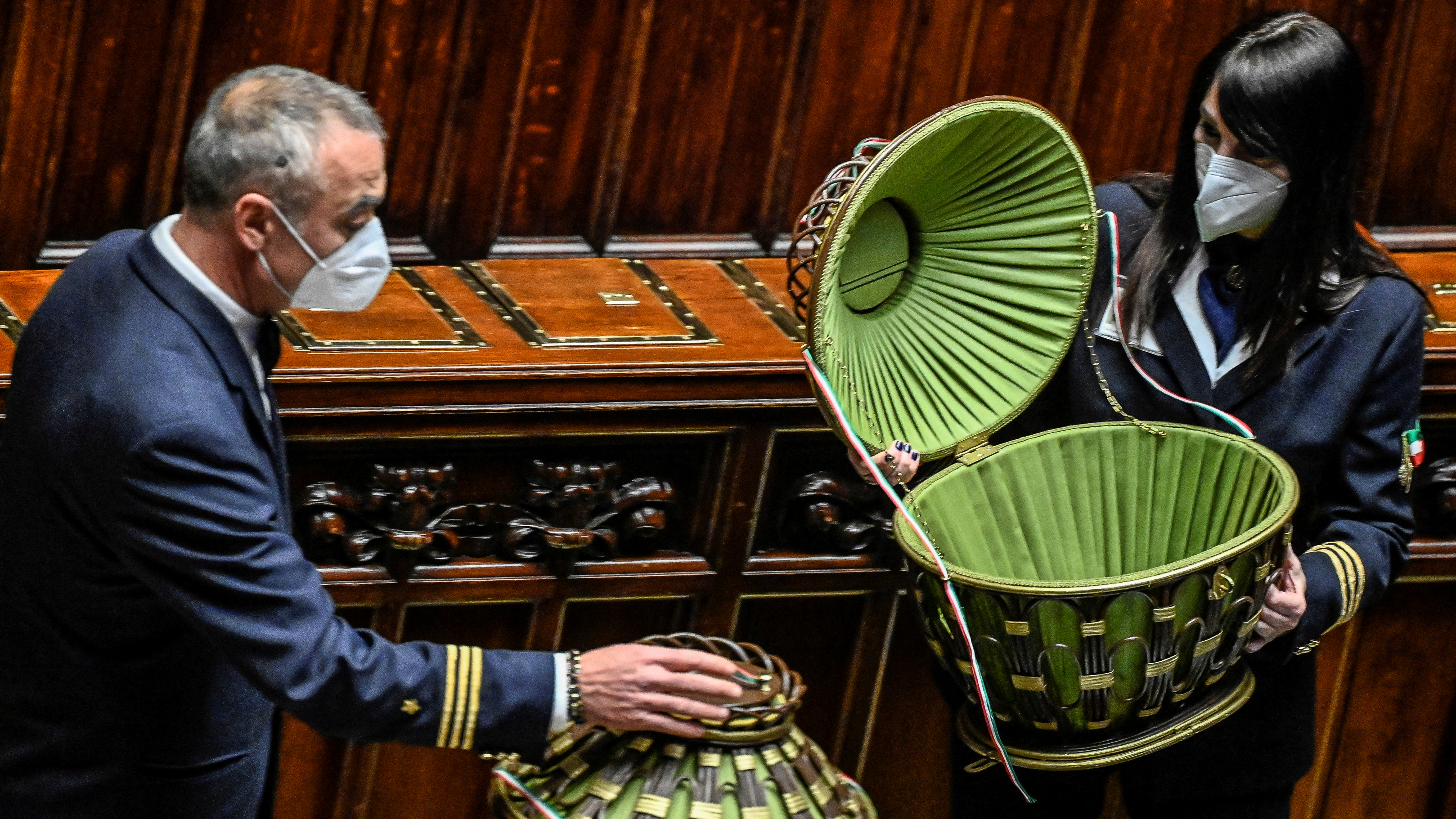
Ushers handle ballot boxes during the third day of voting to elect the country's new president. /Reuters/Alberto Pizzoli/
Experts say a result could be achieved on Thursday as a simple majority is sufficient for a win, instead of the two-thirds majority needed in the first three rounds of voting.
"If Mario Draghi is elected, this means that they've found some kind of agreement on the new government – I think very similar to the present government because they cannot move around many pieces," continues Orsina.
Desire for Mattarella to stay on
Another name high on the list is the former President of the Chamber of Deputies, Pier Ferdinando Casini, or there is the possibility that President Sergio Mattarella could be re-elected, despite making it publicly clear he doesn't want a second seven-year term.
His time in office officially ends on February 3, and it's hoped by then Italy will have a result.
Some politicians want Italy's outgoing president to accept a second mandate.
But Mattarella, 80, has ruled this out. Despite this, he still got more than 120 votes in Wednesday's ballot, suggesting many lawmakers are hopeful he might change his mind.
