- Home
- China
- World
- Asia-Pacific
- Americas
- Europe
- Middle-East and Africa
- Politics
- Business
- Opinions
- Tech & Sci
- Culture
- Sports
- Travel
- Nature
- Picture
- Video
- Live
- TV
- Specials
- Learn Chinese


Share







Copied
The Bank of England has raised its benchmark interest rate for the first time in more than three years amid concerns over the speed of price rises in the economy.
The bank rate was increased to 0.25 percent from 0.1 percent.
Central banks around the world have been concerned that spiraling living costs amid the pandemic pose a threat to stability and confidence. Increasing interest rates can curb the inflation by encouraging individuals and institutions to save, rather than spend, money. However, that step may also have the effect of slowing down the economy.
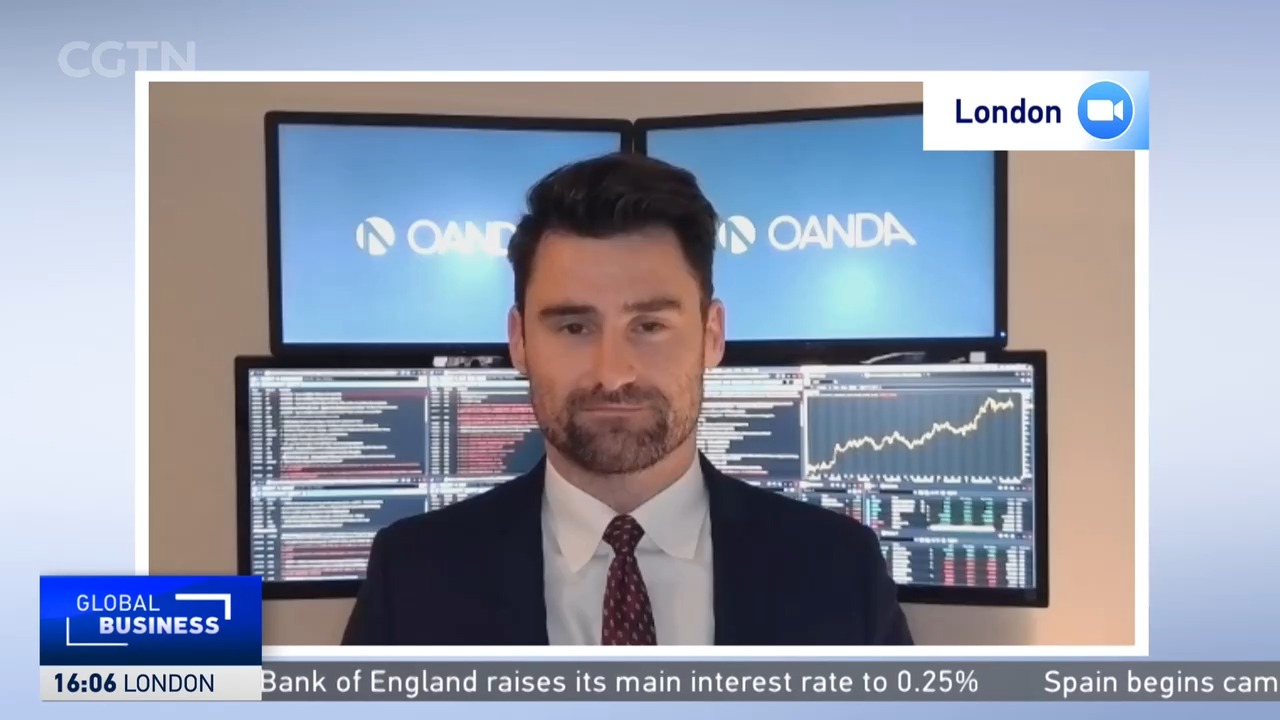
"Right now, modest rate hikes are not that much of a threat to the economy, not nearly as much as rapid inflation would be," Craig Erlam, an analyst at Oanda told CGTN.
READ MORE
Meat and dairy firms set to increase GHG emissions
NATO members threatening Russia, says Putin
The 20 year-old who wants to clean the oceans
While most economies started to grow through the middle of the year, there are concerns that a renewed surge in coronavirus cases during the northern hemisphere winter threatens to undermine the performance of businesses, so central bankers have been trying to perform a balancing act between the risks of high inflation and low growth.
ECB on hold
The European Bank kept its main rate on hold, sticking by a view that inflationary pressures will be temporary. Oanda's Erlam said that years of deflationary threats meant policymakers in Europe could afford to be sanguine about the danger of inflation, which is predicted to ease in the medium term.
Turkey cuts
In Turkey, the central bank announced a fourth straight cut to interest rates, following a strategy advocated by the country's president Recep Tayyip Erdogan, who says lower rates will make the country richer. However, the latest move prompted a fresh slump in the lira as investors dumped the currency.
The falls in value of the lira have made imports more and more expensive, helping push inflation over 20 percent. The main interest rate is currently 14 percent.
