- Home
- China
- World
- Asia-Pacific
- Americas
- Europe
- Middle-East and Africa
- Politics
- Business
- Opinions
- Tech & Sci
- Culture
- Sports
- Travel
- Nature
- Picture
- Video
- Live
- TV
- Specials
- Learn Chinese

 Europe;
Share







Copied
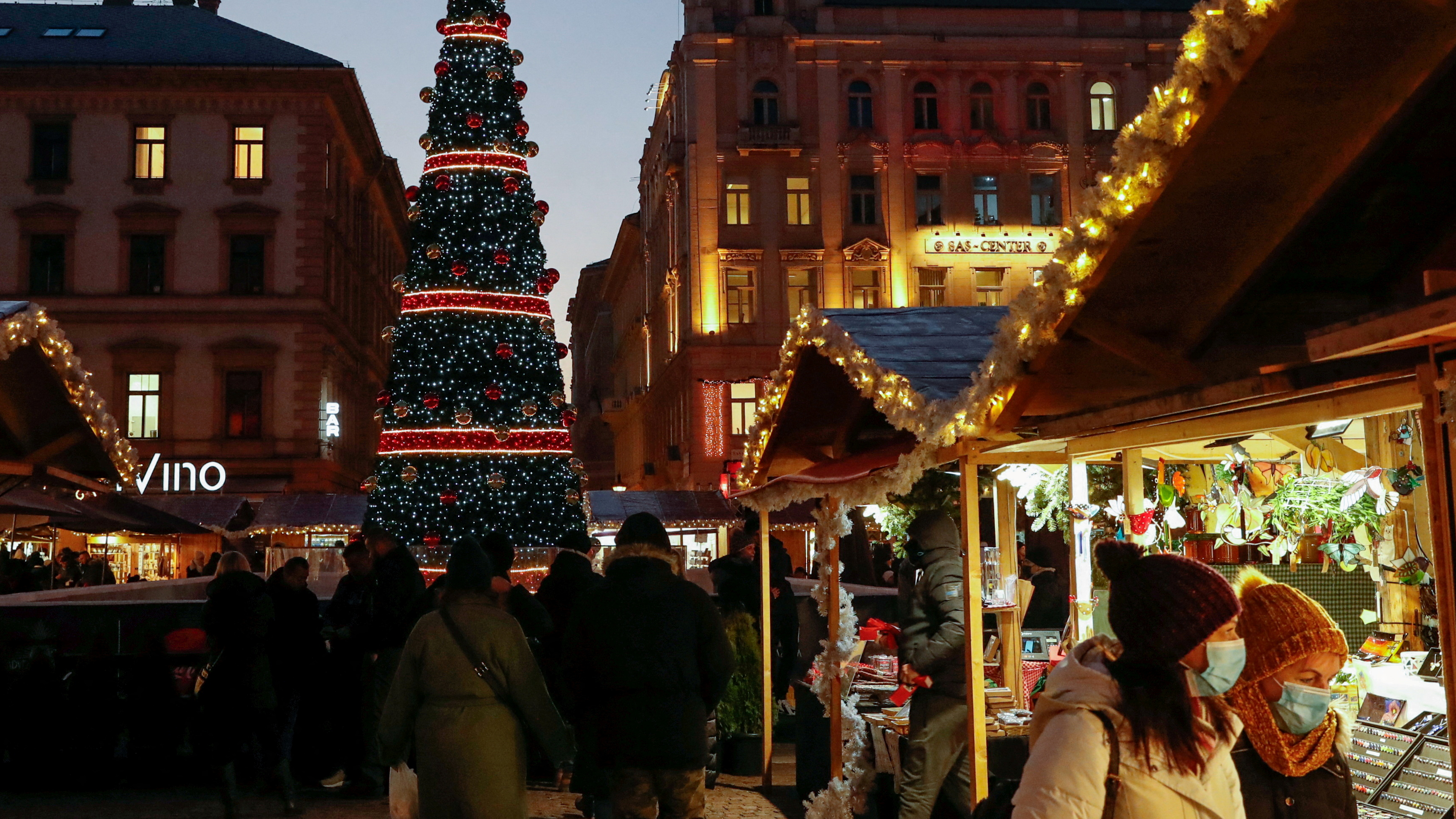
Hungarians will feel the the economic squeeze in their pockets when they visit Christmas markets like this one in Budapest this festive season. /Bernadett Szabo/Reuters
Csaba stands amid a crowd of colorful Matrioskas, hand-stitched Hungarian embroidery and Christmas ornaments, at his shop at the Fovam Square market in Budapest.
The vendor tells CGTN he's had to increase the prices on almost all of his products. Csaba blames a low turnout of American tourists, his main customers, because of COVID-19, but also a hike in his suppliers' costs caused by inflation.
"The matryoshka dolls, these six pieces, two years ago were $10, now they're $12-$13… A lot of inflation," Csaba tells CGTN, pointing to his products, including a chess set that has doubled in price. "It's horrible."
Hungary is facing a 14-year-high inflation rate of 7.4 percent. The Hungarian forint hit an all-time low against the euro in November.
Shoppers and vendors alike feel the 7 percent increase in the customer price index directly in their pockets. At the Fovam Square market, a loaf of bread is 20 percent more expensive and a kilogram of tangerines costs double the amount it did last year.
"I pay more at the cash register," a retiree tells CGTN. Another shopper says: "The price of fruit and meat have increased rapidly, by 20 percent for sure."
Fuel has been one of the most affected commodities, with a 37.7 percent spike in its price. Clothing prices increased 1.8 percent and services costs rose by 4.6 percent.
READ MORE
Vaccine passes for Christmas markets
Small nation with big goals at Beijing 2022
The 20-year old who wants to clean the ocean
Analysts say investor hesitancy due to legal challenges with the European Court of Justice and the government overspending has contributed to the situation.
Prime Minister Viktor Orban has increased public spending ahead of next year's elections by acquiring public companies and increasing the minimum wage by 20 percent.
On Monday evening, Orban delayed the planned government acquisition of the Budapest airport until after the elections. "We need to pay attention to the budget deficit," he said.
The governor of the central bank, an ally of Orban, had called on the government to reduce public spending.
The scenario is concerning and analysts don't expect it to change in the coming months. Which could ultimately cost Orban the vote of many Hungarians who feel left out of pocket.
