- Home
- China
- World
- Asia-Pacific
- Americas
- Europe
- Middle-East and Africa
- Politics
- Business
- Opinions
- Tech & Sci
- Culture
- Sports
- Travel
- Nature
- Picture
- Video
- Live
- TV
- Specials
- Learn Chinese

 Europe;Hungary
Share







Copied
Solar sidewalks, which are part of your driveway and can withstand the weight of a car, are now supplying electricity to family homes.
The innovation, developed by Hungarian company Platio, is one of the products on display at Planet Budapest, a sustainability expo showcasing central European companies.
A solar pavement is similar to the solar panels that go on a roof, and works by capturing sunlight and turning it into electricity. But it has an important difference.
READ MORE:
Omicron: What we know so far
Fatal storm Arwen batters UK and Spain
Sweden appoints first female PM… again
"We had to make it tough, it has a 10mm tempered glass surface, which makes it possible for cars to ride on it. We don't want to build roads, we don't want to build highways but if you have a family home with a garage and a driveway, you can put it on your driveway easily. It will be no problem if you drive on it with your car," said Zoltan Priszler, sales manager for Platio.
The company hopes solar pavements will one day be used in cities, as sidewalks. Tests have shown the solar pavements are tough enough to last 25 years.
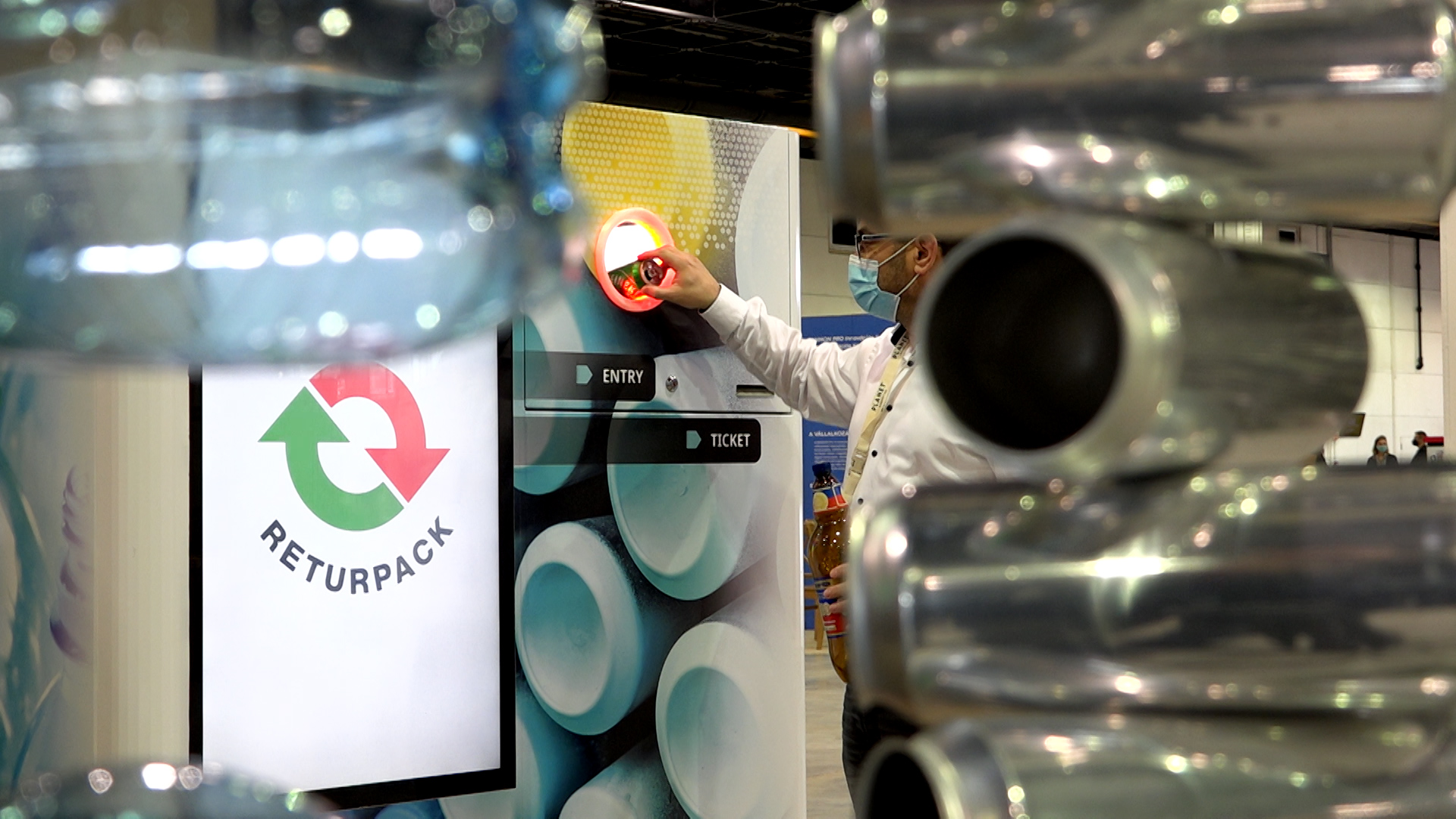
The Planet Budapest expo covers 20,000 square meters and has 180 exhibitors, which range from companies making sensors that help sort waste, to manufacturers of reverse vending machines that pay you for inserting empty plastic bottles and cans.
Another product, created by Czech company TREEIB, is an irrigation bag that prolongs the life of large trees. Trees shouldn't be watered at the base but several meters away to ensure the outermost roots are kept strong and the tree stays stable, according to the Czech developer.
Martin Tuser, of TREEIB, said: "Large trees store an extreme volume of carbon in their wood and leaves and roots. To replace one large oak, we have to plant about 3,000 trees of the size that are normally planted in cities. Extreme numbers of trees. We don't have space. This is the biggest problem, we don't have the space. And we don't have the budget and we don't have the trees."
Alongside the expo, there's a summit at which politicians, bankers, academics and policymakers are discussing solutions to environmental challenges.
The expo is a bid to tell the world there is an eco-innovation surge in Central Europe. The countries that file most green tech patent applications every year are China, Japan, the U.S., Germany and South Korea. Planet Budapest marks the ambition of Central European countries to join that list.
