- Home
- China
- World
- Asia-Pacific
- Americas
- Europe
- Middle-East and Africa
- Politics
- Business
- Opinions
- Tech & Sci
- Culture
- Sports
- Travel
- Nature
- Picture
- Video
- Live
- TV
- Specials
- Learn Chinese


Share







Copied
Last week, Israel launched a scheme to give people over 60 a third dose of the COVID-19 vaccine, and many other countries have followed suit – including several in Europe.
This was motivated in part by approaching fourth waves and the more aggressive Delta variant.
But despite growing interest in third doses, there is still a lot of debate about whether they are necessary, or even ethical to give out – and last week the World Health Organization (WHO) called on countries to defer plans to distribute boosters.
So, what is the booster jab, and why is it controversial?
READ MORE:
Six new Barbies honor COVID-19 frontline women
Why are boosters being given out?
Booster jabs are not a new concept. The influenza vaccine requires a booster every year to help the body adapt to the changing flu viruses in circulation.
Ever since the COVID-19 vaccines started rolling out many experts have suggested that booster jabs would eventually be necessary.
That's because it's still not certain how long the protection the vaccines provide will last after the second dose, and there have been conflicting results from many of the pharmaceutical companies that made them.
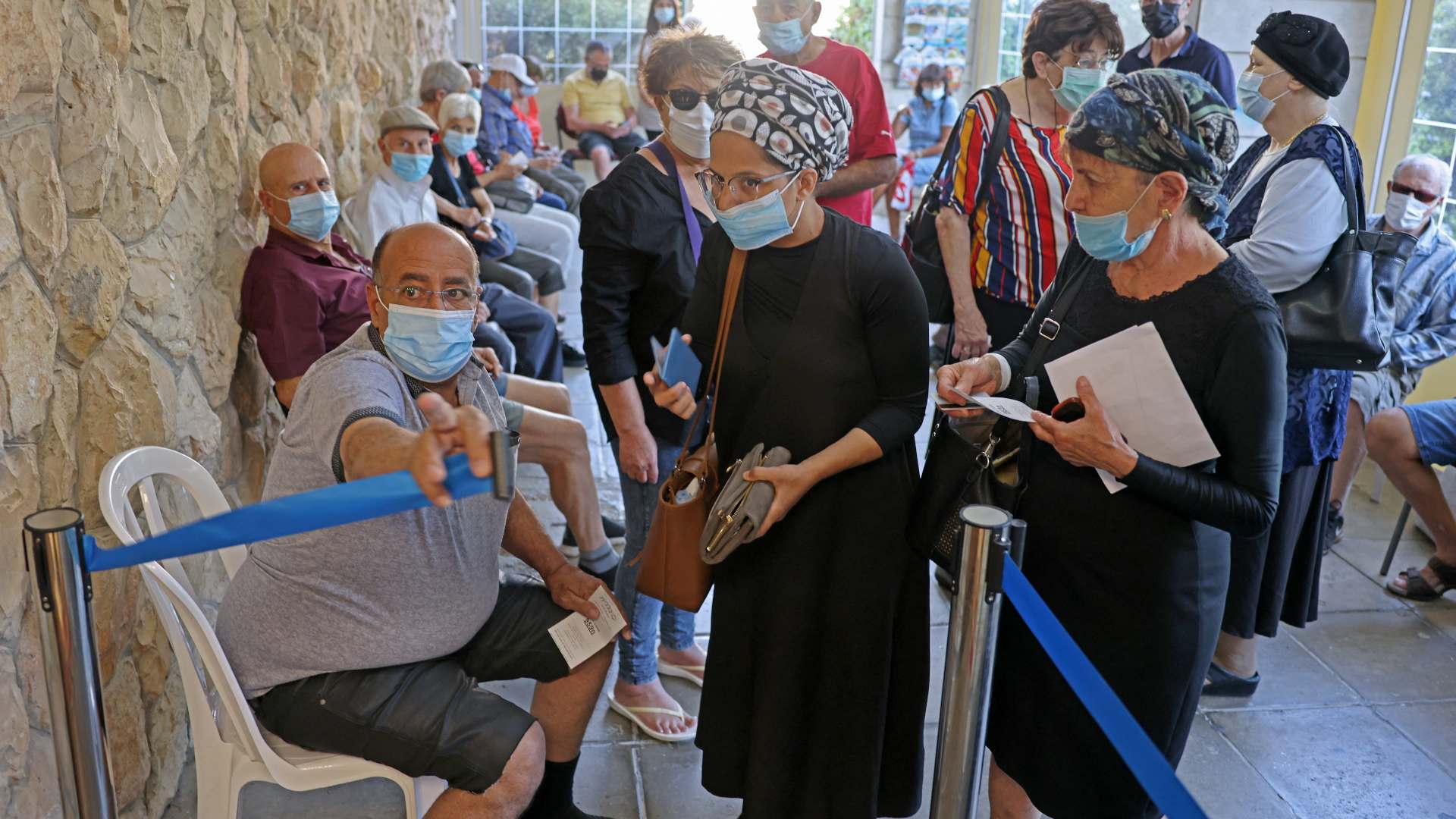
A line of people waiting for their booster jab in Israel. /Menahem Kahana/AFP
For example, Moderna has said that its vaccine is 93 percent effective six months after the second dose – but Pfizer and BioNTech said that the efficacy for their jabs decreases by around 6 percent every two months after the second dose, which will become only 84 percent effective after six months.
AstraZeneca has said that it is still looking into whether an extra dose of its vaccine is needed.
Because of this, a third dose of any of these vaccines would in theory prolong the protection against the virus.
What has the WHO said?
The WHO has been adamant that it wants countries to wait until the end of September before giving out booster jabs.
The logic is that the poorest nations are still struggling to vaccinate their populations, so there should be an added focus on them getting the jabs instead of giving people in richer countries their third dose.
"I understand the concern of all governments to protect their people from the Delta variant," said WHO director-general Tedros Adhanom Ghebreyesus. "But we cannot, and we should not, accept countries that have already used most of the global supply of vaccines using even more of it."
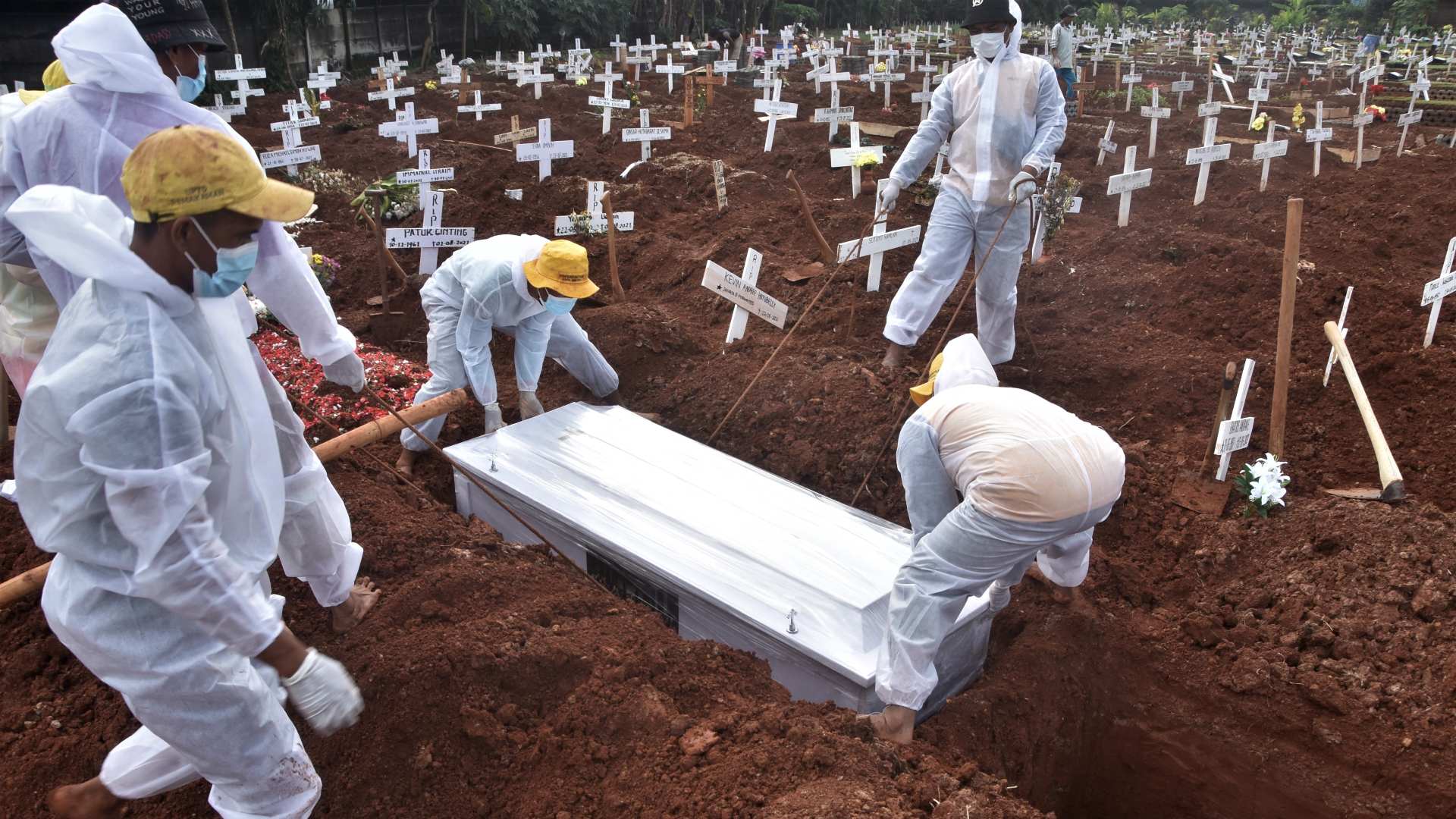
Grave diggers burying the body of a man who died from COVID-19 in Indonesia. An estimated 100,000 people in Indonesia have died because of COVID-19. Indonesia started giving booster jabs to its health care workers in July. /Rezas/AFP
According to the WHO, low-income countries – as defined by the World Bank – have only administered 1.5 doses per 100 people, while high-income countries have already administered 101 doses per 100 people.
Waiting until the end of September would allow the rest of the world to inoculate 10 percent of their population, which would help prevent future variants, especially vaccine-resistant ones, from forming down the line.
"As we've seen from the emergence of variant after variant, we cannot get out of it unless the whole world gets out of it together," said Bruce Aylward, an advisor to Tedros. "And with the huge disparity in vaccination coverage, we're simply not going to be able to achieve that."
Which countries are giving them?
The list of countries starting up their booster programs is already long, and it's getting longer.
In Europe alone, France, Germany and Malta have all announced plans to start giving people a booster in September, while some clinics in Russia started giving out booster jabs in July, making it the first country to do so.
The UK has said that it might announce plans for a booster program in September, while Sweden and Switzerland have made plans to offer boosters as of 2022.
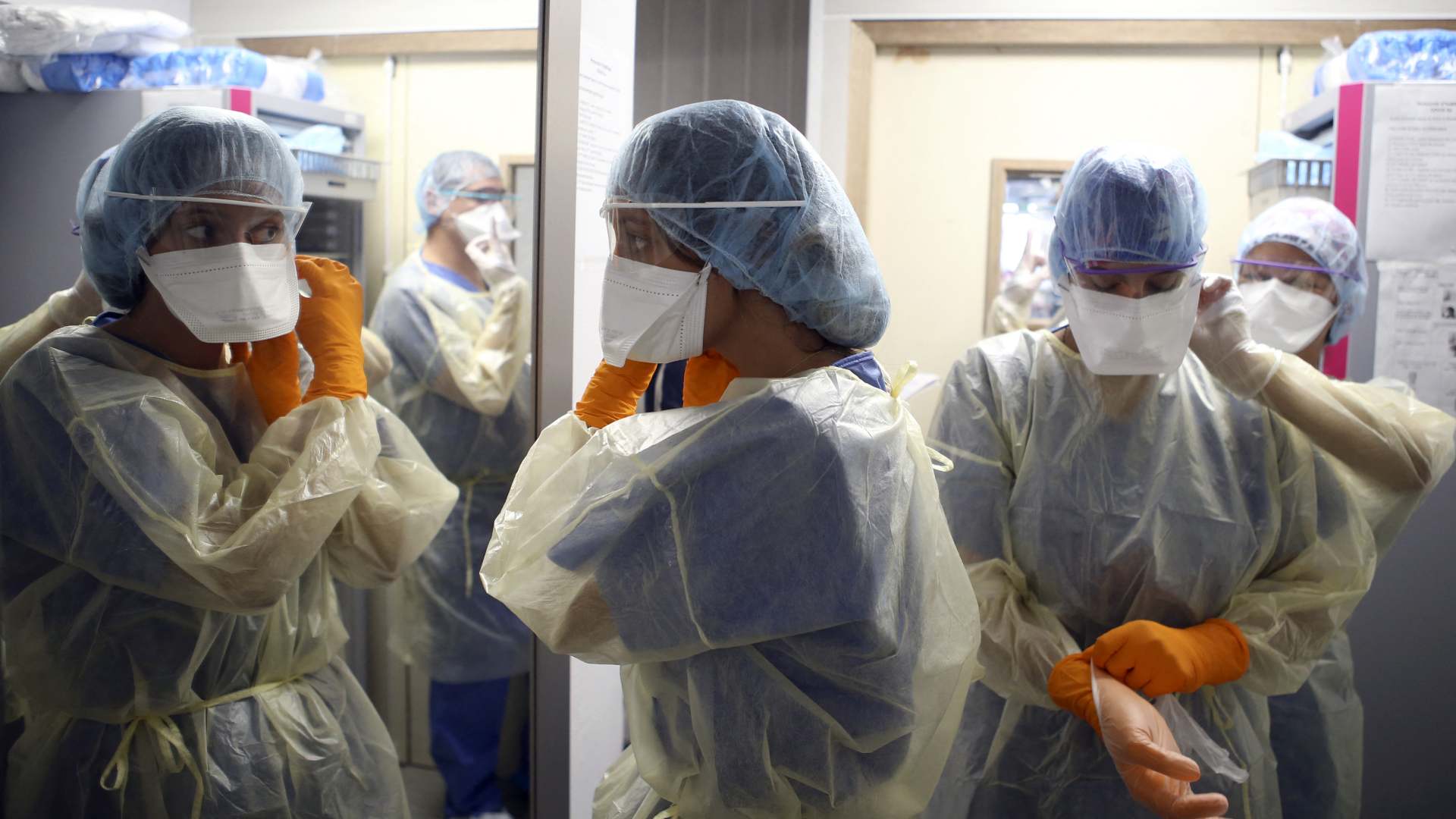
Health care workers at the hospital on the French Mediterranean island of Corsica before entering a COVID-19 ward. /Pascal Pochard-Casabianca/AFP
However, the European Union's drugs regulator said on Friday that there is not enough data to recommend boosters and that it needed more data to determine how long protection from the vaccines can last.
It is also worth noting that most of these countries already have high vaccination rates. Around 49.4 percent of France's population are fully vaccinated, while 53.7 percent of Germany's population has had both doses, and 77.5 percent of Malta's population has done the same.
Only 18.5 percent of Russia's population is fully vaccinated.
What's their justification?
Most of these countries are planing to give out boosters for a specific reason: To protect their most vulnerable populations against the more aggressive Delta variant.
French President Emmanuel Macron said the third dose will be reserved for the country's vulnerable and elderly populations. Germany, Malta and the UK have also specified that the booster will go to people with weak immune systems.
Some data suggests that the vaccines might not be as effective for people who are immunocompromised. One small study by researchers from Johns Hopkins University found that out of 30 transplant patients who were fully vaccinated, 24 did not get protection against the virus after being fully vaccinated – but eight of those patients did get some protection after a booster jab.
Much of Europe is also worried about being hit by the fourth wave of COVID-19 cases. And France has already announced that it's experiencing a fourth wave of cases because of the more aggressive Delta variant. There is also a concern that the number of cases will increase in the winter.
However, data from the U.S. suggests that two doses of the vaccines are still effective against the Delta variant for the general population.
The U.S. Centers for Disease Control and Prevention claimed in July that the surge of new cases in the U.S. was caused by unvaccinated people, adding that they also accounted for "virtually all" deaths and hospitalizations.
It claimed its data showed that people who got their first jabs in December and January were not at a higher risk of contracting the virus compared to those who recently received their inoculations.
