- Home
- China
- World
- Asia-Pacific
- Americas
- Europe
- Middle-East and Africa
- Politics
- Business
- Opinions
- Tech & Sci
- Culture
- Sports
- Travel
- Nature
- Picture
- Video
- Live
- TV
- Documentary
- Radio
- Specials
- Learn Chinese

 Europe;Hungary
Share







Copied
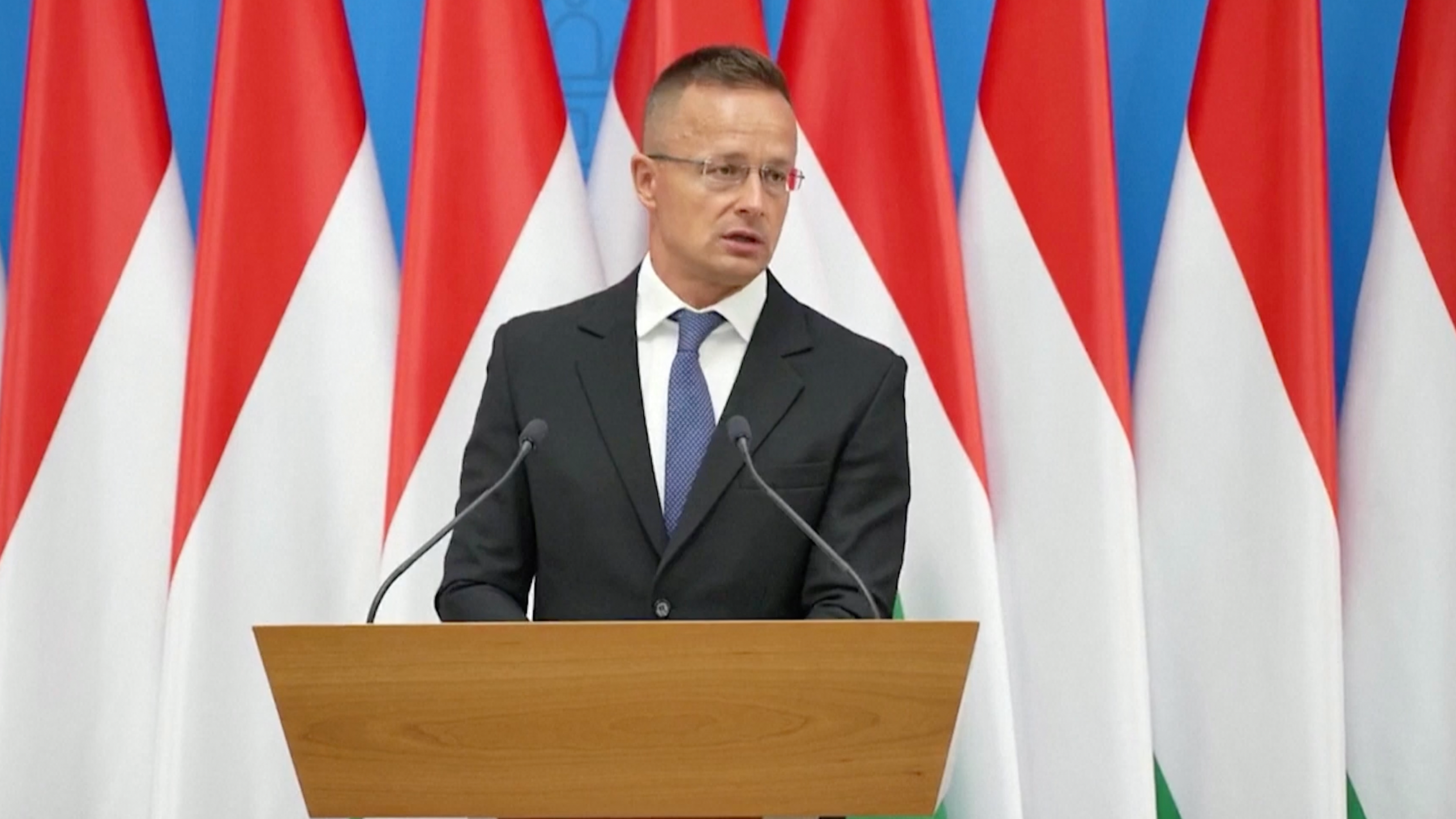
Hungarian foreign minister announces the country will continue importing gas from Russia. /Reuters
Hungary's foreign minister has said his country will continue to buy Russian gas, despite much of Europe reducing supplies from Moscow in response to the war in Ukraine.
Speaking at a special economic conference in the western Hungarian city of Tihany, Peter Szijjarto said Europe's energy security relied on Russia and dismissed calls to cut back usage as unworkable.
"Like it or not, we will continue talks with the Russians about increasing gas shipments to Hungary," he told audience members.
"There is no secure energy supply in Europe without Russian energy sources. It is possible to communicate political or ideological statements, but these are illusions. It is not possible," he added.
READ MORE
Iran nuclear deal could push oil prices down
While much of Europe works to reduce gas imports from Russia, Hungary is bucking the trend, and seeking to increase supplies.
"There is an offer to increase gas shipments, we will fine-tune that with Gazprom in the next few days, and we will sign an agreement under which we could get increased daily shipments," Szijjarto said.
Szijjarto did not give any details about volumes or prices.
Hungarian Prime Minister Viktor Orban's government has faced accusations from other European leaders of remaining too close to the Kremlin.
Under a deal signed last year, before the start of the war in neighboring Ukraine, Hungary receives 3.5 billion cubic metres (bcm) of gas per year via Bulgaria and Serbia under its long-term deal with Russia and a further 1 bcm via a pipeline from Austria. The agreement with Gazprom is for 15 years.
Special exemptions were given to Budapest from Brussels when the EU introduced sanctions on Russian energy, allowing Hungary to continue boosting Russian energy supplies.
Szijjarto met his Russian counterpart Sergei Lavrov in Moscow last month, seeking 700 million cubic meters of gas on top of an existing long-term supply deal with Russia.
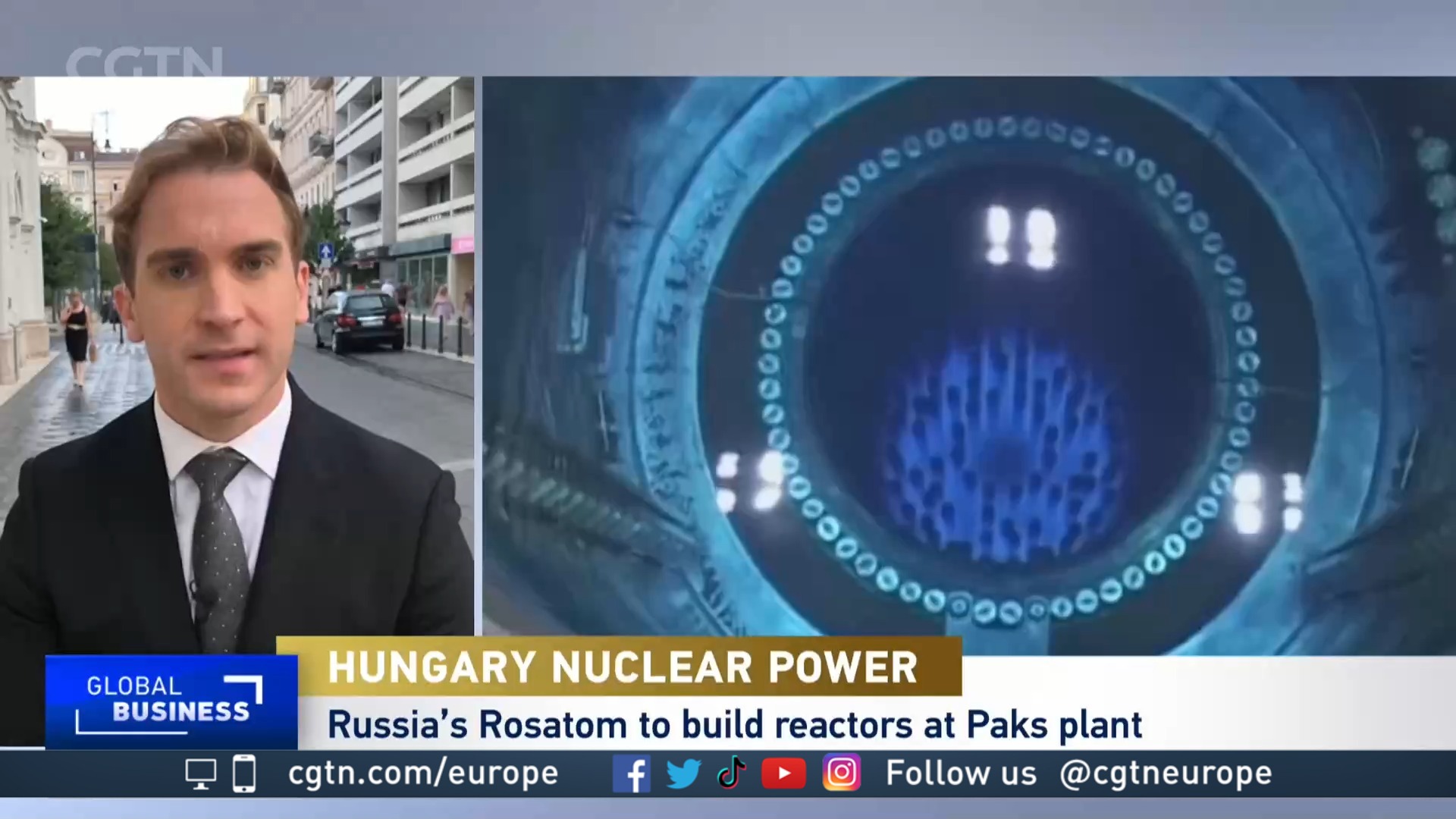
The Hungarian government has also given the green light to Russia's state-owned Rosatom to build two nuclear reactors for power generation. The permit approval will allow construction to go ahead, and the current target is to have them operational by 2030.
"We will build the nuclear plant, we have good experiences so far with the partners, we are using the most advanced technology on earth," Szijjarto said.
Rosatom also had plans to build a similar power station in Finland, but the Finnish consortium that was leading the project cancelled the contract in May following Russia's military incursion into Ukraine.

Search Trends
Copyright © 2020 CGTN. 京ICP备16065310号

Disinformation report hotline: 010-85061466
Copyright © 2020 CGTN. 京ICP备16065310号
Disinformation report hotline: 010-85061466
Copyright © 2020 CGTN. 京ICP备16065310号
Disinformation report hotline: 010-85061466