- Home
- China
- World
- Asia-Pacific
- Americas
- Europe
- Middle-East and Africa
- Politics
- Business
- Opinions
- Tech & Sci
- Culture
- Sports
- Travel
- Nature
- Picture
- Video
- Live
- TV
- Documentary
- Radio
- Specials
- Learn Chinese


Share






Copied
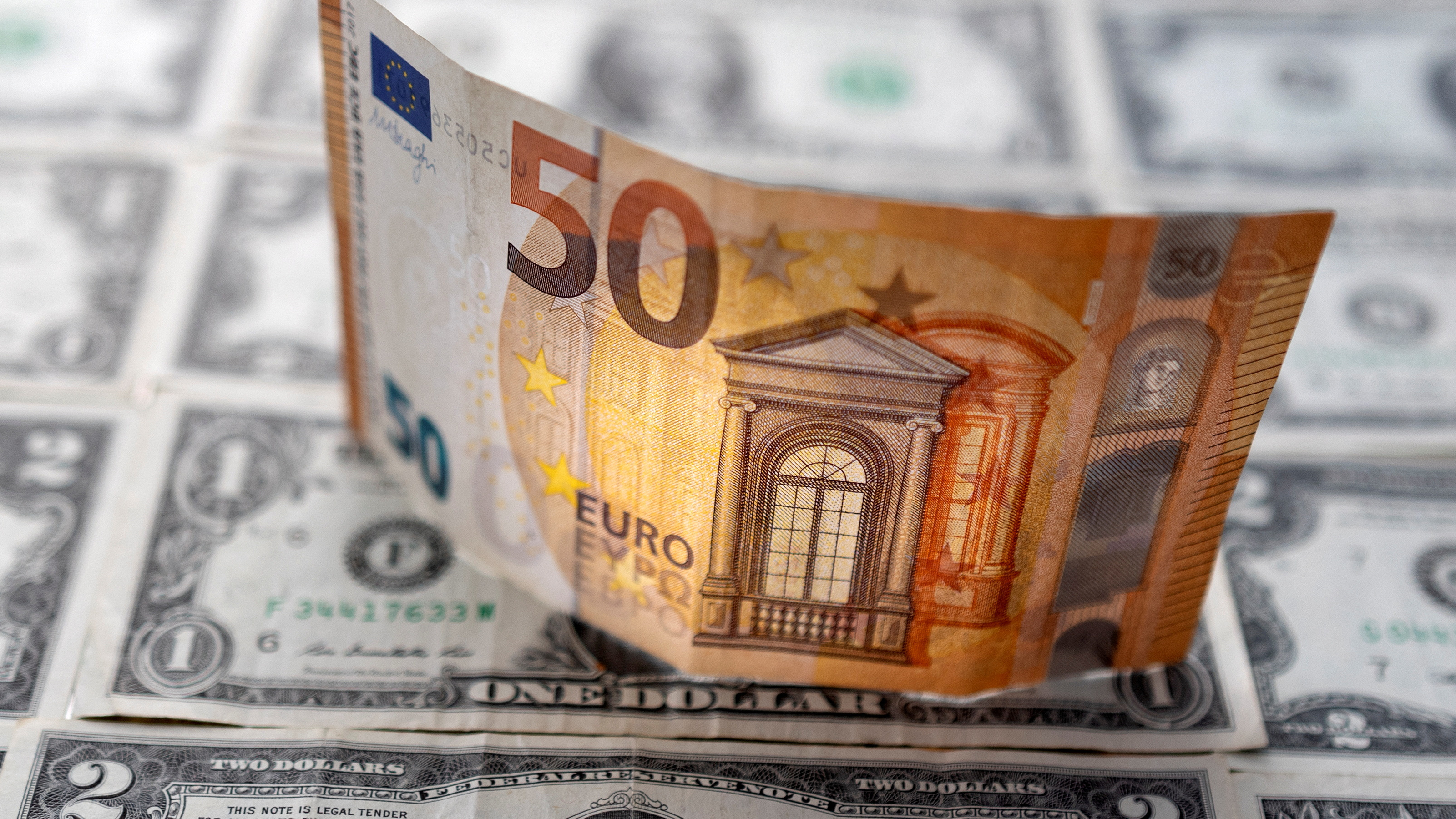
A Euro banknote is displayed on U.S. Dollar banknotes. /Reuters/Dado Ruvic/Illustration
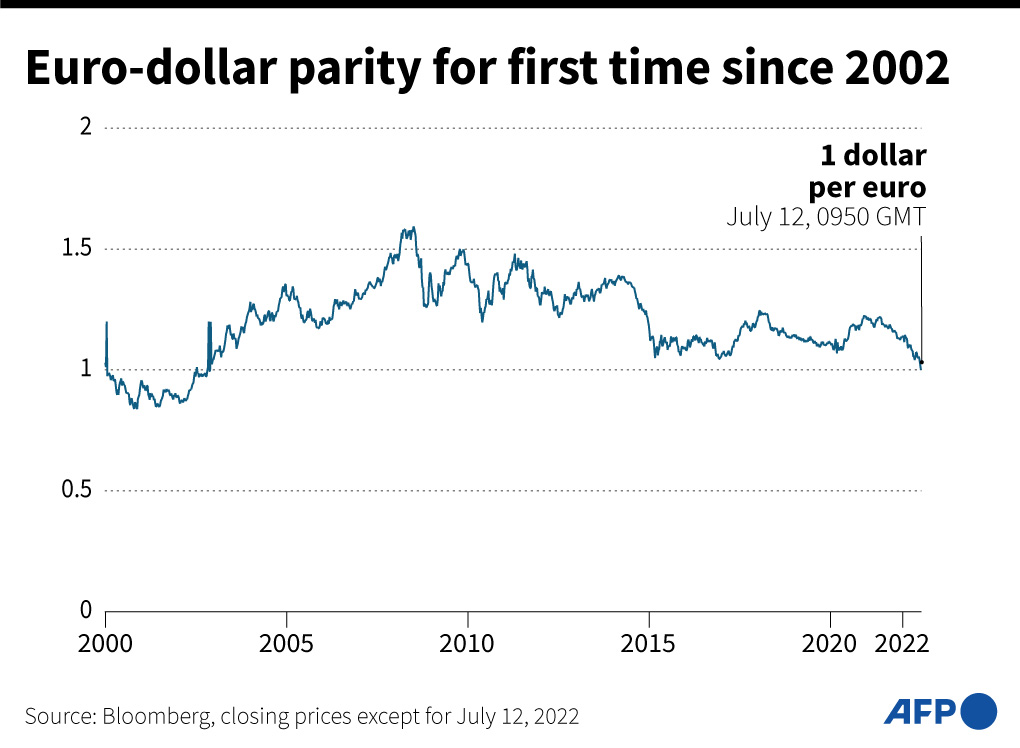
The euro fell on Tuesday, almost touching parity with the dollar, a threshold not crossed for two decades.
The drop comes as recession fears grow, triggered by the energy price crisis and a European Central Bank (ECB) rate rise campaign, which lags far behind that of the U.S. Federal Reserve (The Fed).
The euro has borne the brunt of dollar strength, falling as low as $1.00005, the weakest level since December 2002, and one that some analysts flagged as parity being tested.
READ MORE
Meet the Ukrainians rejecting their Russian language
Robo-arm could help millions
#MyFirstJob: How industry leaders started out
Neil Jones, head of currency sales at Mizuho Bank, said a large queue of 'buy euro' orders at $1 to either reduce cash exposure via purchasing spot or option structures was keeping the euro steady around those levels.
The euro came close to being tipped over the edge after a dire reading from the ZEW economic research institute, which showed German investor sentiment nosedived in July to -53.8 points from -28.0 in June.
The largest pipeline carrying Russian gas to Germany, the Nord Stream 1, began annual maintenance on Monday, with flows expected to stop for ten days. But governments and markets are worried Russia might extend the shutdown, exacerbating the energy crunch and tipping the economy into recession.
Analysts said the weak economy raises uncertainty over the ECB plan to raise interest rates, initially by 25 basis points (bps) in July, then by 50 bps in September.
"There doesn't seem to be a lot of support for euro at this point. It does not just relate to gas prices but to what seems to be a split within the ECB over how far they raise rates," said Sarah Hewin, senior economist at Standard Chartered.
"The expectation is for the (Fed) to do 75 bps this month and its aim seems to be to get to neutral (rates) as soon as possible, while with ECB, it's more of a mixed message given the backdrop over gas," she said.
The move towards parity has raised speculation of ECB intervention, which would be out of character. The bank last stepped in to support the single currency in 2000.
