- Home
- China
- World
- Asia-Pacific
- Americas
- Europe
- Middle-East and Africa
- Politics
- Business
- Opinions
- Tech & Sci
- Culture
- Sports
- Travel
- Nature
- Picture
- Video
- Live
- TV
- Radio
- Specials
- Learn Chinese

 Africa;Libya
Share







Copied
An early report from the UN's "fact-finding" mission to Libya has found "continuing serious human rights violations" and "a culture of impunity" in the country.
The report said many barriers still exist for Libyan society to overcome as it seeks to establish a social and political framework and peace process to end the chaos that has followed General Ghaddafi's death.
It includes reports of human rights abuses against Libyans and the large transitory migrant population that often use Libya as a route to try to get to Europe.
The advance report by the committee of three experts gives an indication of their full findings, due to be published in June.
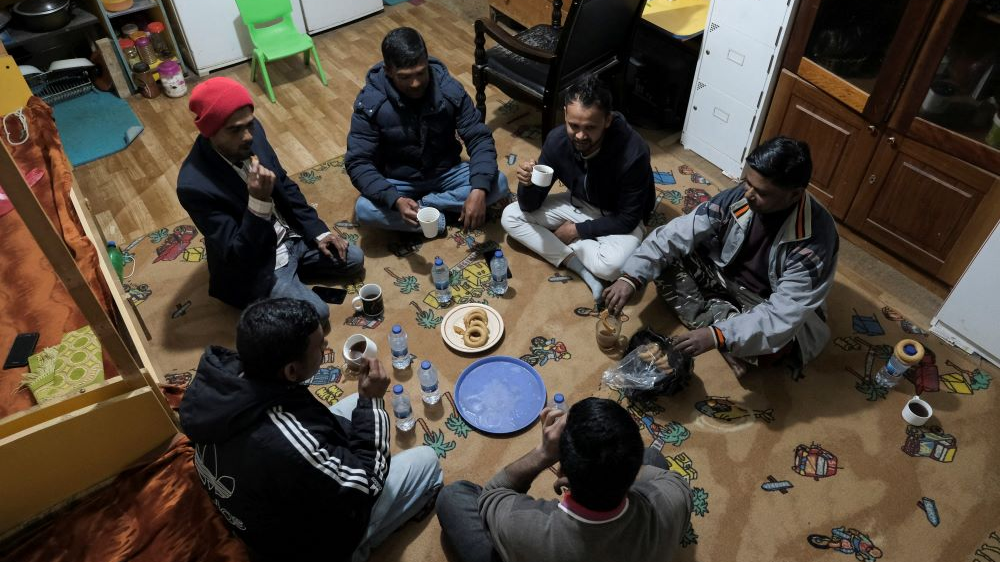
Bangladeshi migrants drinking tea in Benghazi, but others who make it to Libya are less fortunate./Esam Omran Al-Fetori/Reuters
What crimes has the mission found evidence of?
This report is not the first to allege that human rights abuses are happening in Libya, but it said "murder, torture, rape, persecution and enslavement" remain consistent.
Migrants make up a significant number of the people abused in Libya, but violence is not limited to those originating from outside the nation.
The report also detailed violations in Libya's prison system, including at sites which were supposedly closed down but continue to operate as part of a "secret prison network" controlled by a variety of militia groups.
"We have uncovered further evidence that the human rights violations experienced by detainees in Libya are widespread, systematic or both," stated Mohamed Auajjar, the Chair of the Fact-Finding Mission.
READ MORE
Human traffickers target desperate Ukrainian refugees arriving in Poland
Life behind Russian lines: Entering the newly captured towns of Donbas
How e-sports is turning Premier League Wolves into a global brand
Mass graves
Another worrying report mentioned in the first submission from the UN experts alleges the existence of a mass grave near the town of Bani Walid, south of Misrata and on the road to Tripoli.
Several migrants interviewed by the researchers mentioned the mass burial site, and one said they had personally been forced to bury others.
The mayor of the city denied the reports, and questioned the UN sources.
"We deny what was stated in the report... No group or organization has visited the city for a long time and we do not know where this group got its information," he told Reuters.
Chaloka Beyani, one of the mission's three members, described the situation for migrants in Libya as "very, very dire" and called for assistance to help Libya hold perpetrators accountable.
