- Home
- China
- World
- Europe
- Politics
- Business
- Opinions
- Tech & Sci
- Culture
- Sports
- Travel
- Nature
- Picture
- Video
- Live
- TV
- Specials

 Europe;
Share







Copied
TOP HEADLINES
• Russia's health ministry has given regulatory approval for the world's first COVID-19 vaccine, developed by Moscow's Gamaleya Institute, after less than two months of human testing. President Vladimir Putin says his own daughter has taken the vaccine.
• The World Health Organization is discussing with Russia the process for possible vaccine prequalification. "We are in close contact with Russian health authorities [but] prequalification of any vaccine includes the rigorous review and assessment of all required safety and efficacy data," said spokesman Tarik Jasarevic.
• Finland will introduce mandatory tests and quarantines for certain travelers after 24 of 157 passengers on plane from North Macedonia tested positive. The restrictions will apply to anyone arriving from a country with more than eight to 10 new COVID-19 cases per 100,000 inhabitants over the latest 14-day period – which currently applies to most countries, excluding 25 nations such as Italy, Japan, Greece and Norway where infections remain low.
• France has recorded the first significant rise in numbers of hospitalized COVID-19 sufferers since the end of the country's lockdown. The health ministry says the number was starting to increase again, rising to 5,405, after falling steadily from a high of 32,292 in April.
• Russia registered 4,945 new cases on Tuesday, pushing its national tally to 897,599, the world’s fourth largest. Another 130 deaths took the official toll to 15,131.
• Germany is considering requests from at least 14 firms for state aid amid the pandemic, according to an economy ministry document. This could see more the government take a stake in more German companies amid COVID-19 after decades of offloading stakes in national firms.
• The spread of the coronavirus could become harder to control without a collective effort, French Prime Minister Jean Castex has warned. He said the French public was becoming careless after official data recorded nearly 5,000 new COVID-19 cases from Saturday to Monday, bringing confirmed infections above 200,000.
• Spain's government defended its response to the coronavirus pandemic after the country overtook the UK to register the highest total number of cases in Western Europe. Health ministry data showed 1,486 new cases have taken Spain’s total to 322,980, compared with 311,641 UK cases.
• Britain's Heathrow Airport has renewed its call for COVID-19 testing at airports after reporting an 88 percent plunge in July passenger numbers due to ongoing restrictions on travel, which it said were strangling the UK economy.
• At least 5.7 billion doses of coronavirus vaccines currently in development have been pre-ordered around the world, despite not one having yet been officially cleared for mass use.
• Aerospace giant Boeing had 43 cancelled orders of its 737 MAX airplanes in July, with the pandemic ensuring that it failed to secure new orders for any aircraft last month.
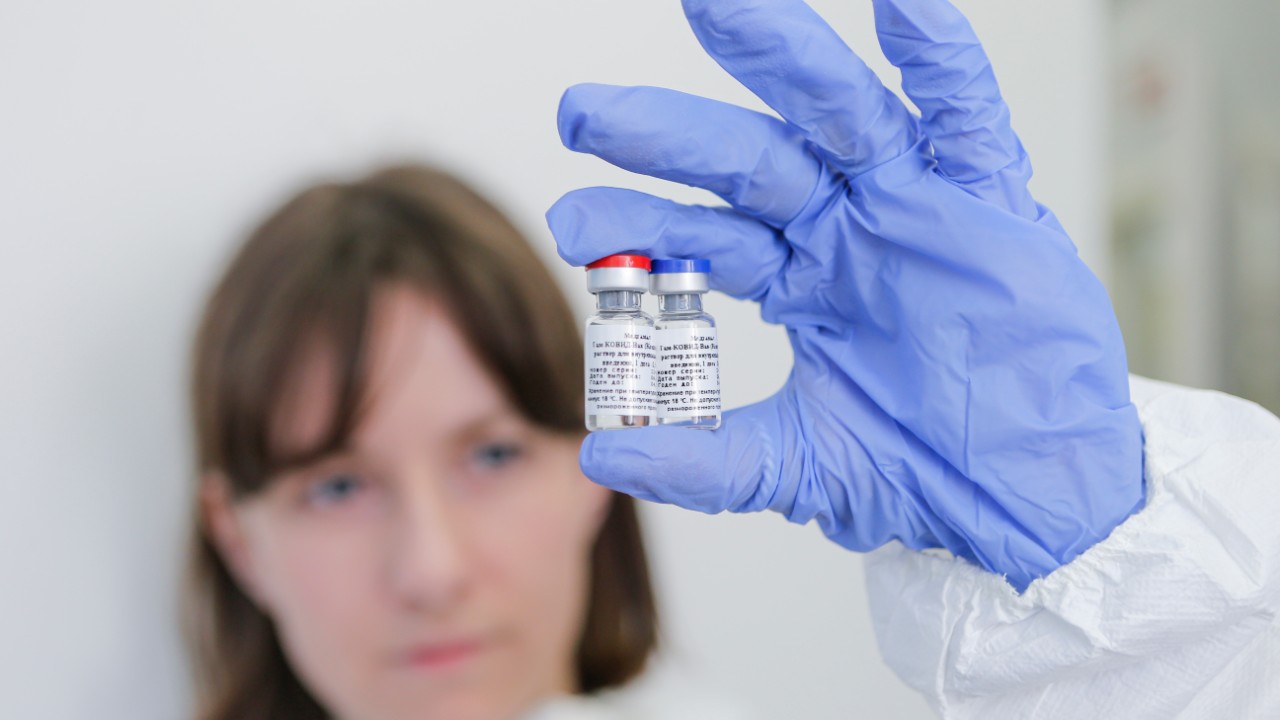
The vaccine against the coronavirus, developed by the Gamaleya Research Institute of Epidemiology and Microbiology. /Handout/Russian Direct Investment Fund/AFP
ACROSS EUROPE
Isobel Ewing in Budapest
Schools in Hungary are preparing to open in September, with the government lining up a protocol of epidemiological guidelines to be released soon.
Péter Horváth, president of the National Pedagogical Faculty, said the complete school closure that took place in March cannot be repeated.
Horváth said parents are overwhelmed and those who are farmers will be unable to manage children at home at what will be a busier time of year for them. He also said it's "inconceivable" for new entrants to start school digitally without personal contact.
Horváth's view is that instead of nationwide regulations, there should be individual measures for each region, which are maintained according to the degree of infection.
Ross Cullen in Paris
France is currently monitoring a sudden rise in the number of cases of the coronavirus in French Polynesia. The Pacific territory reported 43 new cases of COVID-19 in the past five days, compared with a total of around 60 cases on the islands between March and July.
Health authorities believe the virus has been reintroduced by tourists and by civil servants. Each year, teachers and law enforcement officials in French Polynesia are replaced by newcomers from France. Several cases have also been detected among the nursing staff.
This comes as mainland France has now posted the first increase in the number of people hospitalized for a COVID-19 infection since 24 May. On Monday, the health ministry said the total number of hospitalizations had risen to 5,045.
Andrew Wilson in UK
UK Prime Minister Boris Johnson is promoting further NHS spending for the winter. However, he faces concerns over schools' final exam results on Thursday and research ahead of schools' reopening in September that suggests older children may readily transmit the virus to adults.
Pupils in Scotland start their phased returns to their classrooms after apologies from First Minister Nicola Sturgeon about this year's chaotic final exam results.
New unemployment figures are largely unchanged year on year, but payrolls suggest more than 700,000 people have lost jobs and simply aren't looking for new ones yet.
Finance minister Rishi Sunak's "Eat Out to Help Out" meal discount scheme was used more than 10 million times last week, with 83,000 establishments now taking part.

John Bevir in Frankfurt
Experts in Germany have said the recent rise in coronavirus infections is down to small rises everywhere, rather than a few hotspots around the country.
In mid-June, when there was a major outbreak connected to a slaughterhouse in North Rhine-Westphalia, a contentious lockdown and a restriction in travel were used to target the problem. But with new infection rates now close to 1,000 on most days, there are warnings that reducing that number is not possible with a few targeted tough measures, instead requiring a nationwide effort.
The president of the public health agency that collates the data on coronavirus infections believes the increase is due to people not obeying the rules on face masks, social distancing and hand-washing.
Toni Waterman in Brussels
As an outbreak of COVID-19 comes under control in Antwerp, cases are rising fast in the Brussels region – up 164 percent in the past week.
The infection rate is now at 44.9 per 100,000 inhabitants and once that figure breaches the 50 mark, masks become mandatory region-wide. At least seven municipalities including Anderlecht, Schaerbeek and Brussels-City, have already passed the threshold.
It's now been more than two weeks since the government tightened measures nationwide and health experts say if infection numbers don't stabilize, even stricter measures will be needed, including a potential second lockdown.
"There are no longer many options," said virologist Marc van Ranst during a press conference. "Then you quickly end up with 'lockdown-like' measures – and nobody wants that."
FROM OUR GLOBAL COLLEAGUES
CGTN Europe podcast: Notes on a pandemic: New hope for the planet
CGTN China: Chinese mainland reports 44 new COVID-19 cases
CGTN America: Trump tries to sidestep COVID-19 relief deadlock
CGTN Africa: Namibia auctions fishing quota to raise money for COVID-19 medicines
Sign up here to get the COVID-19 Europe bulletin sent directly to your inbox
CGTN Europe has been providing in-depth coverage of the novel coronavirus story as it has unfolded. Here you can read the essential information about the crisis