- Home
- China
- World
- Europe
- Politics
- Business
- Opinions
- Tech & Sci
- Culture
- Sports
- Travel
- Nature
- Picture
- Video
- Live
- TV
- Specials


Share






Copied
Britain on Friday formally ruled out the possibility of an extended post-Brexit transition period, leaving business in uncertainty again.
Michael Gove, the cabinet office minister, said in a tweet that he had formally closed down any possibility of prolonging the arrangement, which had maintained European Union (EU) rules and privileges for the UK following its official departure from the bloc at the beginning of this year.
"I formally confirmed the UK will not extend the transition period and the moment for extension has now passed. On 1 January 2021 we will take back control and regain our political and economic independence," he said.

Michael Gove arrives at Downing Street in London, Britain, February 13, 2020.
Britain will introduce new border controls in three stages up until July 1, 2021. From January 2021, traders importing standard goods, covering everything from clothes to electronics, will need to prepare for basic customs requirements and will have up to six months to complete customs declarations and tariff payment.
Read more:
EU's Barnier warns UK it can't 'cherry pick' benefits in Brexit negotiations
From April 2021, all products of animal origin, for example meat, pet food, honey, milk or egg products, and all regulated plants and plant products will also require pre-notification and the relevant health documentation.
From July 2021, traders moving all goods will have to make declarations at the point of importation and pay relevant tariffs.
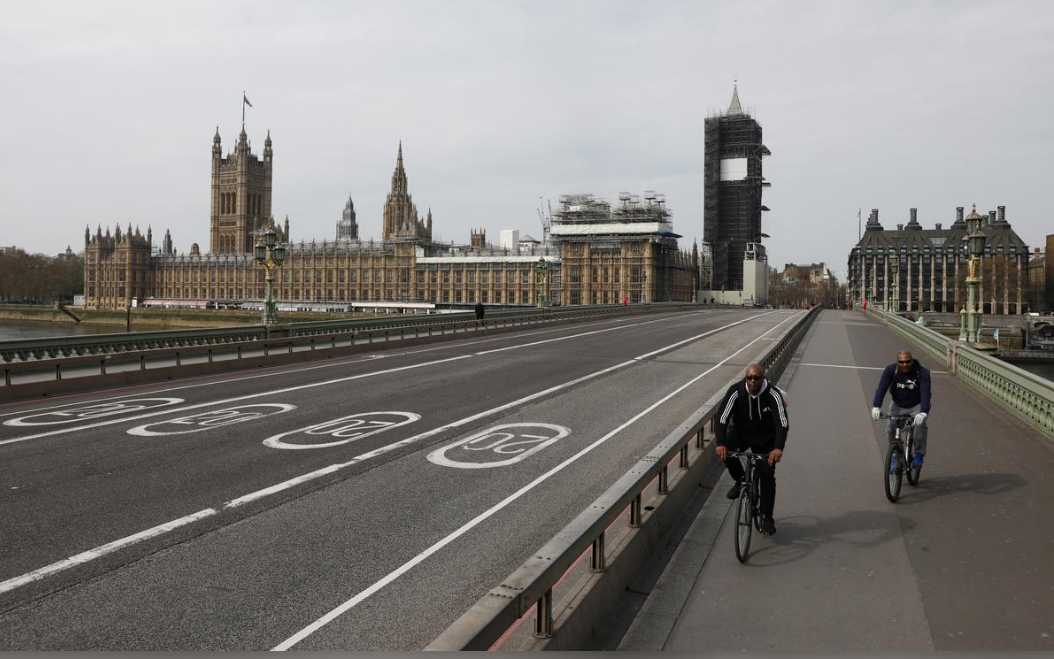
Cyclists ride over an almost empty Westminster Bridge, as the spread of COVID-19 continues in London, Britain, April 8, 2020. /Reuters
On Thursday, Gove told MPs that the British government is not gambling with the EU over Brexit despite the stalled trade talks between the two sides, insisting that Britain will not extend transition period beyond December 31.
"Under no circumstances will the government accept an extension. Indeed, we have a domestic law obligation not to accept. Extending would simply delay the moment at which we achieve what we want and what the country voted for ... our economic and political independence," he said.
Read more:
Brexit: What is the 'level playing field' and how likely is agreement?
Britain and the EU concluded their fourth round of talks last week, during which they made no progress on the most difficult areas where differences of principle are most acute, notably on fisheries, governance arrangements and the so-called level playing field.
The focus will now switch to a crucial meeting next Monday between British Prime Minister Boris Johnson and President of the European Commission Ursula von der Leyen.
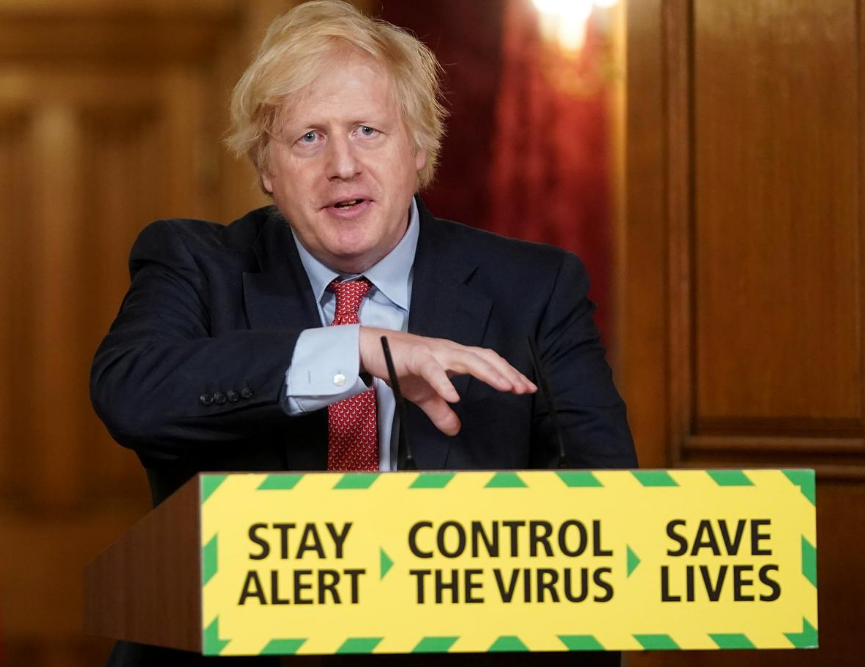
Britain's Prime Minister Boris Johnson speaks during a daily briefing to update on the COVID-19 outbreak at 10 Downing Street in London, Britain, June 10, 2020. /Reuters
The UK government had faced calls to relax its stance and give businesses more time to recover from the coronavirus lockdown. As the two parties have made little progress towards a trade deal, the end of the transition period is likely to cause significant disruption for international companies, which will have to adapt to different rules and probably face tariffs for moving goods across the English Channel.
As one of the worst-hit major economies during COVID-19, UK's GDP has contracted by more than 20 percent in April.
However, Boris Johnson's 2019 election victory was based around a promise to "Get Brexit done" and he appears determined to stick to his timetable.
(With input from agencies)
(Cover: A sign is pictured as British flags flutter at Parliament Square on Brexit day in London, Britain, January 31, 2020. /Reuters)