- Home
- China
- World
- Europe
- Politics
- Business
- Opinions
- Tech & Sci
- Culture
- Sports
- Travel
- Nature
- Picture
- Video
- Live
- TV
- Specials

 Europe;Europe
Share







Copied
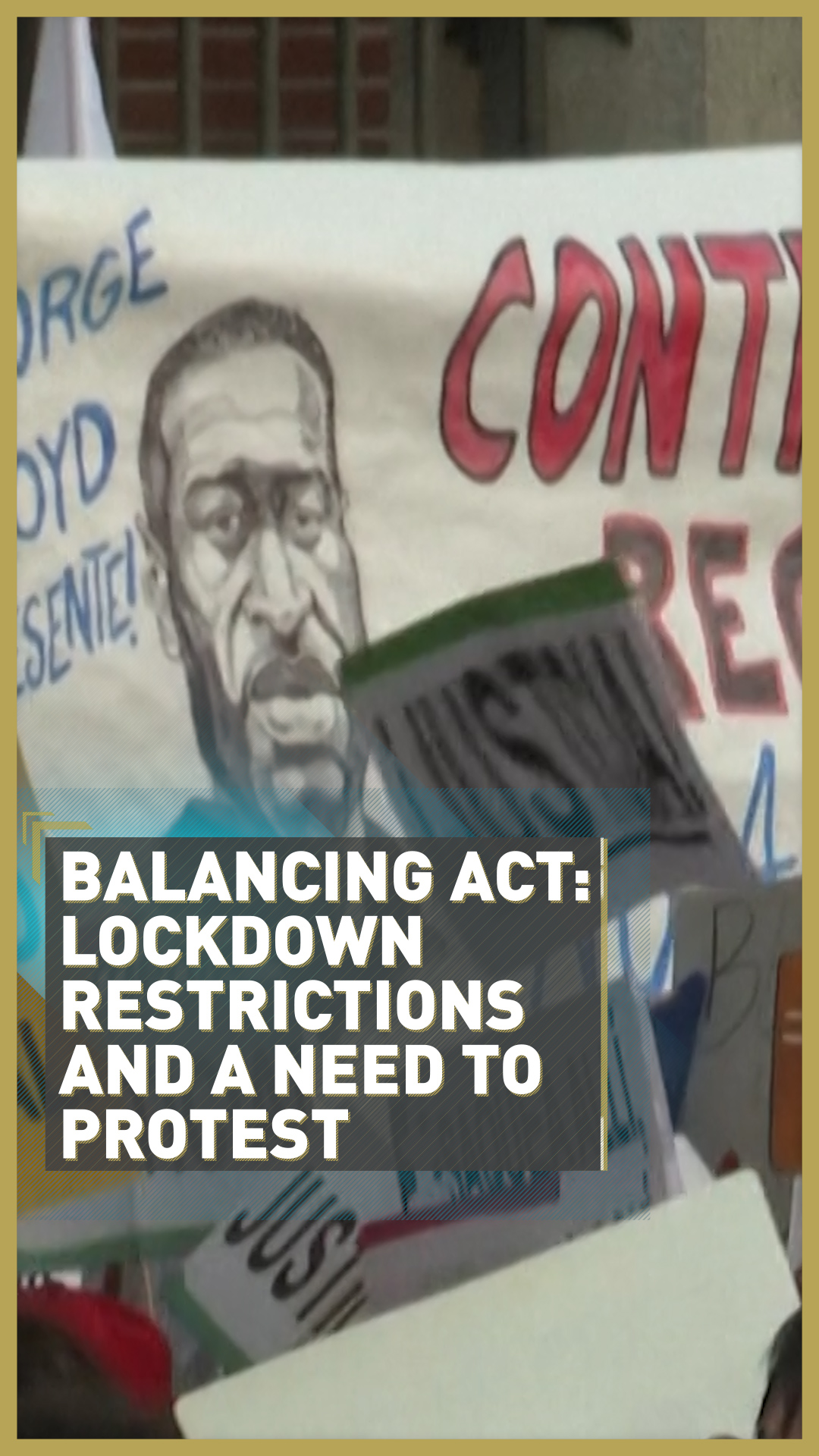
Fears that demonstrations could cause a new spike in COVID-19 cases are supported by clear instructions from the UK government scientific advisory group SAGE – that they should not be allowed due to the health risk.
Some Black Lives Matter campaigners, though, believe the anti-racism cause cannot be stopped for the pandemic and the moment needs to be seized.
A report from SAGE looking at security and policing, from early May, states that protests are restricted due to COVID-19 and this is "deemed proportionate given the health risks."
Mass anti-racism protests have been taking place around the UK and Europe after the killing of George Floyd, a black man, as he was being arrested by a white police officer on 25 May in Minneapolis, U.S..
Barrington Reeves, creative director for Too Gallus, a branding firm, and who is a Black Lives Matter campaigner, said the coronavirus outbreak is nothing compared to racism that has been suffered for centuries.
He told CGTN Europe: "The effect that COVID-19 has is a drop in the ocean compared to the trauma that racism has caused for the past 400 years, although it is not ideal that the two do pass over and cross-over, we just have to take it on the chin, we can't simply delay a full civil rights movement because of a pandemic."
It has been a police balancing act to control the crowds and at the same time not encourage further protests by clamping down on the action.
The UK government reiterated its instructions that gatherings of more than six people shouldn't take place ahead of last weekend, when many large-scale protests took place up and down the country, but police generally looked to control the demonstrations rather than break them up.
Home Secretary Priti Patel tweeted beforehand: "Please for the safety of us all, do not attend large gatherings – including protests – of more than six people this weekend."
But in another social media post, her message was less clear: "Protests must be peaceful and in accordance with social-distancing rules."
SAGE instructions, published in early May by the Home Office, pointed to the potential that restricting protests could actually lead to more and cause more trouble.
It stated: "Indeed, such restrictions are highly likely to be counter-productive, undermine trust and legitimacy in authority and amplify defiance and non-compliance."
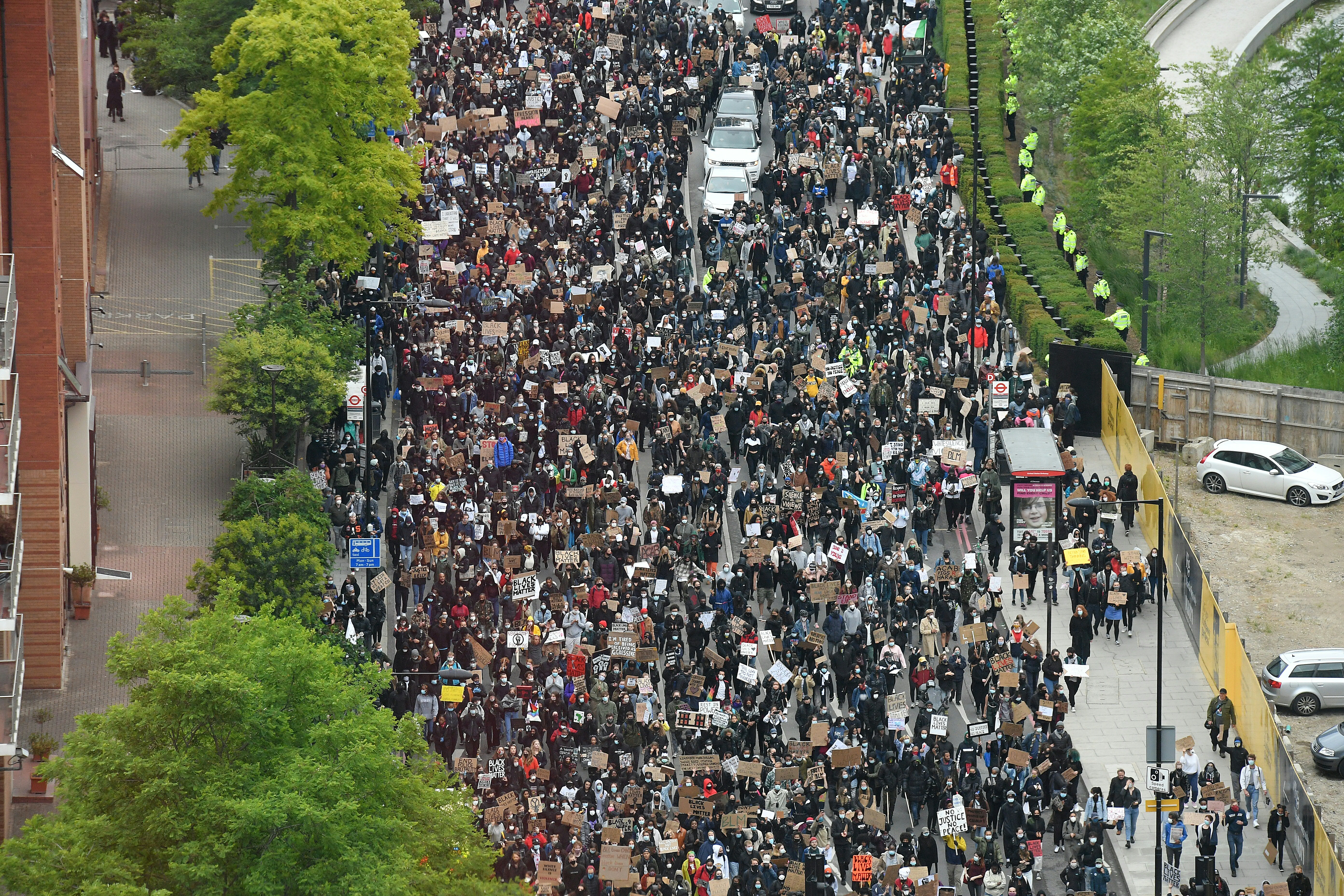
There have been mass protests following the death of George Floyd in the U.S. /Justin Tallis/AFP
It was categoric about the dangers that a mass gathering could cause by spreading the virus.
"Participating in a protest is currently in breach of the COVID-19 regulations. While this does infringe on Articles 10 and 11 of the Human Rights Act 1998 (respectively, 'Freedom of Expression' and 'Freedom of Assembly and Association'), this is deemed proportionate, given the health risks," it read.
Protestors, though, felt that the mood of the people couldn't be ignored.
"It's definitely a tricky one ... particularly when we were organizing the protests on Sunday. Obviously there were strict government guidelines that it shouldn't be going ahead but at times like this you simply can't ignore it," said campaigner Reeves.
"Racism is a pandemic that we have been suffering for 400 years and while people are scared to leave the house to go to the shops, well, black people have been scared to leave the house in fear of being murdered, or being disgraced or being racially abused, or mentally abused or physically abused for hundreds of years."
Check out The Pandemic Playbook, CGTN Europe's major investigation into the lessons learned from COVID-19
Video editing: Natalia Luz