- Home
- China
- World
- Europe
- Politics
- Business
- Opinions
- Tech & Sci
- Culture
- Sports
- Travel
- Nature
- Picture
- Video
- Live
- TV
- Specials

 Europe;Europe
Share







Copied
TOP HEADLINES
- The European Commission unveiled its plan for a €750 billion ($825 billion) recovery fund to help EU countries out of their pandemic slump. Italy and Spain are to receive much of the money ($345 billion) in grants and loans as the worst-affected countries.
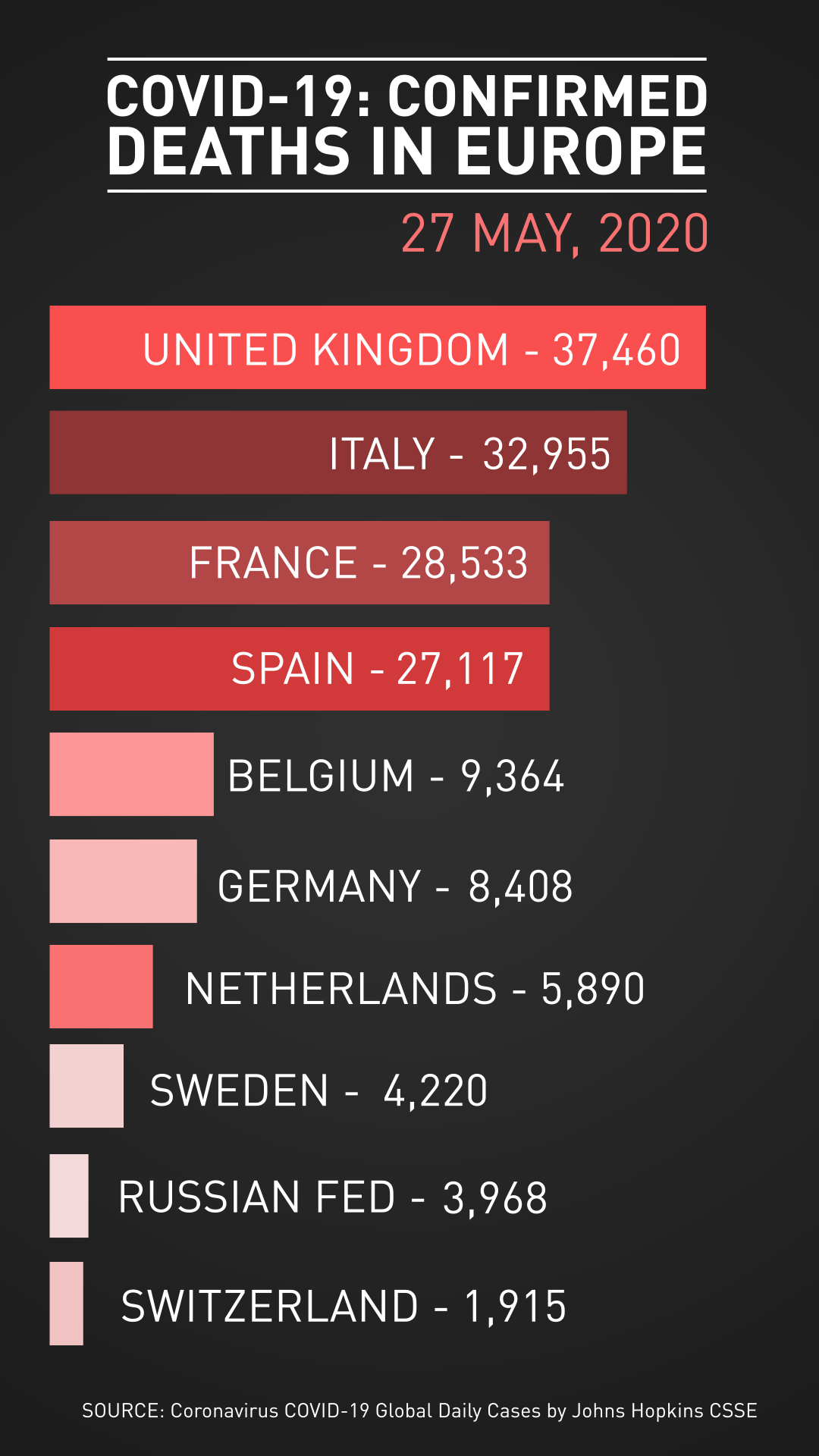
- Spain's government has declared a 10-day official mourning period from Wednesday to honor the nearly 30,000 who died from the coronavirus. Flags will fly at half-mast all over the country's public buildings and navy ships, and the period will end with a ceremony led by King Felipe.
- France has banned the use of hydroxychloroquine as a treatment for COVID-19 patients, becoming the first country to do so since the World Health Organization paused its trial of the drug on patients, citing safety concerns.
- Britain's prime minister, Boris Johnson, will appear before the Commons Liaison Committee today, to answer questions about his adviser Dominic Cummings' controversial lockdown trip and about how the government has handled the coronavirus crisis.
- Poland will allow residents to go outside without masks from 30 May, reopen cinemas, theaters and gyms on 6 June and allow public gatherings of more than 150 people in the coming days as part of its steady easing of restrictions.
- Greece will allow travelers from 20 to 25 countries including Germany, Cyprus and Israel to visit from mid-June without having to be quarantined, as part of plans to gradually ease lockdown travel restrictions and save the struggling tourism industry.
- Germany's government and its state premiers have agreed to extend social distancing rules until 29 June to contain the pandemic. Public gatherings of up to 10 people will also be allowed from 6 June.
- Denmark's central bank has said Danish banks are well-capitalized and able to withstand a severe but temporary economic downturn.
- Norwegian retail sales soared in April, the country's statistics agency has said, defying expectations of a decline amid the pandemic.
- Switzerland will allow public and private events of up to 300 people and spontaneous gatherings of up to 30 people from 6 June, in further easing of lockdown restrictions. Its borders with France, Germany and Austria will open and all travel restrictions lifted from 15 June.
- Bulgaria is to allow restaurants, bars and cafes to reopen at full capacity from 1 June as the Balkan country further eases restrictions to allow tourism-dependent businesses to reopen ahead of the summer season.
- The UK's finance ministry said the number of jobs covered by its wage subsidy scheme for temporarily laid-off workers rose to 8.4 million workers as of 24 May, up from 8 million a week earlier. The value of claims rose from £11.1 billion ($13.6bn) to £15 billion ($18.4bn).
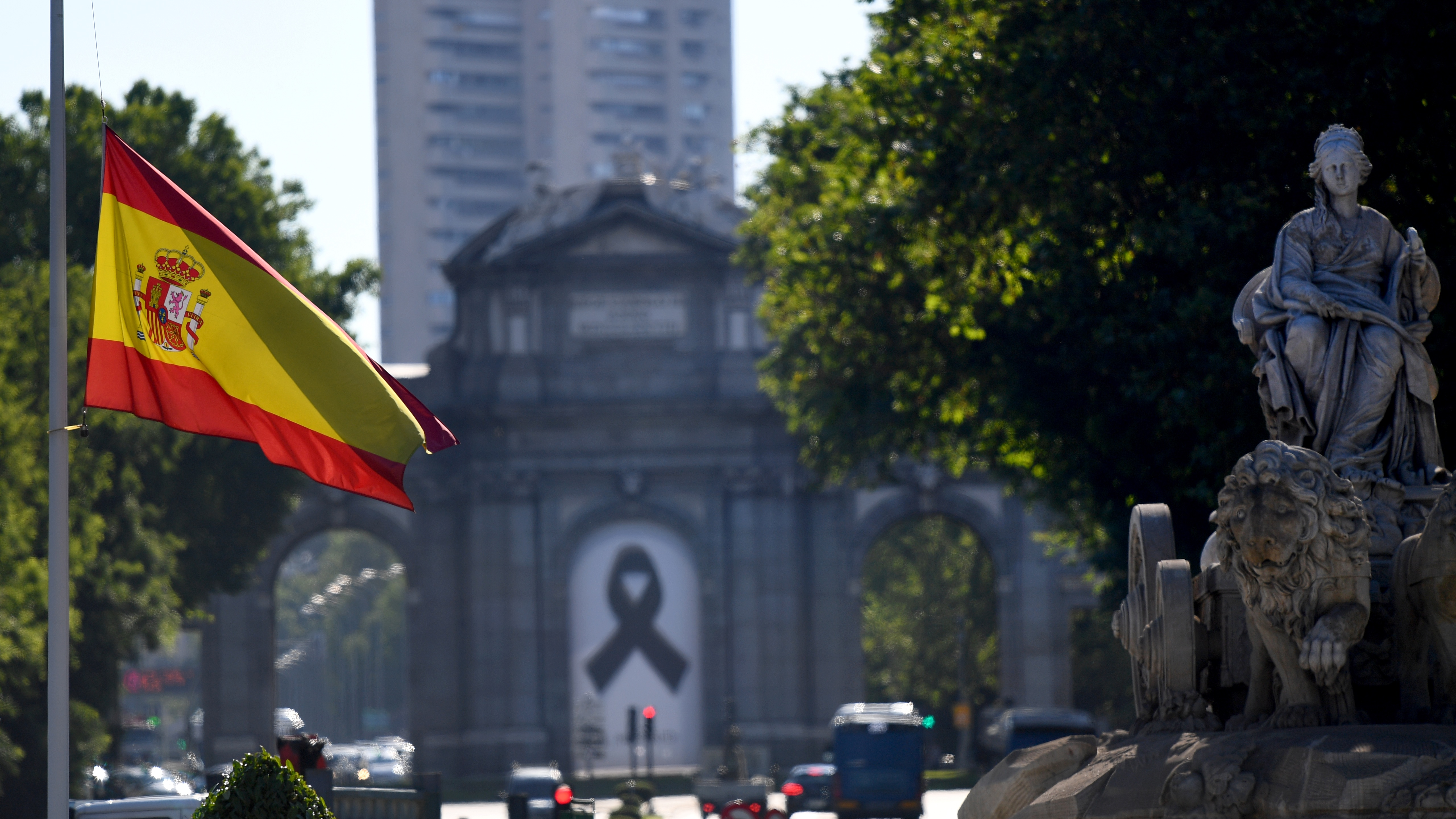
Flags in Spain fly at half-mast and black ribbons are put up to mark the country's 10-day mourning period for the lives lost to the coronavirus. /Gabriel Bouys/AFP
ACROSS EUROPE
By Nicole Johnston in London
Britain's prime minister, Boris Johnson, will be questioned by senior members of parliament on Wednesday over the government's COVID-19 response.
This comes at a time when members of his own party have criticized Johnson's senior aide, Dominic Cummings, for driving more than 400 kilometers with his family during lockdown, many regard it as flouting the rules of lockdown.
More than 40 Conservative MPs have called for Cummings to resign, but Johnson has given him his full support. The controversy continues to dog the government.
Meanwhile, the UK has revealed that future localized outbreaks or "flare-ups" of COVID-19 could lead to local lockdowns.
The health secretary, Matt Hancock, says this will be part of the country's "test and trace" system.
The UK has also announced two billion items of personal protective equipment will be manufactured in the country.
By Alex Fraser in Milan
Italy awaits to see the details of the European Union's much-anticipated recovery fund, to be announced today. In a letter to newspaper Corriere della Sera, the prime minister, Giuseppe Conte, laid out his plans for implementing any rescue fund from Brussels. They include using the money to boost strategic infrastructure, a transition to sustainable energy sources, tax and justice reform.
The issue of the EU and whether any fund is paid using loans or grants is divisive in Italy. Conte has pushed against taking loans via a European Stability Mechanism. Any compromise on agreeing to a fund with strict conditions attached will have major implications domestically – Italy's right wing will treat it as a capitulation of sovereignty and many lawmakers within Conte's government coalition partner Five Star will also be skeptical.
Anti-EU sentiment has grown during this pandemic, with some Italians feeling let down by what they see as a lack of solidarity from northern member states to those hit harder by the virus in Europe's south.
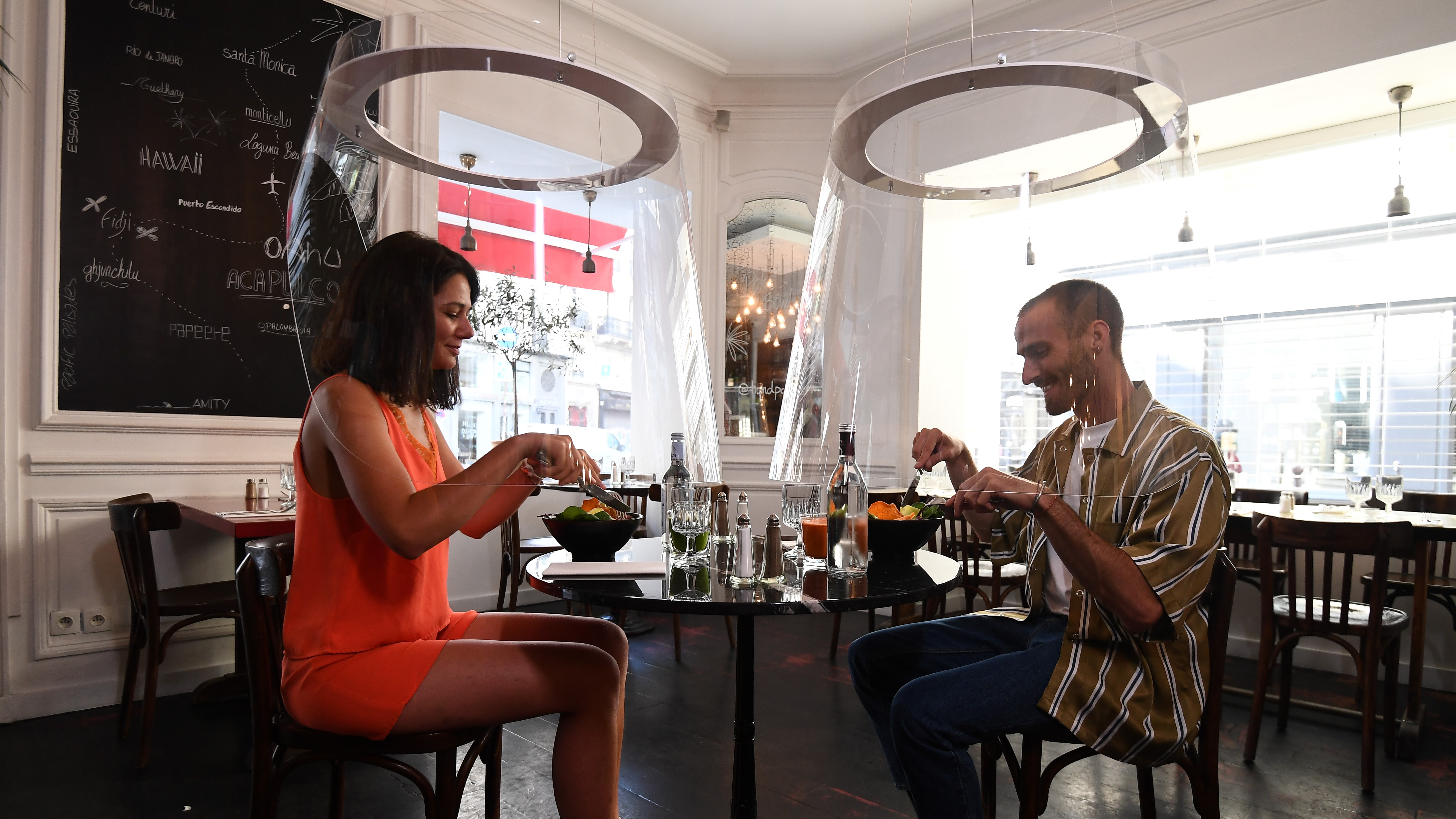
Restaurants such as this one in Paris, France, are finding innovative ways to ensure social distancing rules are met as lockdown restrictions are slowly eased. /Alain Jocard/AFP
By Ira Spitzer in Berlin
Germany's federal and state governments have agreed to extend restrictions on gatherings until 29 June.
Multiple states, though, are reserving the right to make their own decisions. The restrictions allow for meetings of fewer than 10 people or between members of two separate households.
According to media reports, Germany is considering lifting its travel warnings for the the European content on 15 June. There has been a global warning on travel in place since 17 March. The travel industries in countries such as Spain, Italy and Greece depend heavily on German tourists.
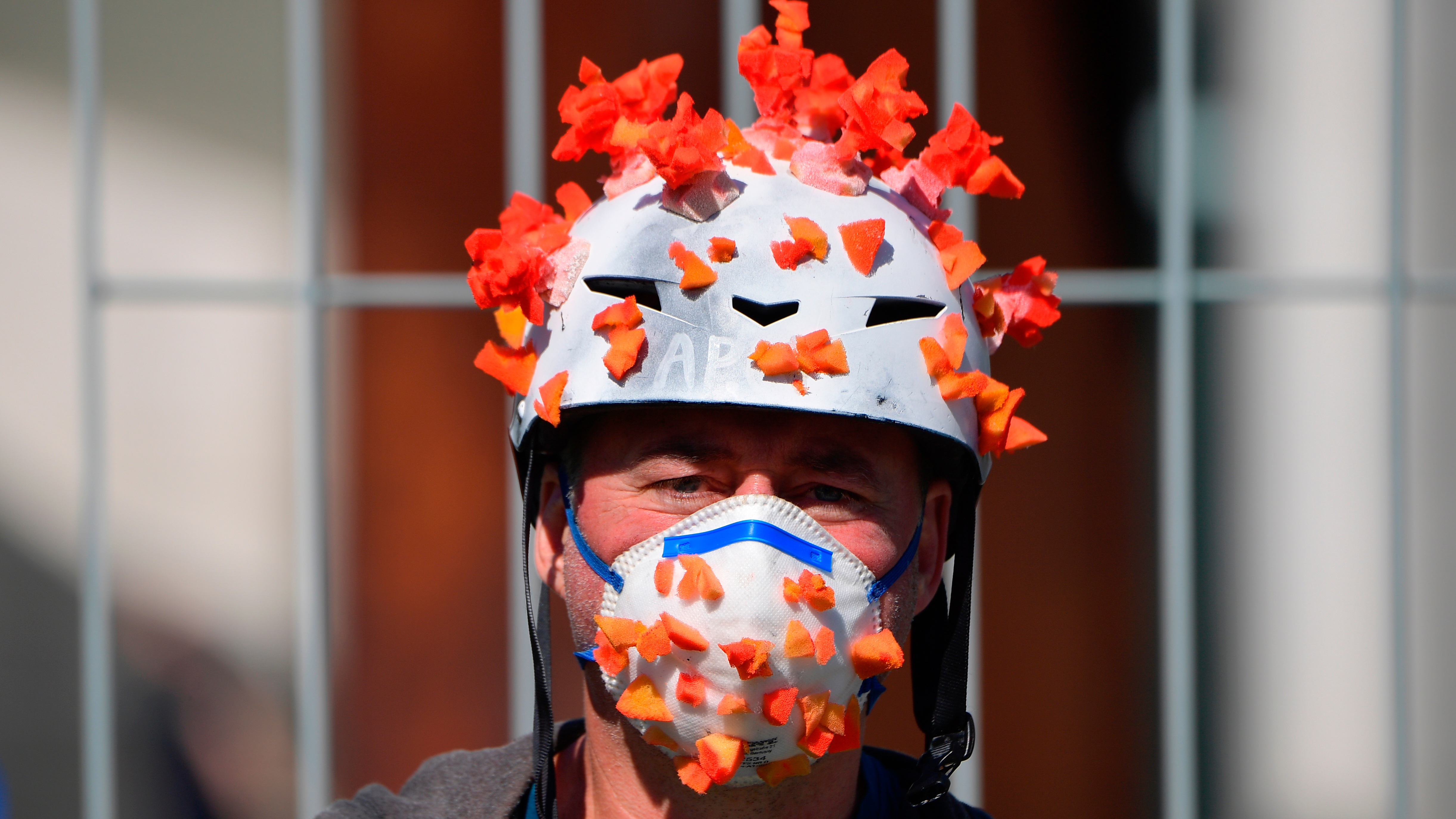
Demonstrators stand in front of the Chancellery in Berlin in a protest against the government's plan to support German airline Lufthansa. /Tobias Schwarz/AFP
By Aljoša Milenković in Belgrade
Serbia is slowly emerging from a lengthy lockdown. The latest COVID-19 numbers are bringing a sigh of relief to the nation. With only 34 new coronavirus infections and no deaths as of Tuesday, the country is now focusing on economic recovery.
More than four million of its citizens applied for the government assistance of 100 euros ($109 dollars). Half a million have already received that amount of money.
In the country, which has an average monthly salary of around $400, the government wants to boost the spending and kick start the economy. But critics say the move only aims to boost the ruling party ratings ahead of 21 June parliamentary elections.
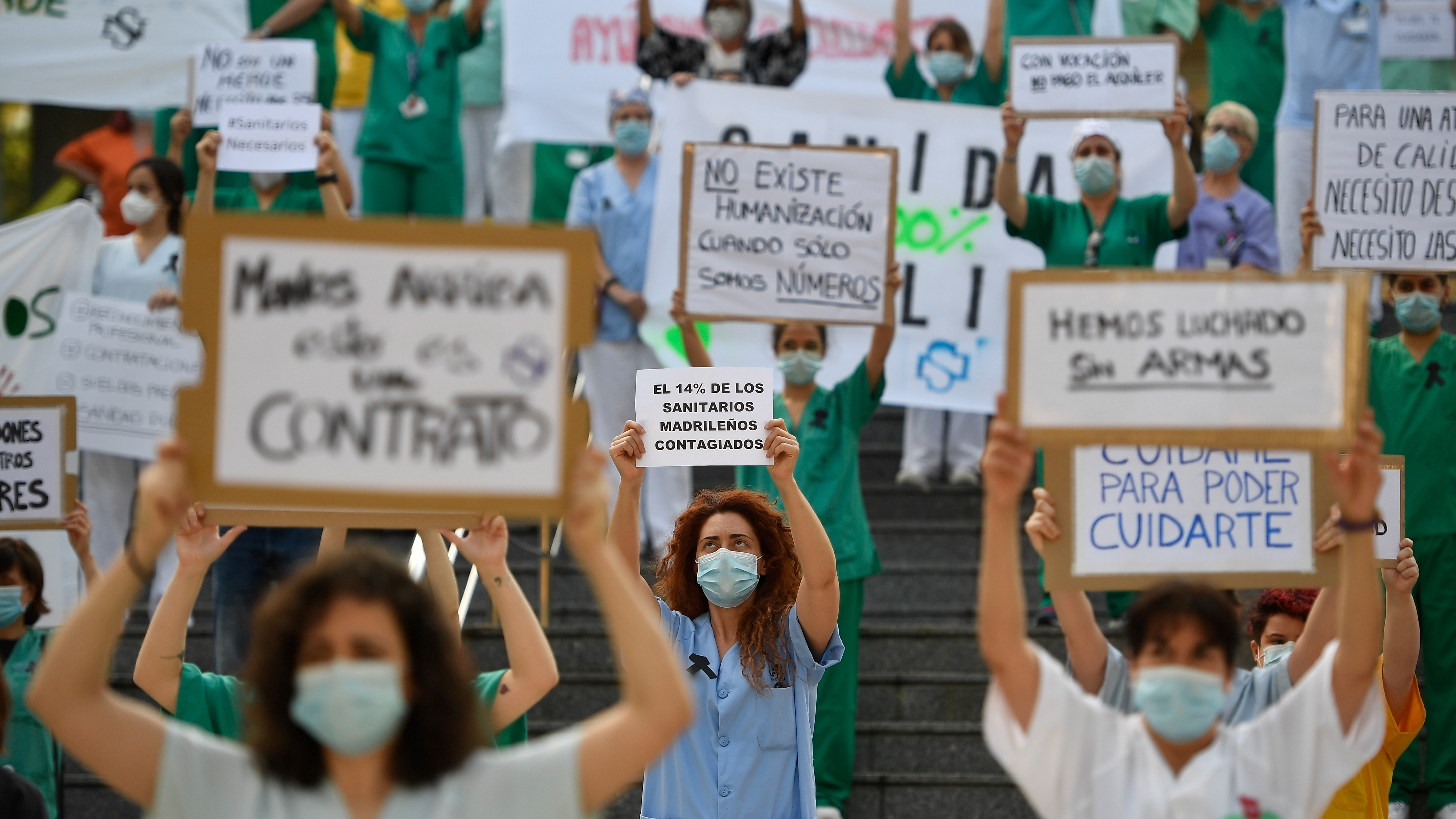
Healthcare workers protest in Madrid as Spain starts its 10-day mourning period for the lives lost during the pandemic. /Pierre-Philippe Marcou/AFP
By Toni Waterman in Brussels
European Union
All eyes will be on European Commission president Ursula von der Leyen today as she unveils Brussels' two-pronged plan to help the bloc recover from the worst ever recession. She'll present an updated long-term budget and a new pot of money to help revive the bloc's coronavirus-battered economy.
Sustainability is expected to be at the heart of the recovery fund, something nearly all EU countries can get behind. But details around how the money will be distributed – grants or loans? And how to repay the funds – new taxes? Will lead to weeks, if not months, of acrimonious debate.
France and Germany have already thrown down their markers, unveiling a $545 billion plan to issue grants to the most crippled countries. But their frugal foes in the north – Denmark, the Netherlands, Austria and Sweden – have rejected the notion of cash handouts. They've put forward a rival proposal which leans on cheap loans.
Belgium
German carrier Lufthansa may be riding high after securing a $9.9 billion deal with Berlin to stay afloat, but its subsidiary Brussels Airlines is days away from running out of money. All of its planes have been grounded for weeks and its staff temporarily laid off. The carrier has asked the Belgian government for a $320 million lifeline, but Belgium is worried the money will be usurped by the larger parent, Lufthansa.
Both sides thought they had reached a compromise: the government would hand over the cash in exchange for a seat on Brussels Airlines' board. But that's reportedly not sitting well with the European Commission, which needs to approve all forms of state aid.
Time is running out and the hundreds of Brussels Airlines workers in Belgium are wondering if Lufthansa, now flush with cash, will come to their rescue.
FROM OUR GLOBAL COLLEAGUES
- WHO says the Americas are new COVID-19 epicenter as deaths surge in Latin America
- Japan eyes fresh $1.1 trillion stimulus to combat pandemic pain
- VIDEO: What will the airports look like after the COVID-19 pandemic?
Subscribe here to get the COVID-19 Europe bulletin sent directly to your inbox.
CGTN Europe has been providing in-depth coverage of the novel coronavirus story as it has unfolded. Here you can read the essential information about the crisis.