- Home
- China
- World
- Europe
- Politics
- Business
- Opinions
- Tech & Sci
- Culture
- Sports
- Travel
- Nature
- Picture
- Video
- Live
- TV
- Specials


Share







Copied

The Madrina Food bank in Cusco, Madrid has been providing food for those who need it for years. It's become a lifeline for some of the most vulnerable members of society. However, in recent weeks it's become even more important, following the outbreak of the COVID-19 pandemic.
As of 27 April, nearly 8,000 people in Spain's capital had died from the coronavirus, making it the country's epicenter.
The capital has also borne the brunt of the economic downturn, brought on in part by the lockdown. The country's unemployment rate rose to 14.4 percent in the first quarter of 2020, with 121,000 people losing their jobs in that period, many of them in Madrid.
READ MORE: COVID-passports: EU searches for ways to save the tourism industry
The economic chaos resulted in larger queues at the dozens of food banks organized by the Madrina Foundation. The charity's president, Conrado Gimenez, who has run food banks for more than 20 years, says he hasn't seen anything like this before.
"At the beginning of the crisis, we saw poor families with nothing, undocumented immigrants or people who worked in cash-only paid jobs. But now we can see middle-class people turning up. These are people you would never have assumed would come here before, but due to unemployment and temporary lay-offs, they have no money and have children to take care of," he told CGTN Europe.
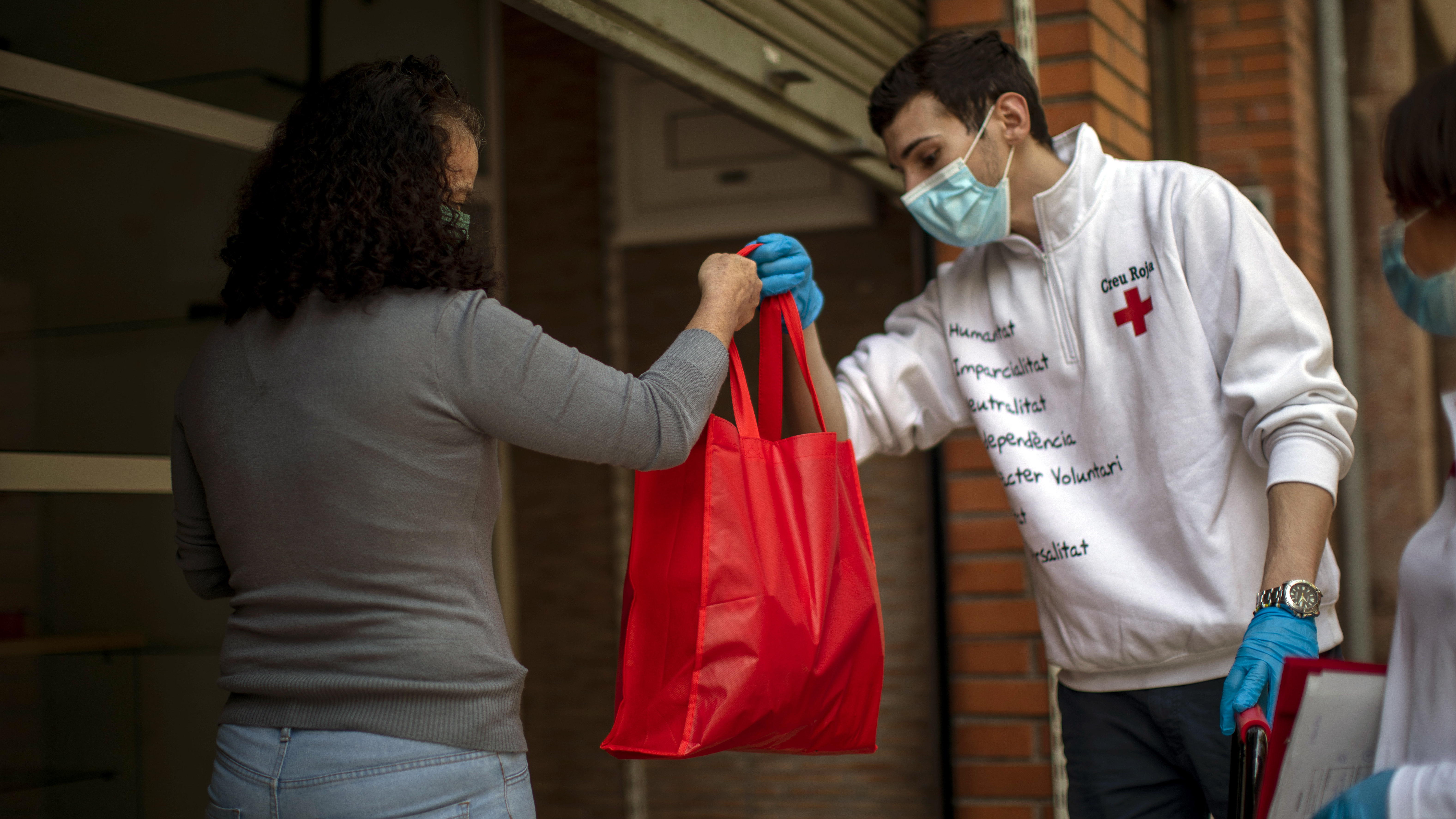
Food delivered to a family in need during a food distribution drive. /AP/Emilio Morenatti
Much of the food is produce set to pass its expiration date, donationed by local companies. Madrid's local government has also agreed to provide storage space, giving the charity use of the city's Caja Magica tennis complex.
Normally at this time of year, the venue would be hosting the likes of Rafael Nadal and Serena Williams at the Madrid Open. However, with the tournament canceled, the complex is now housing supplies that will be transported to 30 food banks around the city.
READ MORE: Germany switches to Apple/Google anonymity for COVID-19 tracer app
Gimenez and his team initially struggled to get official government recognition when the lockdown came into force. Although a subsequent about-turn by the authorities allowed it to distribute food across the city, work that wouldn't be possible without its 300 volunteers.
Ismael Allouch, one such volunteer who works at a food bank at the Santa Maria la Antigua church, said: "Right now I'm unemployed, I've been affected by a temporary lay-off, so now, with all that we are going through, people need help, rather than me staying at home."
As demand continues, the Madrina Foundation is trying to increase its meal output from 2,000 to 3,000 hot meals per day. In a crisis unlike any other, and with no obvious government alternative – charities like Madrina are left to make up the shortfall.