German troops pull out of Mali as 10-year peacekeeping mission ends
 Europe;Germany
Share







Copied
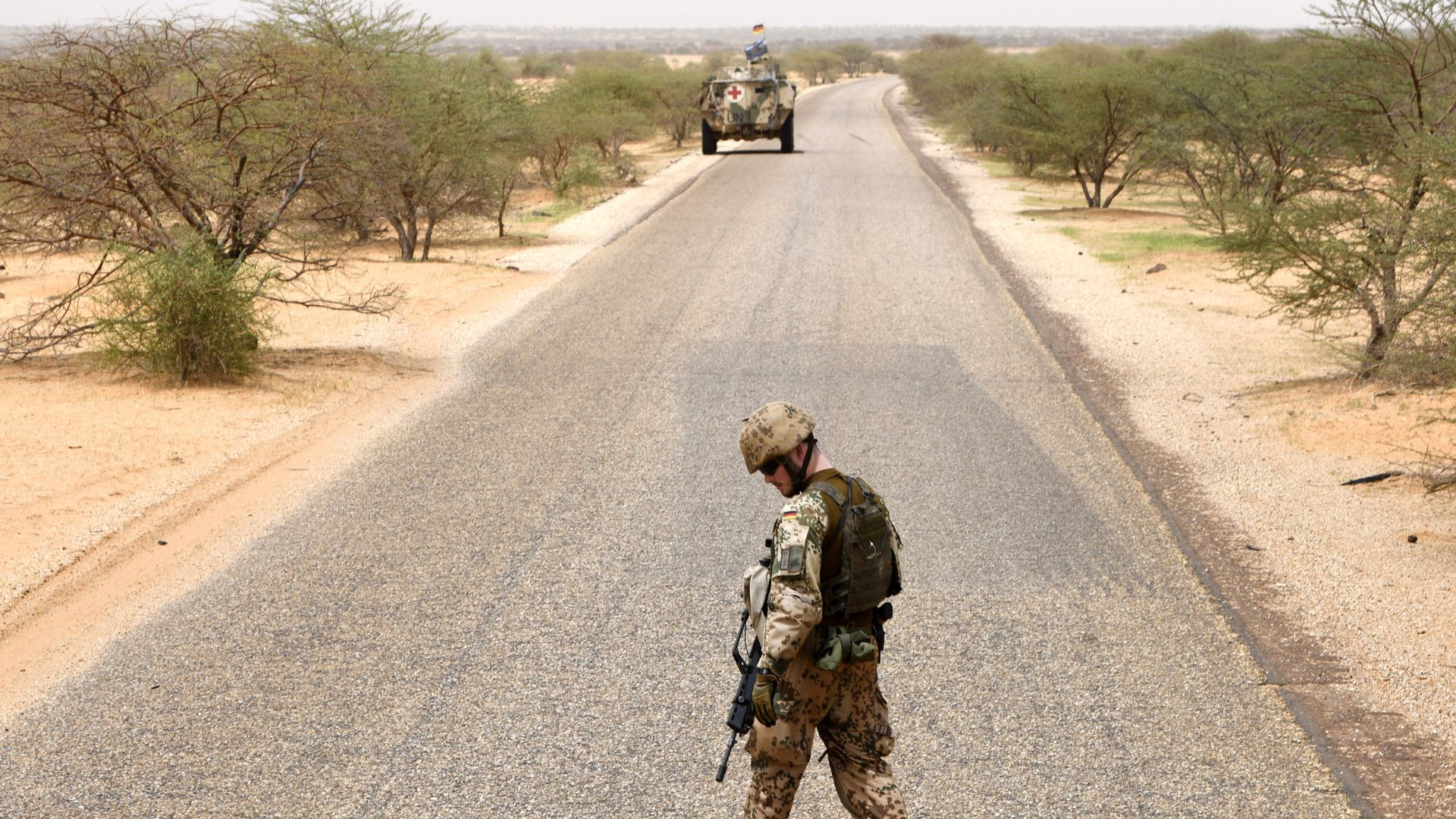
A German soldier from the parachutists detachment of the MINUSMA searches for explosives during a patrol on the route from Gao to Gossi, Mali. /Seyllou/AFP
After a decade-long peacekeeping mission in Mali, Germany has officially begun withdrawing from the West African nation.
Germany was the largest European contributor to the UN Multidimensional Integrated Stabilization Mission in Mali, or MINUSMA, deploying alongside the likes of the UK, Sweden and Netherlands back in 2013 to help the then government bolster security against rebels linked to al-Qaida and the Islamic State group.
But relations between the West and Mali have deteriorated since a coup in 2020, the country's new rulers making it clear it wanted European troops out as it strengthened relations with Moscow. The German Armed Forces say they've been working hard to pull out before a UN deadline.
READ MORE
Gaza reporter: It's more than a job
7,000 children killed in Gaza as Israel expands ground attack
Copenhagen's all-timber neighborhood is 'the future of city building'
"We started our relocation with Camp Castor a few weeks ago. At the moment, containers are being dismantled every day, modules dismantled and prepared for relocation," said Heiko Bohnsack, the Commander of Germany's Armed Forces in Mali.
"This reduces the number or density of what we have in the camp every day. We've also reduced the number of personnel quite a lot. We're down to 800 troops now. When I came here we still had about 1,200-1,300," he added.
Airlift campaign
The German Air Force has been helping facilitate the end of operations, carrying troops and equipment back to Germany as part of an airlift operation.
The departure from Camp Castor comes as Mali's military government continues to signal its desire for Western Forces to accelerate their withdrawal timelines. In June, Mali asked the UN mission to vacate the country. Under longstanding UN practice, a peacekeeping mission needs the approval of the host country.
But even as the withdrawal efforts accelerate, field hospital operations continue, with German authorities stressing they remain on standby to help any sick and injured until the very last aircraft departs.
"We need to maintain our skills right to the end so that we can provide adequate care for emergency patients. In the last 30 days of the contingent, we will still be able to offer high-quality medicine here," said 'Ronald', a field doctor with the German Army.
"The return transport of severely injured patients is also organized and guaranteed here via our specially equipped aircraft for further treatment in Germany," he added.
A decade of peacekeeping comes to an end
After first arriving in 2013, troop numbers continue to shrink, but officials stress that even with personnel reductions, they will continue their work until given the final orders to stand down.
"You can imagine that the last few days here at the camp will be spent with only the most essential staff on site. We will all just be sitting here with our rucksacks so that we can board the planes and get back to Germany as quickly as possible and with a small footprint," said German Army spokesperson 'Nana.'

Subscribe to Storyboard: A weekly newsletter bringing you the best of CGTN every Friday
Search Trends
SITEMAP
Copyright © 2023 CGTN. 京ICP备16065310号

Disinformation report hotline: 010-85061466
SITEMAP
Copyright © 2023 CGTN. 京ICP备16065310号
Disinformation report hotline: 010-85061466