'We can't expect overnight change': Progress at China-EU summit, but 'we need to keep momentum,' says EU official

Share







Copied
At their first in-person summit for four years, the leaders of China and the EU agreed their trade relationship should be more balanced. But in spite of "positive signals" on key areas of divisions, according to one European politician familiar with the talks, clear progress couldn't be expected overnight.
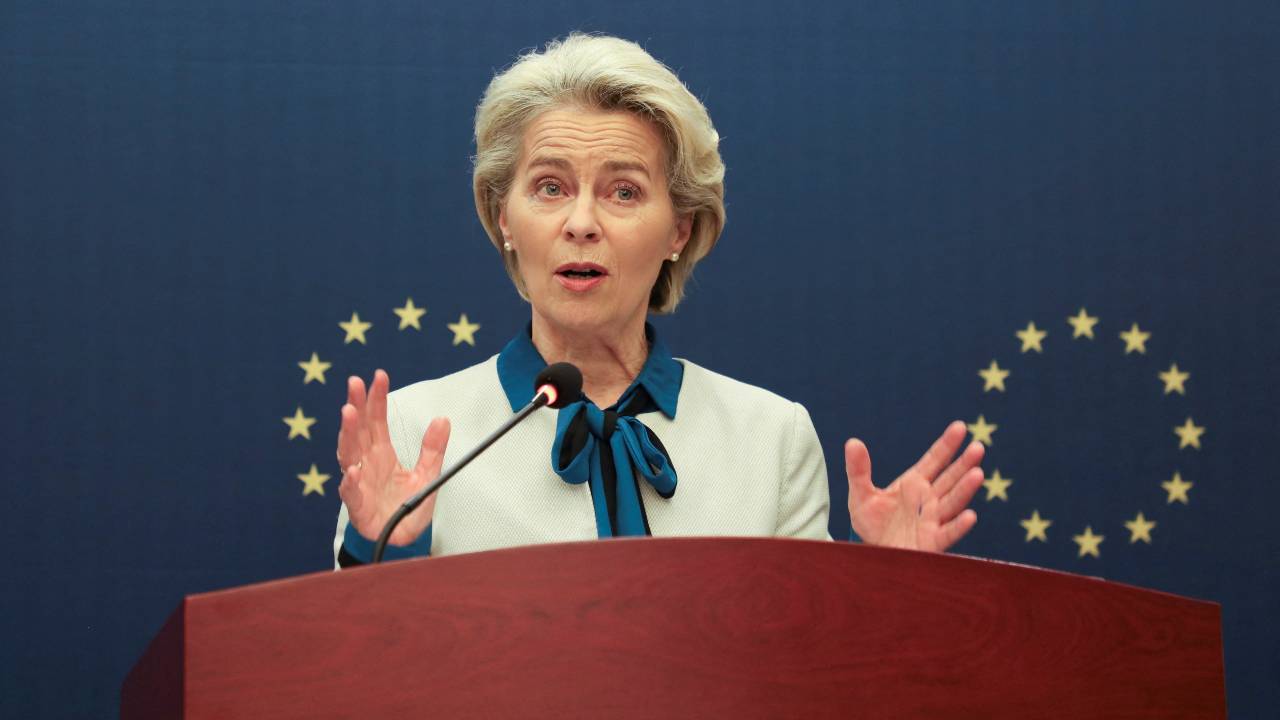
Chinese President Xi Jinping met with the two European presidents - Ursula von der Leyen from the EU Commission and Charles Michel from the EU Council - in Beijing, where they discussed a wide range of issues, all the way from electric vehicle battery production to the conflicts in Ukraine and Palestine.
The main message from Michel at the end of the summit was the importance of "a more reciprocal and balanced" trade relationship, a point confirmed by the Chinese side. But as Adam Dunnett, secretary general of EU Chamber of Commerce in China, told CGTN Europe, "we can't expect for things to change immediately."
"What we're looking for is a level playing field, the same thing we've been looking for over the last 20 years," said Dunnett. "Of course, China's continued to open and reform, but in many areas, it's still not a level playing field."
READ MORE:
Why isn't sustainable farming top of COP28 agenda?
Trade tops agenda as China's Xi Jinping and EU meet in Beijing
'Scientists stunned by Antarctica sea ice loss' - climate expert
While Beijing said it expected prudence from Brussels when introducing "restrictive" trade policies, stressing that the two should not view each other as rivals, at a post-summit press conference, EU leaders said Europe would not tolerate what it called "unfair competition" from China.
Von der Leyen said the sides had discussed the root causes of the two blocs' trade imbalance, from access to the Chinese market to the impact of state subsidies. But "the biggest eyesore" of the disparity for Europe, said Dunnett, remained last year's trade deficit of nearly $430 billion, an issue which the EU leaders apparently pressed China on.
"It's at a historic level and it gets a lot of attention," he said. And while there were obvious benefits to Beijing, the reasons for such a large deficit, he said, were hurting China's push to attract foreign investment, meaning it was "missing out" on not being able to bring in the overseas funding it desired.
"For our companies doing business here, they're not able to make the investments that they would like to," said Dunnett, explaining "there are a lot of barriers that EU agricultural goods and medical devices are facing trying to export to China."
China should be looking at some of its regulations to see how it can "better harmonize and get the assurance it needs to to bring these products into China," he said. "The EU has a lot of export capacity and we'd like to see it digested here."
Von der Leyen did say after the meeting that the leaders had discussed medical devices, cosmetics and geographical indicators for food products in terms of redressing disparities. She also cited "progress" on China's willingness to clarify restrictions on cross-border data flows that have impacted EU firms operating in the world's second-largest economy.
The question of state subsidies
State subsidies in key industries remain a thorny area for both sides, with China investing heavily in markets which are set to shape the future of the world economy. Meanwhile, the European executive's strong belief in the free market has meant that it remains wary of subsidizing industry in a meaningful way.
But forced to act by the success of China's industrial development strategy on the world market, the EU is trying to catch up - for example, having recently announced around $3.2 billion in subsidies for electric vehicle battery production.
"I think they've taken a cue from what they've seen happening in China in terms of how emerging industries have developed," said Dunnett. "Perhaps this will give European automakers a little bit of an edge and support that they need to compete in this very, very important market," he said.
But echoing the executive's perspective on state-backed industry, Dunnett said that "what's important is subsidies do exist out there, but they need to be implemented according to market based principles that have been set up by the World Trade Organization and need to be respected accordingly."
As for the big takeaways from the summit, the European official reiterated that points of concern weren't likely to change quickly, but he did point to the many "small steps along the way" of the trade wrangling. "For example, with the 24 measures coming out of the State Council - the relaxation of visas, the extension of the individual income tax - those sorts of things are positive signals that business will look at and say, 'Hey, you know, this is a place where we can still do business.'"
But he said that the broader context still had to be considered, particularly the impact of China's security measures on companies deciding to invest there. "With the anti-espionage law, the foreign relations law, self-sufficiency directives, that sends a mixed signal to business," Dunnett said.
"We need to keep the momentum going, as President Xi himself said… And we do that by sending positive signals and then we look to see what the results of those are," he explained. "But ultimately, the judge will be where business puts its money at the end of the day."

Subscribe to Storyboard: A weekly newsletter bringing you the best of CGTN every Friday
Search Trends
SITEMAP
Copyright © 2023 CGTN. 京ICP备16065310号

Disinformation report hotline: 010-85061466
SITEMAP
Copyright © 2023 CGTN. 京ICP备16065310号
Disinformation report hotline: 010-85061466