
Share







Copied
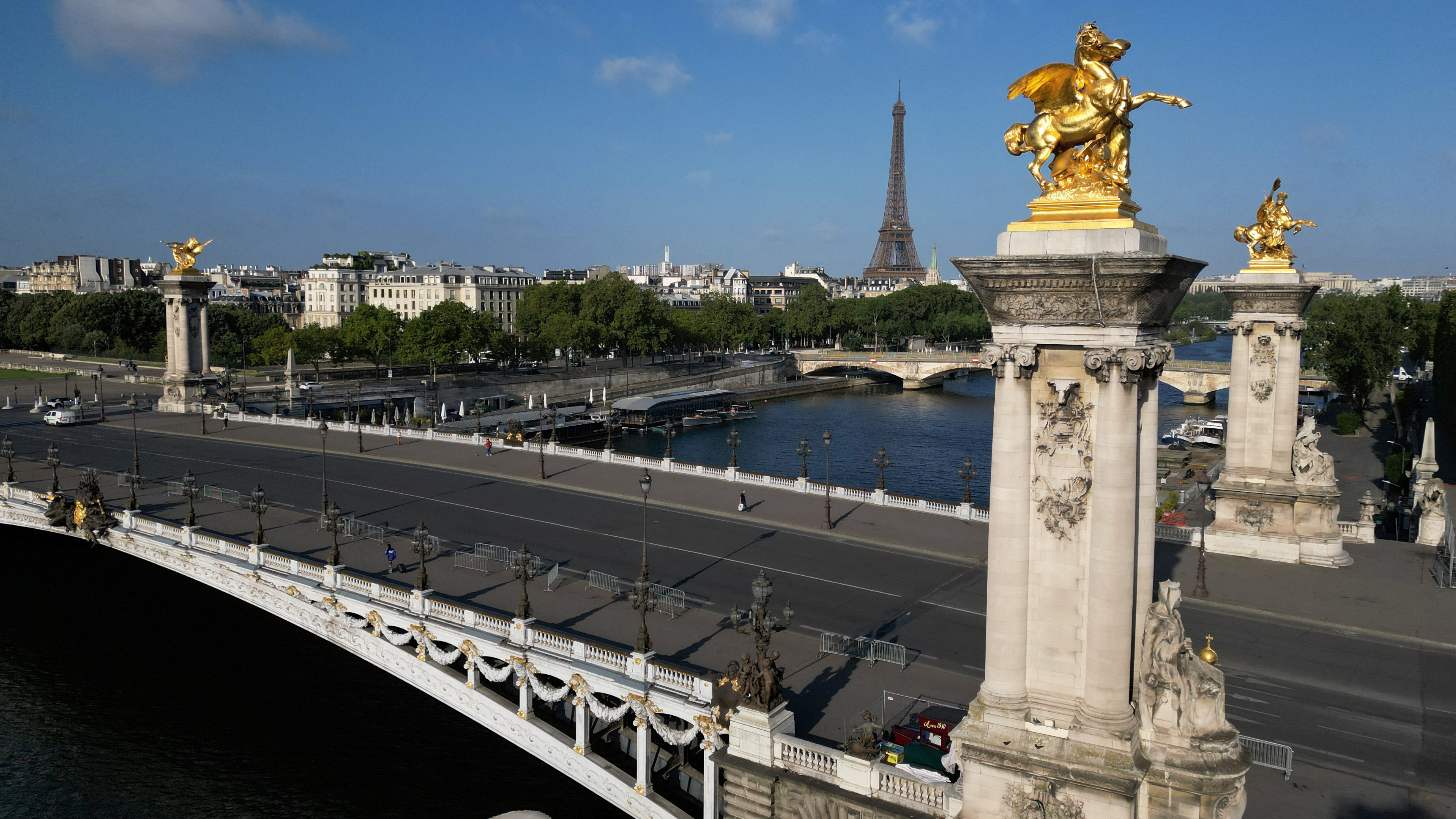
Paris is one of the most visited cities in the world. /Pascal Rossignol/ Reuters
Paris is preparing to host the Olympics next year but while there is a buzz of anticipation around the city, there is also anxiety among hoteliers about the implications for their trade.
The Ile de France region, which includes historic suburbs such as Seine-Saint-Denis, home of the main Olympic sites, and Versailles, is neck-and-neck with the London area as the most visited city in Europe.
And the hotel industry is hoping that the Olympics can provide a boost. But hoteliers are also wary of a "bad buzz" if the Games fail and are aware that the Olympics is set to drive up prices for years to come.
"With the expected peak in visitor numbers, it's clear that the Paris hotel network, which is much larger than that of Rio or Athens, will be saturated," said Vanguelis Panayotis, president of specialist consultancy MKG Consulting.
"At the Rio Olympics in 2016, Airbnb helped to increase accommodation capacity. And at the Athens Olympics in 2004, large cruise liners were put in the port to cover accommodation needs."
In terms of "hotel density, Paris and its region are superior to New York and very well positioned compared to London," said Vincent Bollaert, director of France for property specialists Knight Frank.
"We have a very high level of tourism: 45 million tourists staying here every year, and an extra 15 to 20 million are expected for the Olympic Games," said Panayotis. But he warned: "Some of the capital's usual clientele are not likely to come. They are not interested in being in the rush of the Olympic Games.
"In London in 2012, there was no visitor boom, but those who came for the Games were prepared to pay much more: prices rose by 100 percent and more, and they remained higher in subsequent years."
The Ile de France hotel network is growing, said Bollaert. It has some 2,100 establishments with 124,000 rooms and "has attracted €1.3 billion ($1.4 billion) in investment, an increase of 35 percent compared to 2019, before the pandemic."
He said: "In the run-up to the Olympic Games, around 150 new establishments, or 5,000 additional rooms, will be added to the total."
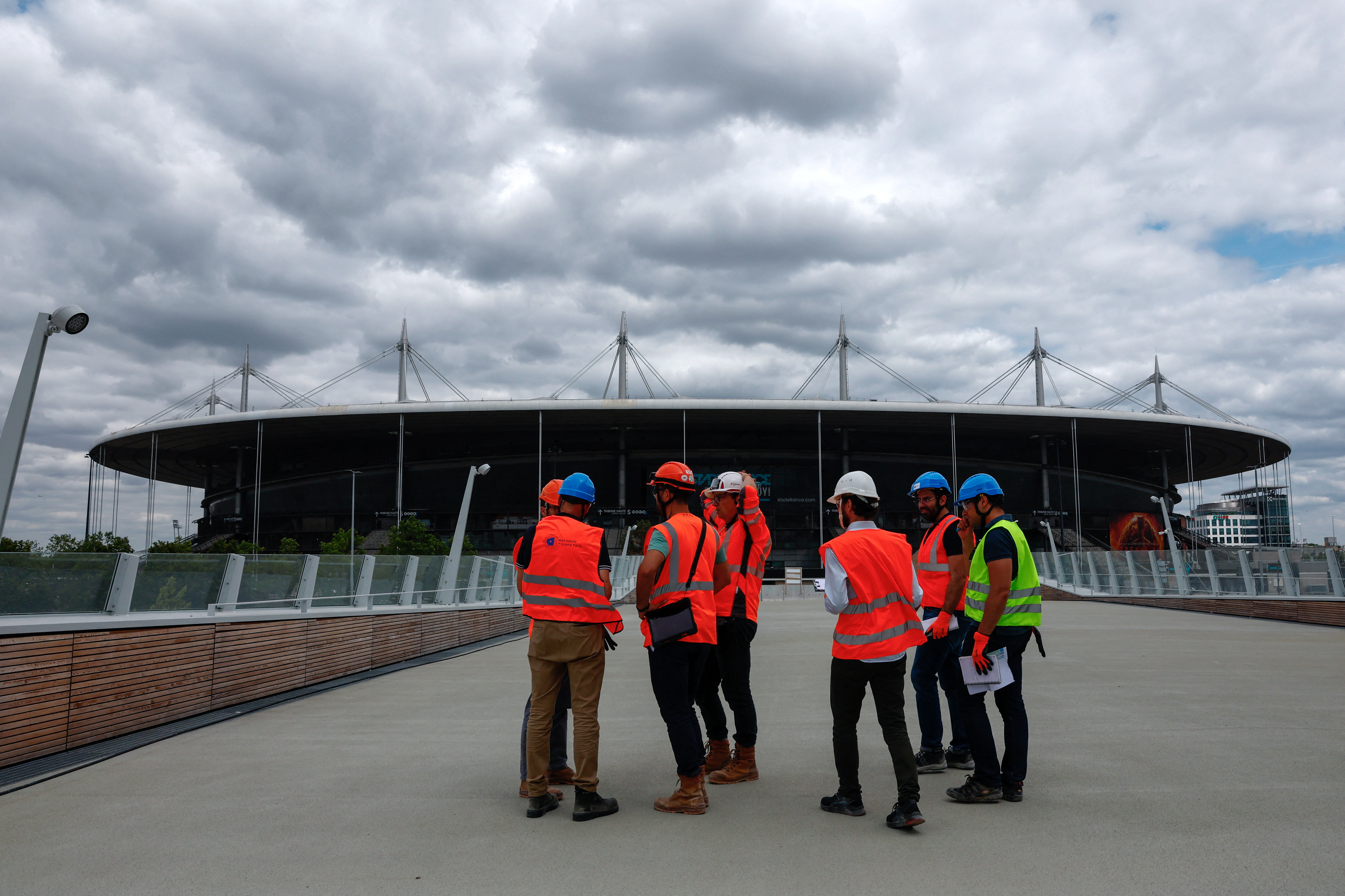
Workers stand at the Olympic Aquatics Centre construction site near the Stade de France stadium. /Gonzalo Fuentes/Reuters
There is also the concern that those who come may not enjoy their visit. "It could even be extremely negative if what emerges from the Games is negative communication about the destination," said Didier Arino, managing director of the Protourisme consultancy.
"But it can also produce a good image" in the long term, if everything goes well, providing an "exceptional promotional window."
The positive contribution, said Arino, will come more from "the transformation, the urban developments, the creation of infrastructures that will be used afterwards, than from the Olympic Games' tourism function alone."
Hoteliers are planning to make the most of it. Some started early, renting rooms to agencies and partners rather than to private individuals.
By May this year, Edgar Suites, which has some 500 boutique hotels, mainly in Paris had rented 60 percent of its properties for the Olympic period.
Co-founder Gregoire Benoit said that "12 to 18 months before the Games is the most interesting period: federations, the Olympic Committee, sponsors, athletes' families, etc are looking for accommodation."
And for hoteliers this long-term approach carried risks, said Panayotis.
READ MORE
The rise of Temu, China's new retail app
Spanish trans youths fear roll-back of rights
Giant Panda ignites Chengdu university games
Prices "were negotiated before Covid. Except that we're not at all in the same context, with high inflation: they need to be re-discussed to avoid hoteliers refusing to apply the negotiated rates and waiting until the last minute to sell their rooms for much more," he warned.
Some on private rental platforms such as Airbnb, one of the main sponsors of the Olympics, will try to raise prices sharply.
Already a target for criticism because, just as new hotels occupy space that could be used to house Parisians, Airbnb is accused of fueling soaring property prices and drying up the long-term rental market.
To play down the burgeoning controversy over Olympic price hikes, Airbnb commissioned a study, published in April, from consultants Deloitte.
It predicted a "realistic" price increase of 85 percent during the Games.

Subscribe to Storyboard: A weekly newsletter bringing you the best of CGTN every Friday
Search Trends
SITEMAP
Copyright © 2023 CGTN. 京ICP备16065310号

Disinformation report hotline: 010-85061466
SITEMAP
Copyright © 2023 CGTN. 京ICP备16065310号
Disinformation report hotline: 010-85061466