 Europe;Europe
Share







Copied
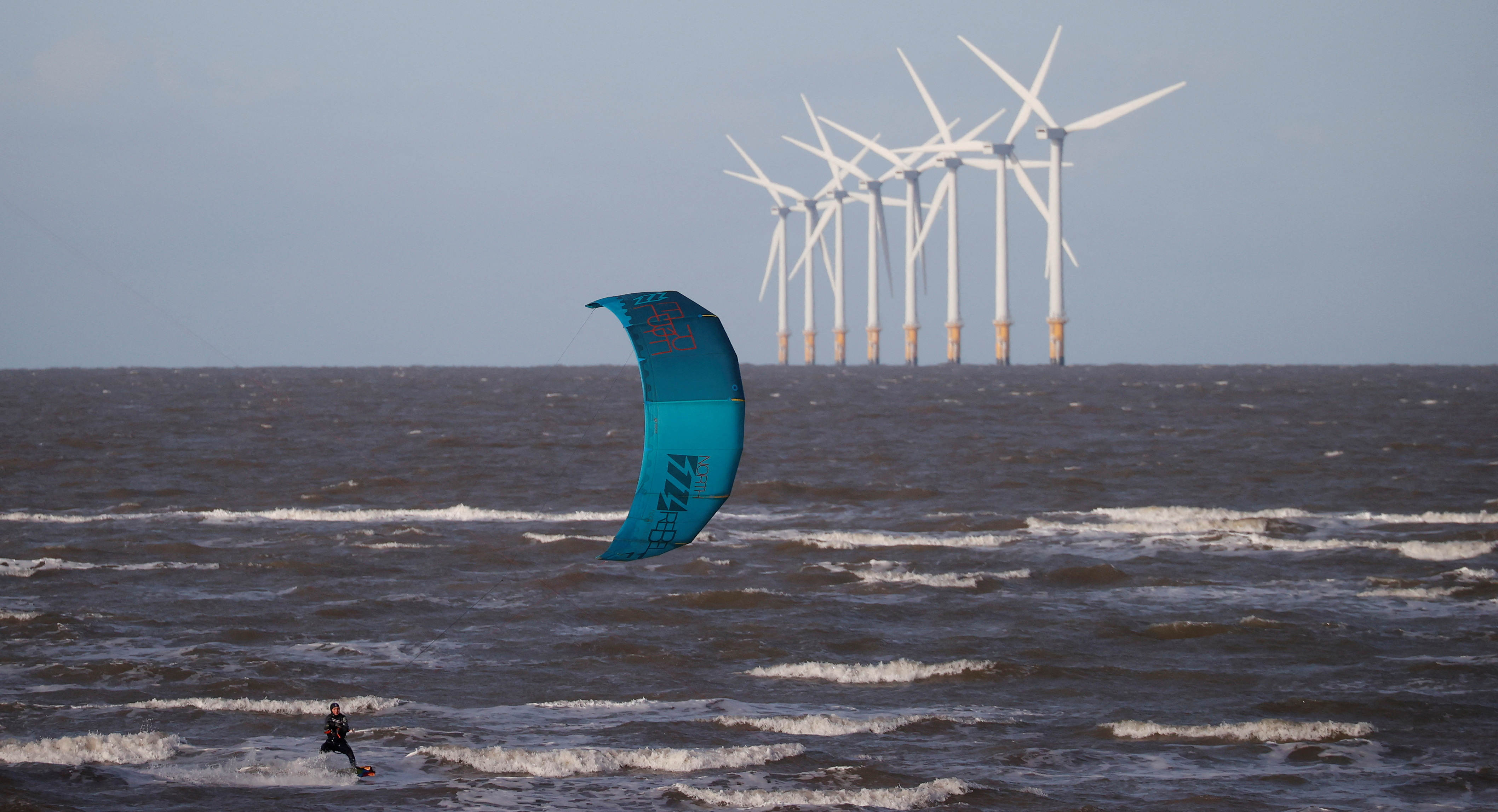
Kitesurfing technology is being used by firms trying to adapt if for the shipping industry. /Phil Noble/ Reuters
Kitesurfing technology is being adapted by French firms in the hope that it can be used to propel everything from yachts to cargo ships and cut the shipping industry's massive carbon footprint.
The sector is under fresh pressure to reduce its reliance on fossil fuels as the International Maritime Organization sealed a deal on Friday that raises its emissions-reduction targets.
In Arcachon Bay in southwest France, the startup Beyond The Sea tested a blue inflatable kite sail the size of a small studio to pull a specially-designed catamaran across the water.
"Are you ready to jibe?" said company founder Yves Parlier, using kitesurfing lingo to speak to his team of engineers steering the 25-square-metre kite.
In kitesurfing, riders use their hands to control the kite but on Parlier's SeaKite catamaran, an automated traction system is used for the kite, with winches and artificial intelligence that adapts the sail's position to the wind conditions.
The goal is to design much bigger kite sails that could one day pull yachts, trawlers and even container ships.
"It's a phenomenal system of traction which allows one to reduce fuel consumption by 20 percent on average," said Parlier, a former winner of transatlantic sailing competitions.
The potential is huge given that there are nearly 100,000 merchant ships crisscrossing the oceans and 4.6 million fishing trawlers in the world.
The Wind Ship association, which was created in 2019 in France with the aim of greening the maritime sector, says the market could be worth four billion dollars by 2030 with around 1,400 vessels fitted with such kites.
In March next year, Beyond The Sea will carry out similar tests using its specially-designed kites off the waters of Norway and Japan and in the Mediterranean.
It hopes to double the size of its kites every year, reaching 800 square meters in four years, the company's executive director Marc Thienpont said.
READ MORE
Twitter threatens Meta with legal action
Sweden charges climate activist Greta Thunberg
AI to predict extreme weather events
The shipping industry has to find alternatives to fossil fuels, with the IMO on Friday setting a net-zero emissions target for "close to 2050," with progressive reduction goals of at least 20 percent by 2020 and at least 70 percent by 2040 compared to 2008 levels.
While the previous target was for a 50-percent reduction by mid-century, climate campaigners said the decision did not go far enough to help the battle against global warming.
Airseas, another French company in which European aviation giant Airbus holds 11 percent stake, is testing a kite spanning 500 square meters - almost twice the size of two tennis courts - which it hopes to double for larger ships.
The company, based in the western city of Nantes, late last year fitted out a bulk carrier belonging to the Japanese firm K. Line, its biggest client which has placed five confirmed orders for its Seawing.
It has also kitted a roll-on, roll-off ship transporting equipment for A320 planes between the French port of Saint-Nazaire and the port of Mobile in the southern US state of Alabama where Airbus has a factory.
But if the sector has the wind in its sails, its attractiveness suffers from a price of a barrel of heavy fuel oil currently at its lowest.

Subscribe to Storyboard: A weekly newsletter bringing you the best of CGTN every Friday
Search Trends
SITEMAP
Copyright © 2023 CGTN. 京ICP备16065310号

Disinformation report hotline: 010-85061466
SITEMAP
Copyright © 2023 CGTN. 京ICP备16065310号
Disinformation report hotline: 010-85061466