 Europe;France
Share







Copied

French President Emmanuel Macron wasted no time in setting into law the country's new pension reforms overnight. Moments after France's constitutional council, the highest decision-making authority, validated the policy, Macron promulgated the legislation.
The president has also confirmed he will address the nation on April 17 about the significance of the signing.
The high court ratified the rise of the minimum pension age from 62 to 64. It, however, struck down some measures of the bill, such as the so-called Seniors Index related to the employment of older workers.
READ MORE
Türkiye prepares for momentous elections
Climate changes forces Loggerhead turtles to migrate
World participates in Earth Hour – but what is it?
A request for a referendum to be held on the issue was also declined. The controversial policy was advanced through the parliament on 16 March, using Article 49.3. This is a constitutional power at the discretion of the ruling party used to bypass lawmakers and pass legislation without a vote.
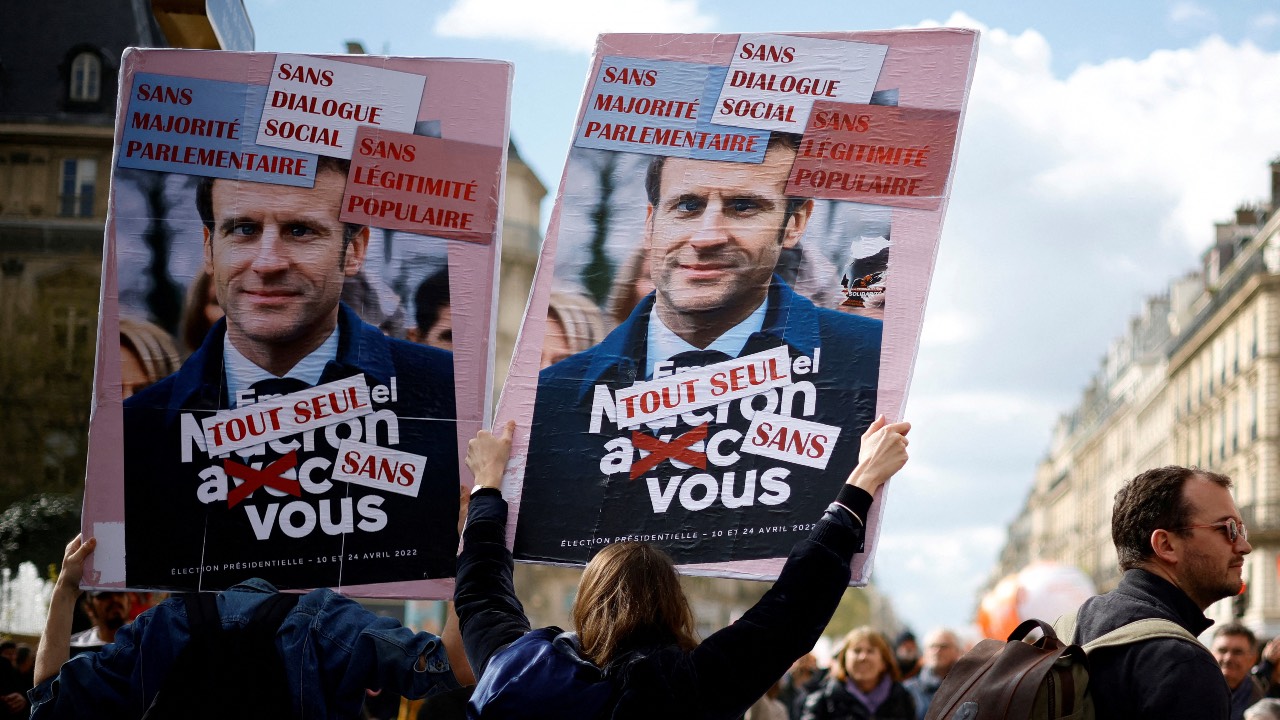
Protesters hold placards depicting French President Emmanuel Macron during a demonstration as part of the 12th day of nationwide strikes and protests against French government's pension reform, in Paris. /Sarah Meyssonnier/File Photo /Reuters
The reforms, and the way it advanced through the national legislature, sparked outrage from the opposition benches and trade unions, who deemed the process unfair. Since the start of the year, unions rallied millions of its members to join days of mass mobilization and strikes in a bid to convince the state to reverse its decision.
The government believes its pension system would have suffered significant losses, amounting to multi-billion euro deficits without these approved changes.
Intensified social defiance
In the wake of the high court's verdict late on April 15, unions have vowed to continue their resistance. The nine-member council's ruling is widely considered a victory for Macron and his administration but at the cost of intensified social defiance.
Since the verdict, protesters have gathered in public squares across the country and outside the City Hall in Paris to mark their objections. Dozens of other pickets and strikes have been planned in the aftermath of the highly anticipated decision. Unions have also warned of more demonstrations, including a joint Labour Day campaign on May 1.
Ahead of the court's announcement, and during an oversight visit to the fire-ravaged Notre-Dame Cathedral, Macron maintained he will meet with the unions to chart a way forward.
However, trade union leaders have rejected all invites to meet with the executive. Opponents of the pension reforms have threatened to disrupt the preparations of the 2024 Olympic Games due to be held in the French capital.
Subscribe to Storyboard: A weekly newsletter bringing you the best of CGTN every Friday
Search Trends
SITEMAP
Copyright © 2023 CGTN. 京ICP备16065310号

Disinformation report hotline: 010-85061466
SITEMAP
Copyright © 2023 CGTN. 京ICP备16065310号
Disinformation report hotline: 010-85061466