- Home
- China
- World
- Asia-Pacific
- Americas
- Europe
- Middle-East and Africa
- Politics
- Business
- Opinions
- Tech & Sci
- Culture
- Sports
- Travel
- Nature
- Picture
- Video
- Live
- TV
- Documentary
- Radio
- Specials
- Learn Chinese

 Europe;Ukraine
Share







Copied
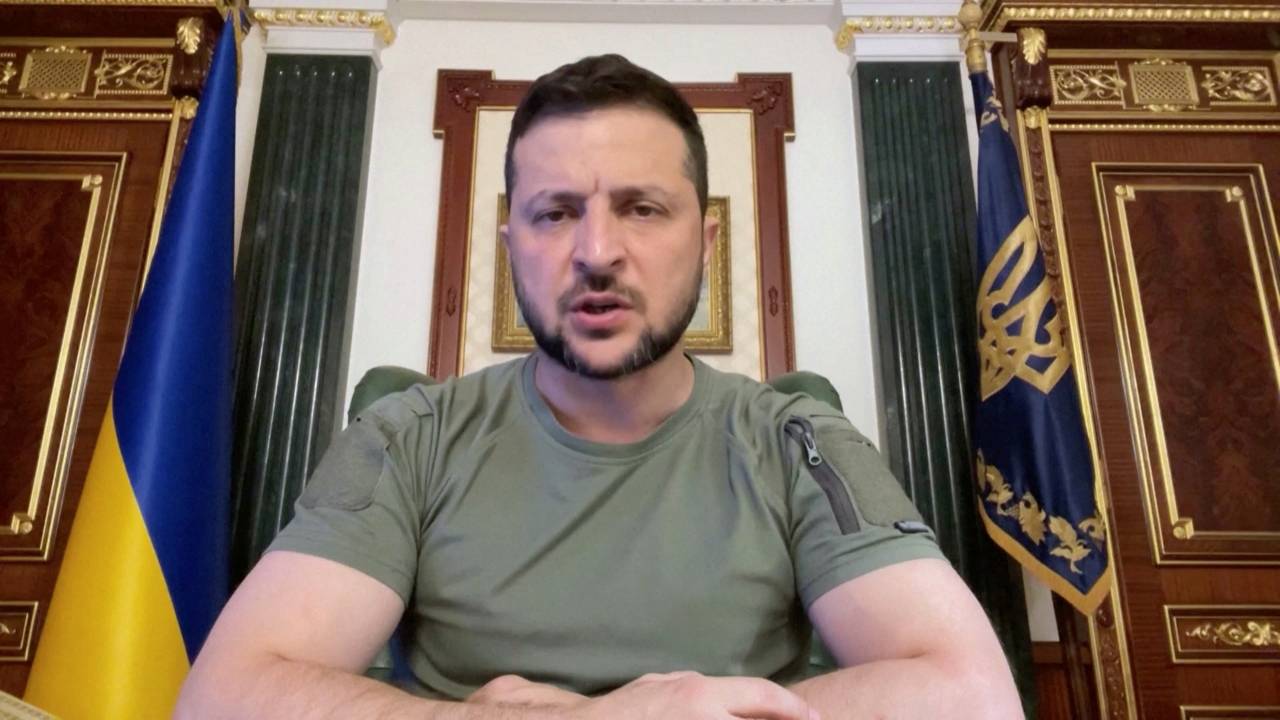
Ukrainian President Volodymyr Zelenskyy says his troops will chase the Russian army "to the border". /Ukrainian Presidential Press Service/Reuters
TOP HEADLINES
• Ukrainian President Volodymyr Zelenskyy has urged Russian troops to flee from an offensive launched by his forces near the southern city of Kherson, saying Ukraine's military were taking back their territory. Russia said the assault had failed. READ MORE BELOW
• Germany and France have issued a joint warning against an EU ban on tourist visas for Russians, advocated by some other members of the bloc, arguing that "far-reaching restrictions" could "trigger unintended rallying-around the flag effects and/or estranging future generations." The Kremlin called the proposals "irrational" and the latest manifestation of the West's anti-Russian agenda. READ MORE BELOW
• Russian shelling has killed at least four people and wounded four others in Ukraine's second largest city, Kharkiv, according to the regional governor. In the city of Mykolaiv, Russian shelling also killed two people and destroyed homes in residential areas, local officials said.
• Ukrainian forces have upped their artillery attacks across southern Ukraine, as well as long-range precision strikes, causing disruption to Russian supply lines, Britain's defense ministry said.
• Russian-installed authorities in the town of Enerhodar accused Ukrainian troops of once again shelling the territory of the nuclear power plant. Despite fears of a radiation leak amid the fighting, thousands of people fleeing Russia-occupied areas of south Ukraine are arriving in a city near the Zaporizhzhia site.
• Officials from the UN's nuclear watchdog are heading to Ukraine's Zaporizhzhia nuclear plant, as Moscow and Kyiv continue to trade accusations of shelling in the vicinity, stirring fears of a potential nuclear disaster.
• Russia's foreign ministry has condemned the demolition of Soviet-era monuments in the Baltic states as "Russophobic," accusing Latvia, Lithuania and Estonia of xenophobia and discrimination against ethnic Russian minorities there.
• EU defense ministers could agree in principle at a meeting on Tuesday to set up an EU military training mission for Ukraine, the bloc's foreign policy chief said.
• Germany is facing the "bitter reality" that Russia will not return gas supplies to previous levels, its economy minister said, ahead of planned halt by state energy giant Gazprom of exports to Europe via the Nord Stream 1 pipeline. Gazprom will also cut deliveries to France's utility company Engie from Tuesday amid a dispute over contracts.
• Russia's oil output has exceeded expectations in the wake of the conflict but it will find it increasingly difficult to keep up production as western sanctions begin to bite, the head of the Paris-based International Energy Agency said.
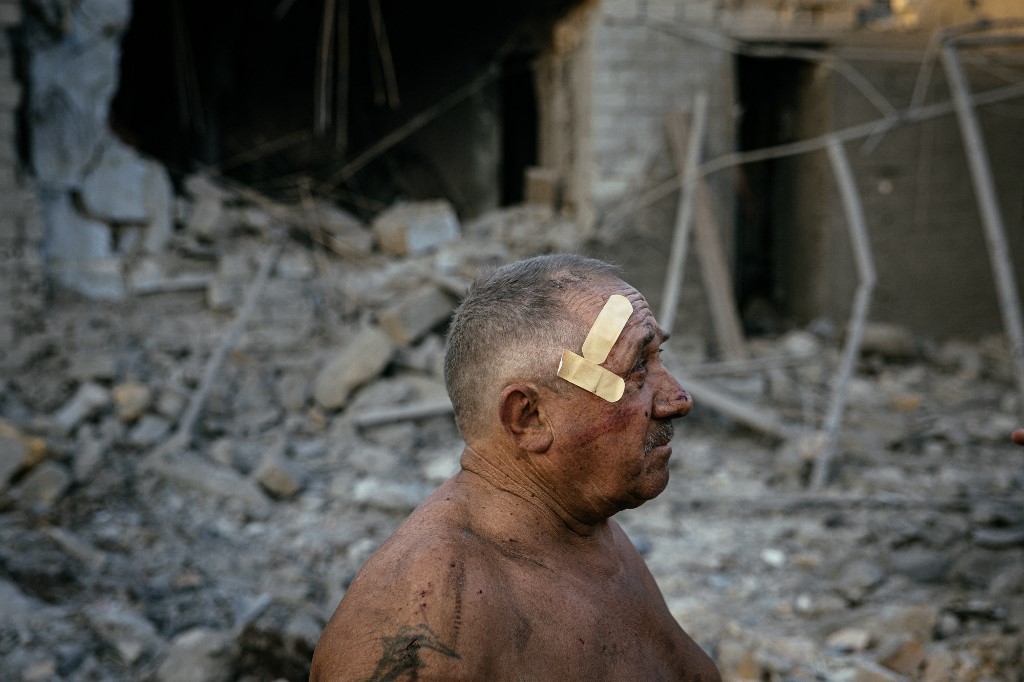
Oleksandr Shulga looks at his destroyed house following a missile strike in Mykolaiv. /Dimitar Dilkoff/AFP
IN DETAIL
Kherson counter-offensive
Ukraine's military claims to have taken back Russian-occupied territory near the city of Kherson after weeks of a stalemate.
President Zelenskyy, in his nightly address late on Monday, vowed that Ukrainian troops would chase the Russian army "to the border". "If they want to survive – it's time for the Russian military to run away. Go home," he said.
Oleksiy Arestovych, a senior adviser to Zelenskyy, said Russian defenses in the Kherson region had been "broken through in a few hours."
READ MORE
China launches first virtual power plant
China Space Station: Experimental cabinets work well
NASA moon rocket on track for launch
Ukrainian forces were shelling ferries that Russia was using to supply a pocket of territory on the west bank of the Dnipro river in the Kherson region, he added.
Ukraine's Suspilne public broadcaster reported explosions around Kherson on Tuesday and city residents reported in social media posts gunfire and explosions but said it was not clear who was firing.
Russia's defense ministry said Ukrainian troops had attempted an offensive in the Mykolaiv and Kherson regions but sustained significant casualties. The "enemy's offensive attempt failed miserably," it said.
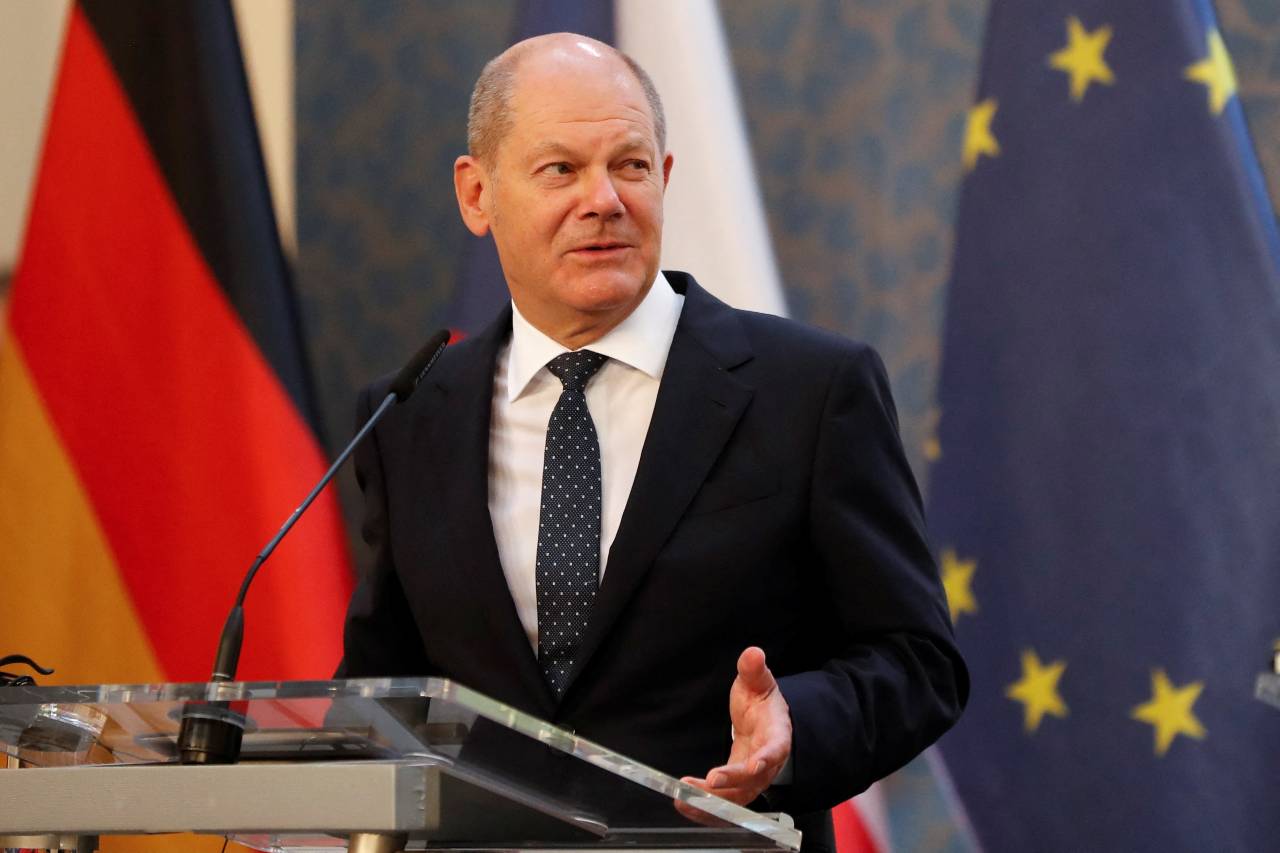
German Chancellor Olaf Scholz attends a news conference with Czechia's Prime Minister Petr Fiala in Prague. /David W Cerny/Reuters
EU split on visa bans for Russia
Germany and France have issued a joint warning against a ban on tourist visas for Russians, saying such a step, advocated by other EU member states, would trigger "unintended" consequences.
The split on tourist visas will be central to a meeting of the bloc's foreign ministers in Prague on Tuesday and Wednesday, as they discuss what further steps they can take to sanction Russia for its six-month military incursion into Ukraine.
"We caution against far-reaching restrictions on our visa policy, in order to prevent feeding the Russian narrative and trigger unintended rallying-around the flag effects and/or estranging future generations," France and Germany said in the joint memo.
The bloc's two leading countries argue for tighter controls on visa applications for security risks, but believe visas should still be issued.
"We must not give up on supporting pro-democratic elements with Russian society," they said. "Our visa policies should reflect that and continue to allow for people to people contacts in the EU with Russian nationals not linked to the Russian government."
Others, in particular eastern and Nordic member states, have argued strongly for a ban.
"It is very provocative to me that you see Russian men on European beaches in Southern Europe and at the same time Ukrainian men between 18 and 60 years cannot even leave their country but have to fight for their freedom," Denmark's foreign minister Jeppe Kofod said last week.
Since the start of the conflict, Russians have mostly been entering the EU via the land borders of Estonia, Latvia, Lithuania, Poland and Finland, countries that may act on their own if the EU does not agree on a union-wide ban.

Search Trends
Copyright © 2020 CGTN. 京ICP备16065310号

Disinformation report hotline: 010-85061466
Copyright © 2020 CGTN. 京ICP备16065310号
Disinformation report hotline: 010-85061466
Copyright © 2020 CGTN. 京ICP备16065310号
Disinformation report hotline: 010-85061466