- Home
- China
- World
- Asia-Pacific
- Americas
- Europe
- Middle-East and Africa
- Politics
- Business
- Opinions
- Tech & Sci
- Culture
- Sports
- Travel
- Nature
- Picture
- Video
- Live
- TV
- Documentary
- Radio
- Specials
- Learn Chinese

 Europe;United Kingdom
Share







Copied
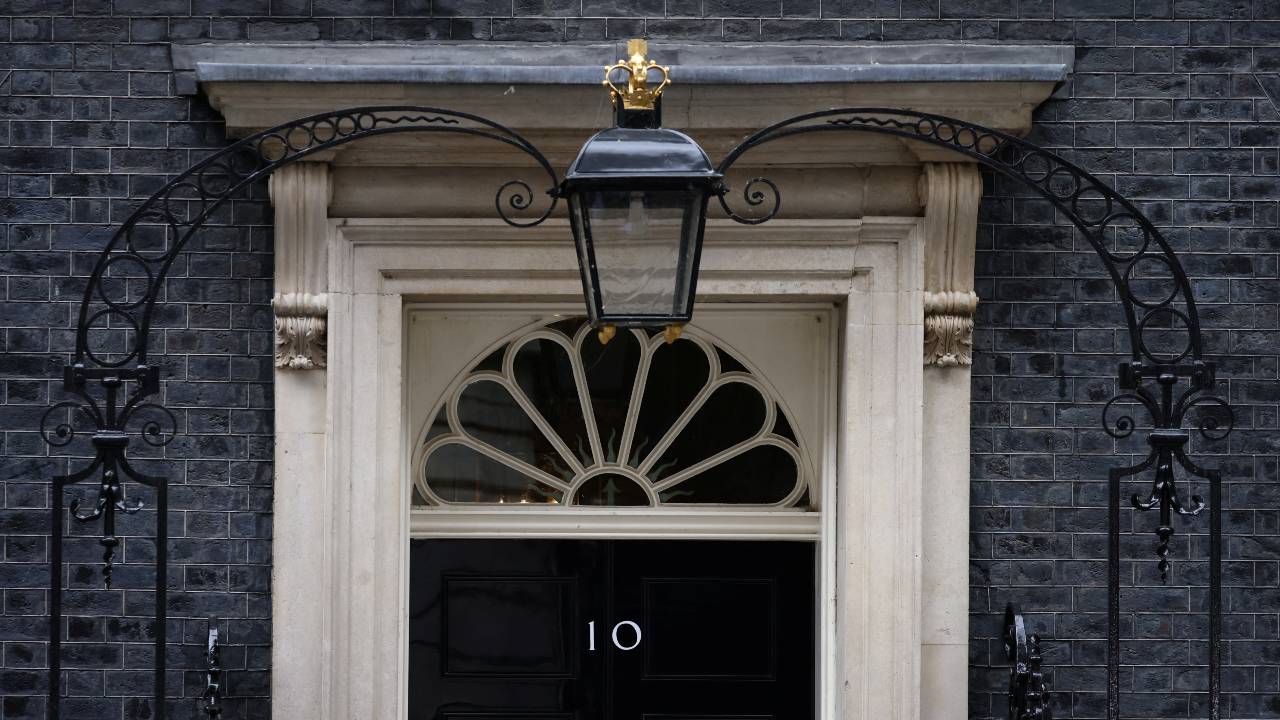
It's unclear who will be the next occupant of this illustrious address. /Henry Nicholls/Reuters
After Boris Johnson's eventual acceptance that he could no longer command a majority in the House of Commons – or indeed have enough ministers for government to even function – attention has turned to who will become the UK's 56th (some historians say 58th) Prime Minister.
The UK has an unwritten constitution, meaning that it runs mainly on precedent, as opposed to written rules. But some things are clear.
When will the UK have a new Prime Minister?
The appointment of a new Prime Minister, elected by Conservative Party members, will not happen until the autumn. Parliament's six-week summer recess begins on July 21 and the organization required to hold a leadership election takes time. In the mean time, there are two options.
Johnson wants to stay as caretaker Prime Minister until a successor is chosen and Downing Street has briefed reporters that he wants to stay until the beginning of Conservative party conference on Sunday 2 October. This is similar to what happened when his predecessor Theresa May announced her intention to step down after losing the confidence of her MPs on May 24, 2019 and subsequently stayed in office for exactly two months.
By contrast, May took office just 19 days after David Cameron resigned in the wake of losing the Brexit referendum. This was only possible because one of the two final candidates for the leadership election, due on September 9, 2016 - Andrea Leadsom – withdrew from the race.
With a leadership election choosing Johnson's successor involving canvassing of party members, once MPs have whittled the field of possible contenders down to a final two, this process will last until September at the earliest.
Johnson's desire to stay on in a caretaker capacity is highly controversial, considering that there were at least 60 ministerial resignations in the past two days, including five front-ranking Cabinet ministers such as Chancellor Rishi Sunak, Health Secretary Sajid Javid, and Education Secretary Michelle Donelan – while Michael Gove was sacked as Secretary of State for Housing, Communities and Local Government. There may simply not be enough ministers willing to serve in a caretaker Johnson administration.
A more likely alternative is that a caretaker prime minister takes over - possibly but by no mean certainly current Deputy Prime Minister Dominic Raab, with some suggesting that he simply re-appoint the majority of ministers who resigned this week. Raab held the reins for around three weeks in April 2020 when Johnson was in intensive care suffering from COVID-19.
There have even been suggestions that Theresa May could run a caretaker administration. Someone named as a "well-placed source" told the right wing Daily Mail: "She knows the ropes and the security stuff, she's a party woman through and through, she's definitely not interested in standing for it herself and would be credible."
Caretaker governments aren't a modern phenomenon. Conservative premier Winston Churchill ran a so-called 'coalition caretaker government' during the latter stages of the Second World War, from 23 May to 26 July 1945, after the Labour Party withdrew from the war-time coalition government following the cessation of hostilities with Germany.
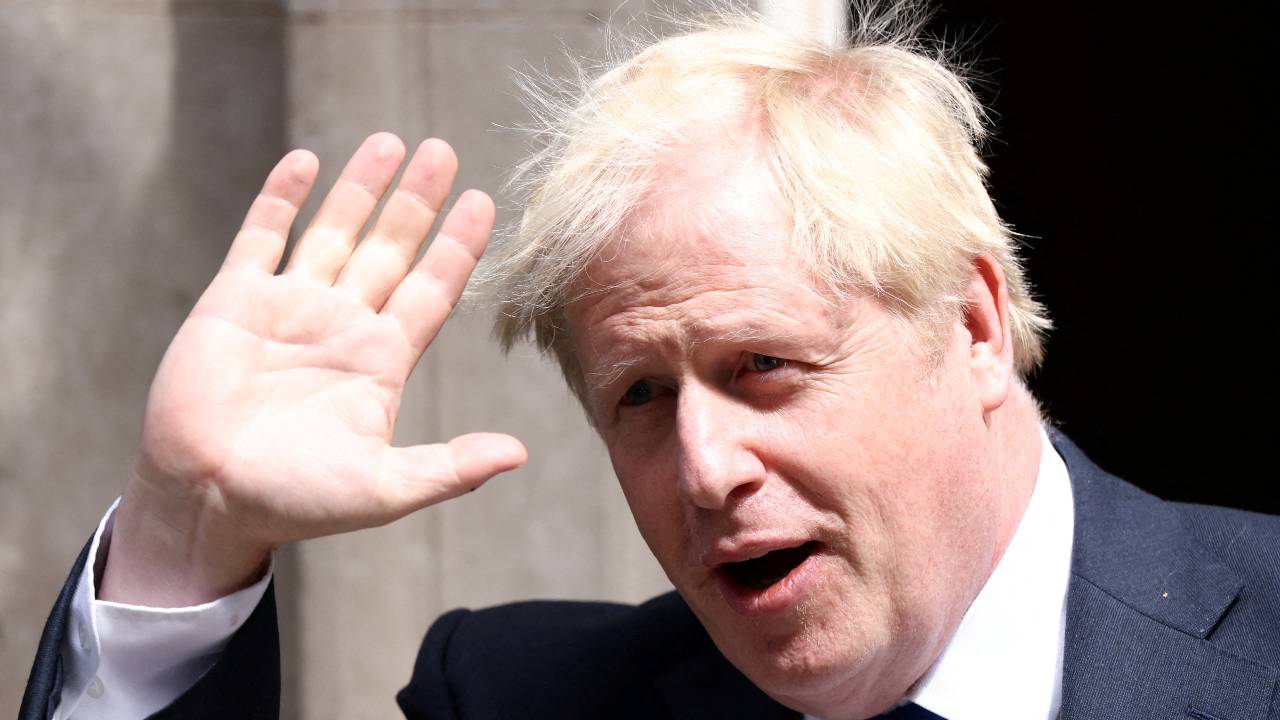
British Prime Minister in Downing Street on July 6. /Henry Nicholls/Reuters
How does a prime minister resign?
When Johnson hands over power, either to a caretaker replacement or elected successor, he will be taken by car to Buckingham Palace and tender his resignation to the Queen. On the advice of the ruling party she will appoint a new prime minister.
Will there be a general election?
No. With 356 Conservative MPs and 281 opposition MPs voting on parliamentary legislation, the Conservative Party has an effective working majority of 75 votes in the House of Commons.
