- Home
- China
- World
- Asia-Pacific
- Americas
- Europe
- Middle-East and Africa
- Politics
- Business
- Opinions
- Tech & Sci
- Culture
- Sports
- Travel
- Nature
- Picture
- Video
- Live
- TV
- Radio
- Specials
- Learn Chinese

 Europe;Munich, Germany
Share







Copied
Tears filled her eyes when I showed her a picture of a university in Kharkiv I had recently visited.
"That's my university," cried 48 year old Viktoriia Shepel in the hallway of a house in Munich, where she and her twenty year old daughter are being hosted.
Viktoriia used to work in the Chemistry faculty at Kharkiv National University until Ukriane's second largest city came under Russian bombardment.
READ MORE
See Odesa's catacombs, ready for Russian attack
What counts as a chemical weapon?
How Zoe Reed builds bridges between cultures
Security
"The last night we spent in the bomb shelter," recalls Viktoriia. "It was impossible to stay in our flat because bomber planes were flying above our heads. So at 6 a.m we returned to our flat, took the suitcases that we had prepared in advance, and in 15 minutes ran to the railway station."
It took her and her daughter 18 hours to reach the Western Ukrainian city of Lviv and then another two days to get to Munich.
Viktoriia tells CGTN she had two reasons for wanting to come to Germany.
"First of all, we wanted to get far enough away from the border because we were very scared. And second, in my imagination Germany is a very solid country and only here will I feel protected."
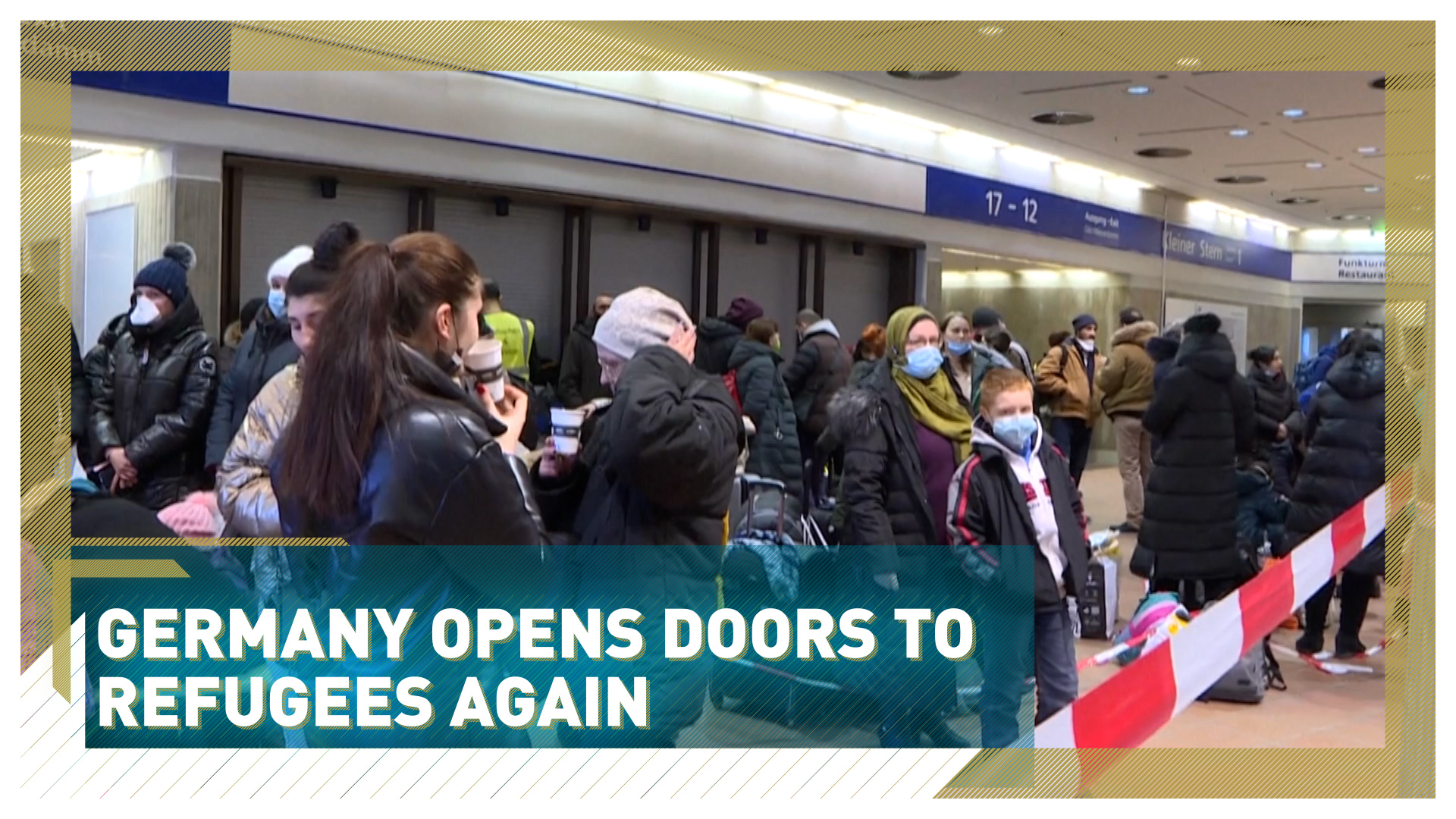
Viktoriia and her daughter are now two of the nearly 320,000 Ukrainian refugees in Germany.
Social benefits
She lists what government support they have received since arriving in Munich in early March.
"We have received living permission with the right to work in Germany. We have received our first social aid benefits and I even received medical assistance. I even applied for optics for free. Thank you."
The majority of Germans surveyed agree to help refugees from Ukraine in every way possible, yet the financial burden of accommodating and integrating them has largely been on municipal and state governments.
This has pushed some smaller cities and states, such as Saarland in western Germany, to announce that they can no longer receive people.
Now Germany's federal government is now stepping in.
Berlin will provide the 16 states with over $2 billion to help support refugees from Ukriane. Around $500 million will go towards the costs incurred to date. Another $500 million will pay for upcoming accommodation, while the remaining $1 billion is allocated for schooling and daycare centres.
The country's basic social protection scheme will also be made available to them, says Panu Poutvaara, the director of the IFO centre for International Institutional Comparisons and Migration Research.
"In Germany this is called 'Hartz IV benefits,' so that goes to economic assistance to refugees who don't find a job, housing allowance to help pay for the rent and access to non-emergency health care."
Class system
There are concerns about the class system this could create among Germany's refugee population - some people who arrived during the 2015/2016 refugee flow into Europe still do not have access to such benefits.
For Viktoriia and her daughter, the "protection" they believed Germany would offer when they were fleeing bombardment has proven true…but with no end in sight to the war in Ukraine questions are now turning to how long Germany can sustain such support.
