- Home
- China
- World
- Asia-Pacific
- Americas
- Europe
- Middle-East and Africa
- Politics
- Business
- Opinions
- Tech & Sci
- Culture
- Sports
- Travel
- Nature
- Picture
- Video
- Live
- TV
- Radio
- Specials
- Learn Chinese

 Europe;Russia
Share







Copied
WHAT'S THE ISSUE?
Despite Russia's modest economy and GDP contribution of just 1.7 percent, it is a major exporter of some of the world's most important commodities, including oil and gas. Therefore, it was inevitable that any sanctions on Russia would cause a ripple effect around the world.
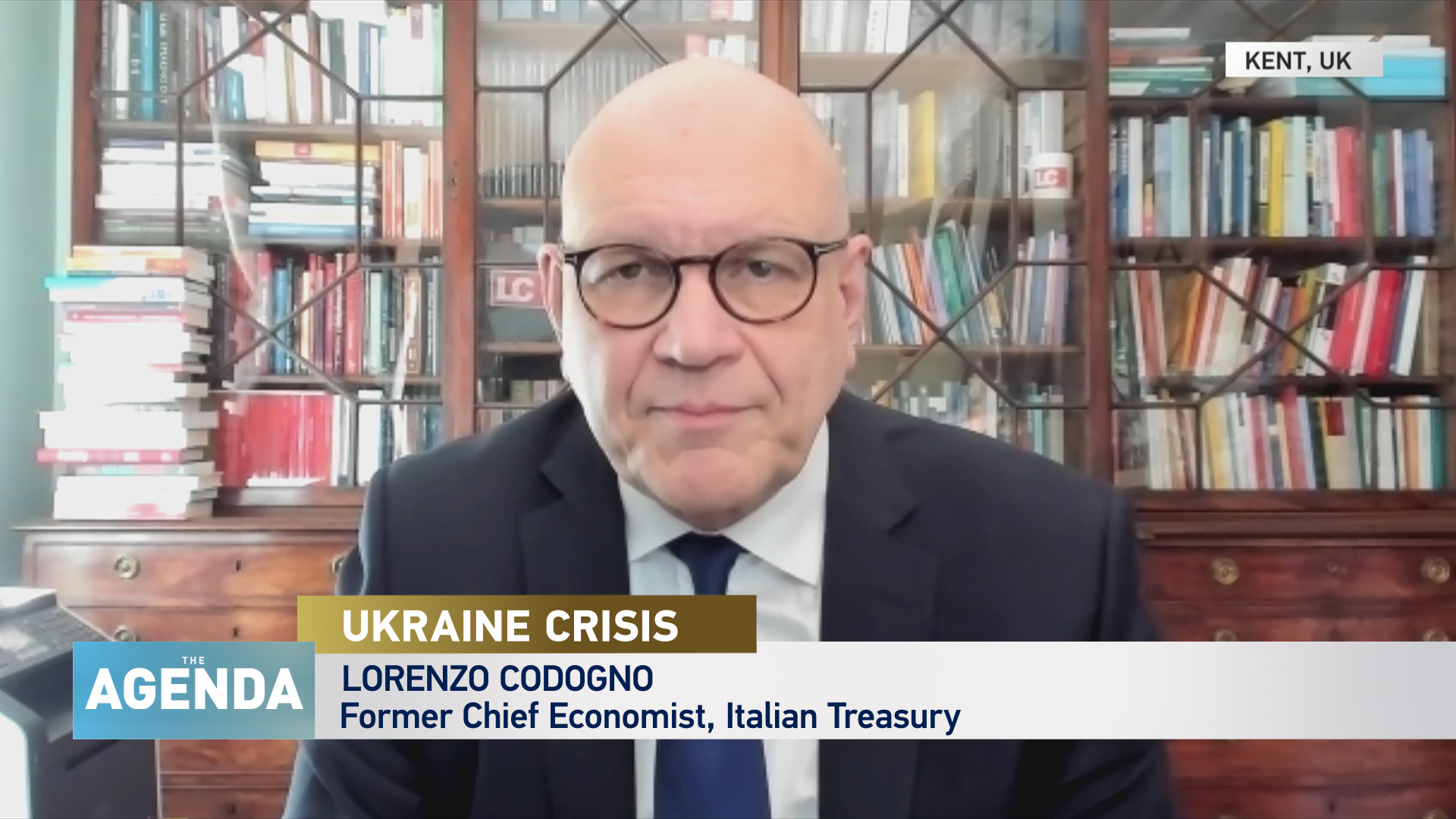
To discuss the impact of these sanctions on economies in Europe and beyond, The Agenda with Stephen Cole is joined by Lorenzo Codogno, former chief economist at the Italian Treasury.

MEET THE EXPERT:
Lorenzo Codogno knows a thing or two about the importance of preserving economic stability, having spent almost a decade as chief economist at the Italian Treasury Department (2006 to 2015). There, he held responsibility for macroeconomic forecasts, cyclical and structural analysis on the Italian/international economy, and analysis on European and international monetary and financial issues.
Prior to that, he was based with the Bank of America, London, where he was managing director, senior economist, and co-head of European Economics.
Codogno has since become a Senior Fellow of the LUISS School of European Political Economy in Rome, and is currently a visiting professor at the London School of Economics.
He also founded his own consulting business, Lorenzo Codogno Macro Advisors Ltd.
WHAT DOES LORENZO CODOGNO SAY?
Asked how the issue of rising energy prices can be tackled, Codogno said the problem isn't only the cost, but also the uncertainty of supply.
"It is a massive problem," he said. "Russia accounts for 11 percent of global oil production, 19 percent of gas production and 17 percent of solid fuel. If Russia decides to close the tap, it will be a massive problem for Europe."
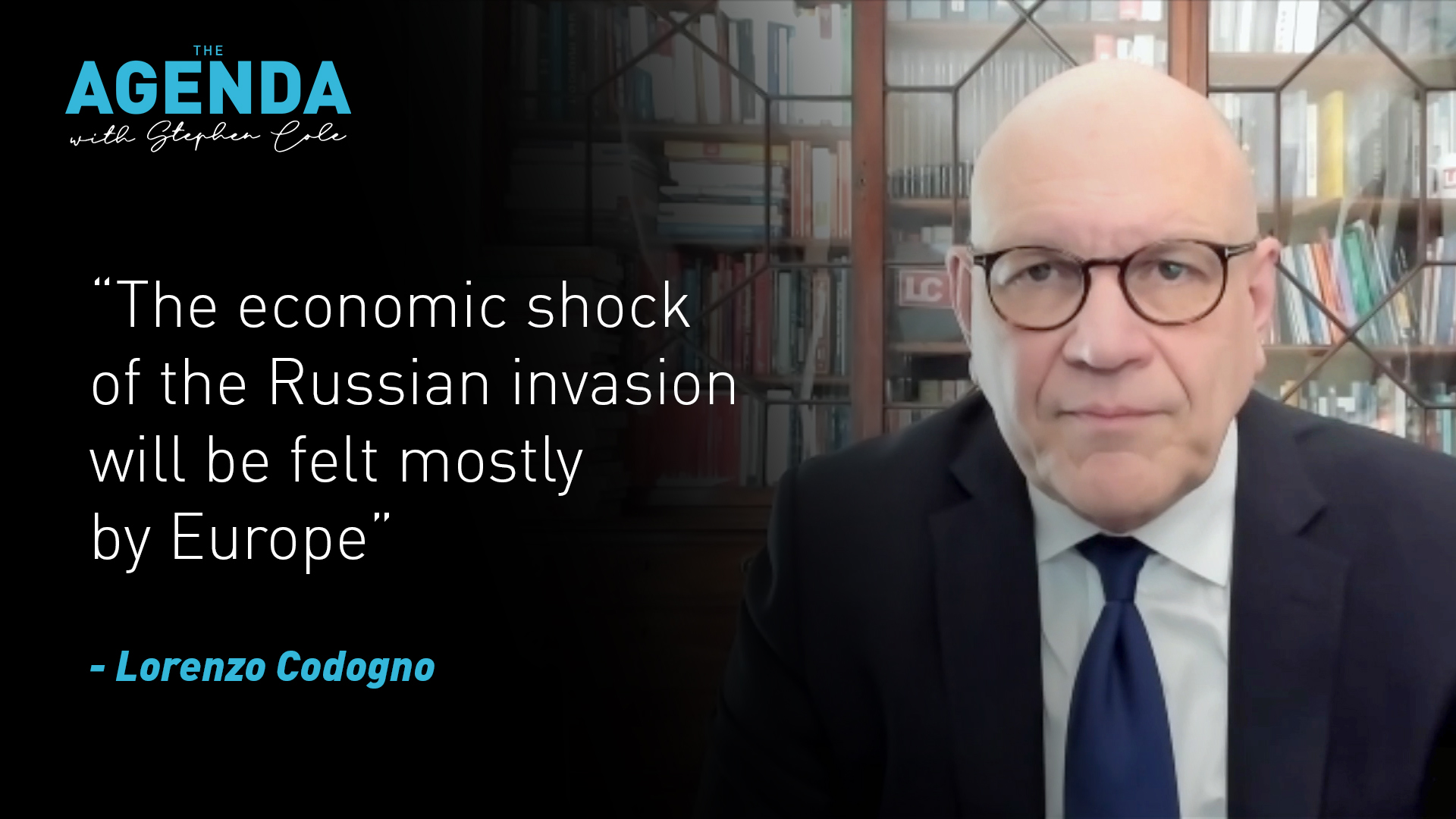
Asked about inflation in Europe, Codogno says inflation is likely to remain high – not just in Europe, but globally. However, he says this will eventually produce the opposite effect: "The clear risk is that the spike in prices will drive down the global economy, especially Europe, and eventually produce lower inflation."
Looking ahead, Codogno says the biggest worry lies with the weaker economies:. "Some emerging markets are clearly reliant on imports for food and energy and the lower you move into the income bracket, the higher the percentage of energy and food in the consumption basket.
"Therefore, emerging markets may have more severe problems than advanced countries if we see a global spike in inflation."
ALSO ON THE AGENDA
- Sanctions lawyer Adam Smith
- Sergey Aleksashenko, former deputy governor of Russia's central bank and former deputy finance minister for the Russian Federation

