- Home
- China
- World
- Asia-Pacific
- Americas
- Europe
- Middle-East and Africa
- Politics
- Business
- Opinions
- Tech & Sci
- Culture
- Sports
- Travel
- Nature
- Picture
- Video
- Live
- TV
- Specials
- Learn Chinese


Share







Copied
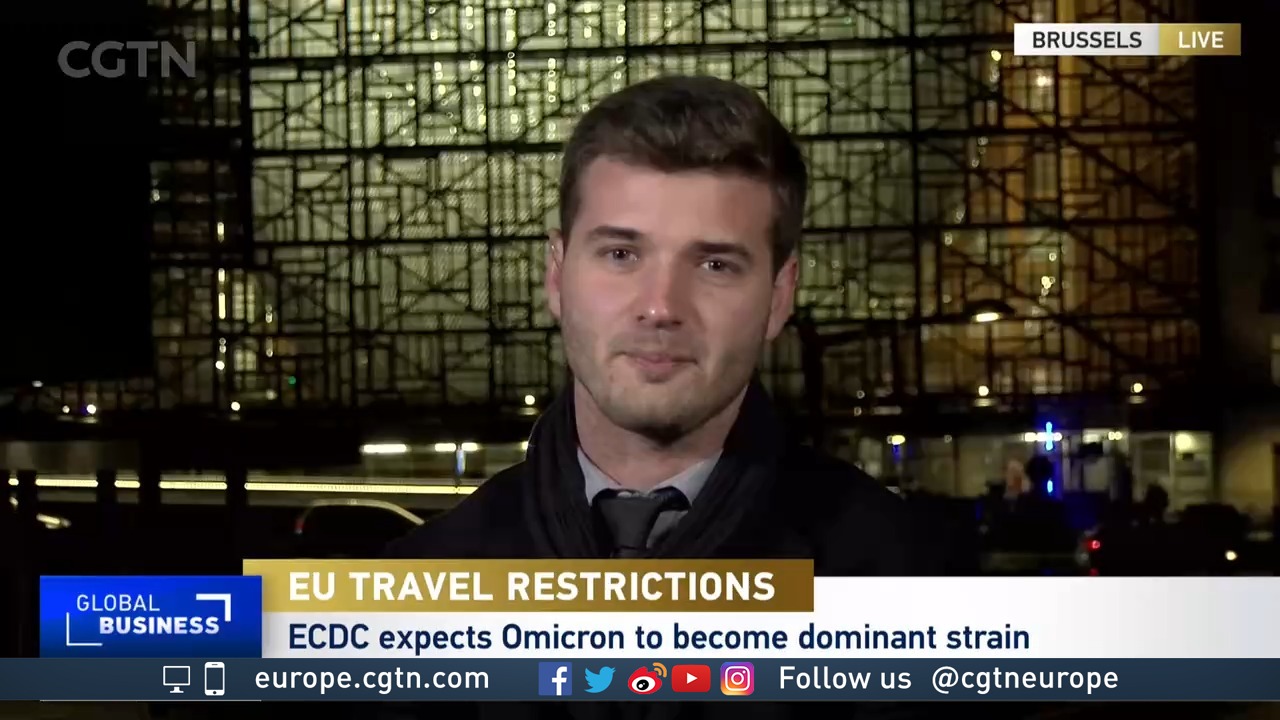
Polish Health Minister Adam Niedzielski, told an EU meeting that near-term "forecasts are not optimistic" for Europe as the holiday season for much of the continent approaches.
Health ministers from across the European Union met in Brussels on Tuesday to discuss recent developments and concluded that the Omicron strain and how to deal with it should dominate the EU summit on December 16.
"We have all seen in the last weeks the true scale of the challenge we still face against the virus that the world cannot yet shake off," European Commission chief Ursula von der Leyen told EU ambassadors on Tuesday in a video address.
READ MORE
Climate icons saving the planet
Omicron: 'Too late' to use border controls
Europe has recorded a record-high number of new infections in recent weeks as a fourth wave has spread across the continent.
Health experts say conditions are ripe for the winter surge: More people are spending time indoors, vaccine efficacy is likely wearing off, and the recently discovered Omicron variant has proven to be more transmissible that previous mutations of the virus.
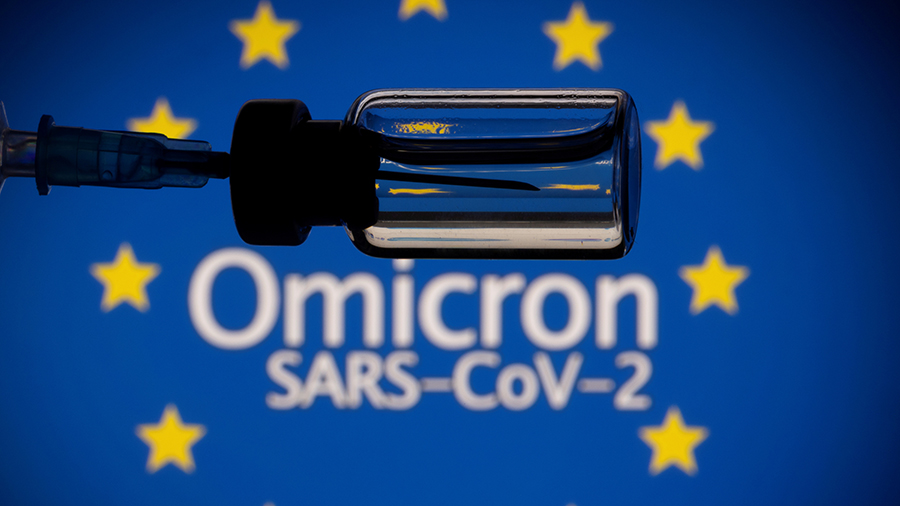
The first case of Omicron in the EU was discovered on November 26. /REUTERS/Dado Ruvic/Illustration/File Photo
Tuesday's meeting aimed to improve the coordination of bloc-wide measures, such as travel recommendations and vaccination campaigns.
A majority of healthcare policy in Europe is left up to individual countries to decide, which has at times left the bloc with a patchwork of different rules during the pandemic.
Ministers didn't announce any radical changes from current policy but agreed that the bloc was "facing a very challenging epidemiological situation," EU health commissioner Stella Kyriakides told reporters following the gathering.
She added that nations needed to urgently close the "immunization gap" by working harder to improve vaccine uptake among those who are more skeptical.
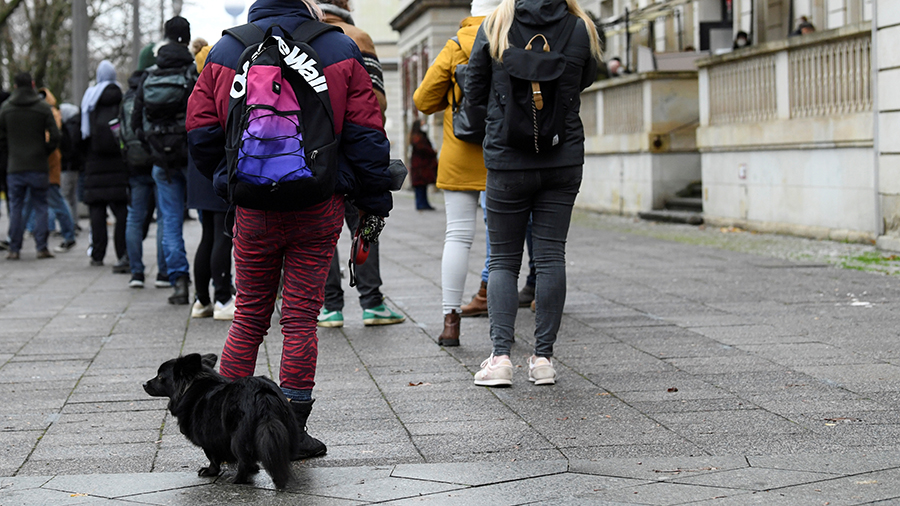
People queue for vaccination outside a doctor's practice in Berlin, Germany. /REUTERS/Annegret Hilse/File Photo
Some EU countries, such as Malta and Portugal, have fully vaccinated more than 90 percent of adults. However, six other nations still have a vaccination rate below 55 percent.
Many countries will soon expand COVID-19 jabs to include children 5 to 11 years old, following the European Medicines Agency's approval of a low-dose Pfizer-BioNTech jab.
The World Health Organization noted Tuesday that the highest rates of COVID-19 are "currently observed in the five to 14 years age group."
"It is not unusual today to see two to three times higher incidence among young children than in the average population," WHO Regional director Hans Kluge told reporters.
"The health risks extend beyond the children themselves," he added, suggesting that children could be passing the infection to older family members in their household.
There are concerns that prove extra dangerous as much of the continent gets together with family for holiday gatherings at the end of the year.
