- Home
- China
- World
- Asia-Pacific
- Americas
- Europe
- Middle-East and Africa
- Politics
- Business
- Opinions
- Tech & Sci
- Culture
- Sports
- Travel
- Nature
- Picture
- Video
- Live
- TV
- Specials
- Learn Chinese


Share







Copied
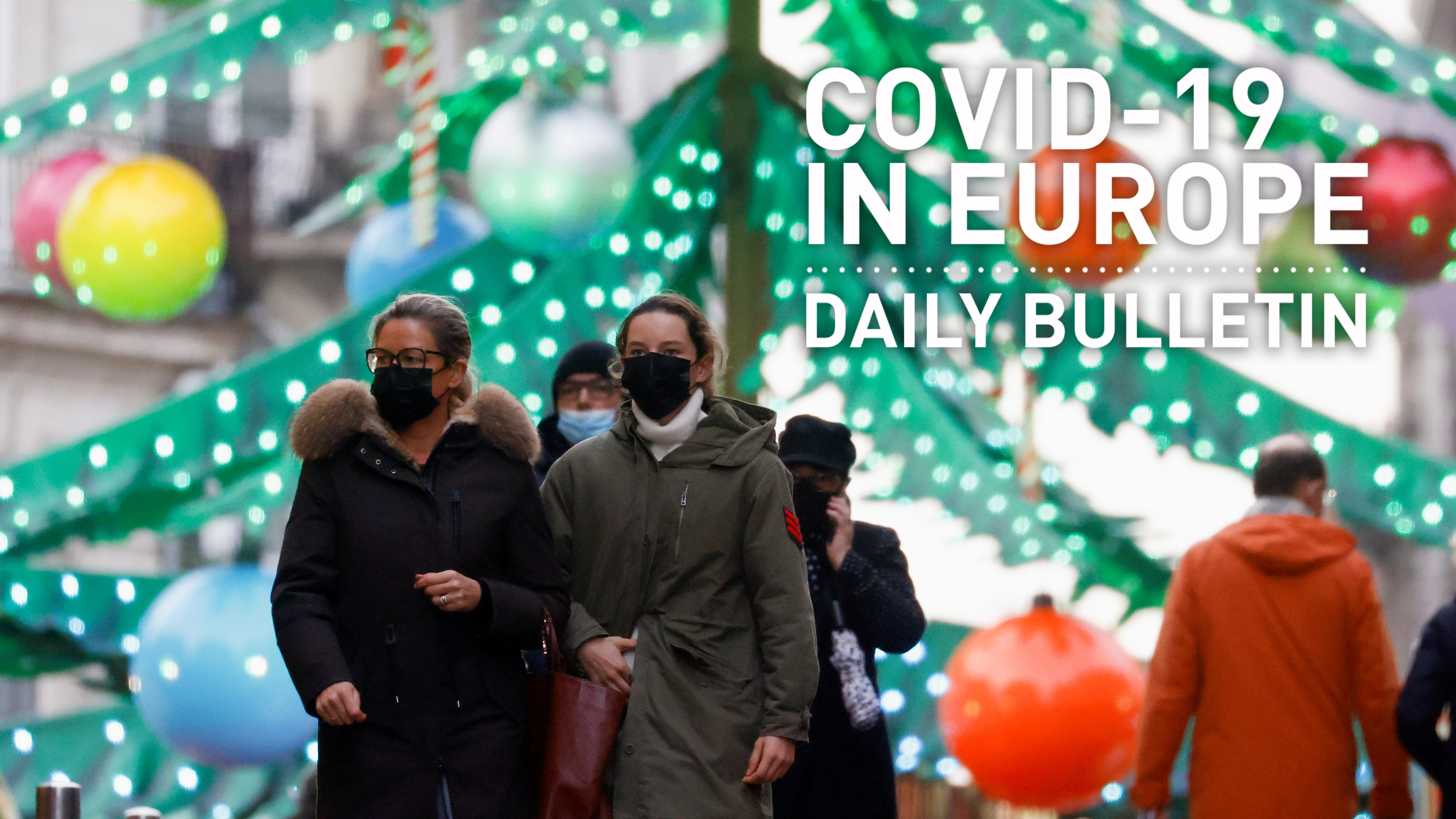
People wearing face masks walk in front of a Christmas tree carousel in Nantes, France. /REUTERS/Stephane Mahe
TOP HEADLINES
· Prime Minister Boris Johnson has apologized to the UK public after a video showing staff at Downing Street discussing a 2020 Christmas party was leaked to ITV news. Johnson had previously insisted no rules had been broken but has now launched an internal investigation and said there would be disciplinary action for anyone found to be involved.
· The UK is set to impose new restrictions, including advice to work from home tomorrow to curb the spread of Omicron. The so-called 'plan B' is likely to include mandatory vaccine passports to access large venues, according to media reports.
· Early test results indicate the Omicron variant appears to be no worse than other strains of COVID-19, according to the World Health Organization (WHO). Executive Director of the emergencies program, Michael Ryan, said it is likely to be more transmissible than previous variants, but preliminary data showed that cases might not be as severe. A more complete analysis is expected before Christmas.
· Omicron was reported in 57 countries, according to the WHO, with case numbers still rising in southern Africa and experts predicting an increase in hospitalizations as a consequence.
· "In no circumstances" is introducing vaccine mandates an acceptable measure, said the UN rights chief Michelle Bachelet in a video message on Wednesday. "In no circumstances should people be forcibly administered a vaccine, even if a person's refusal to comply with a mandatory vaccination policy may entail other legal consequences, including, for example, appropriate fines," she said.
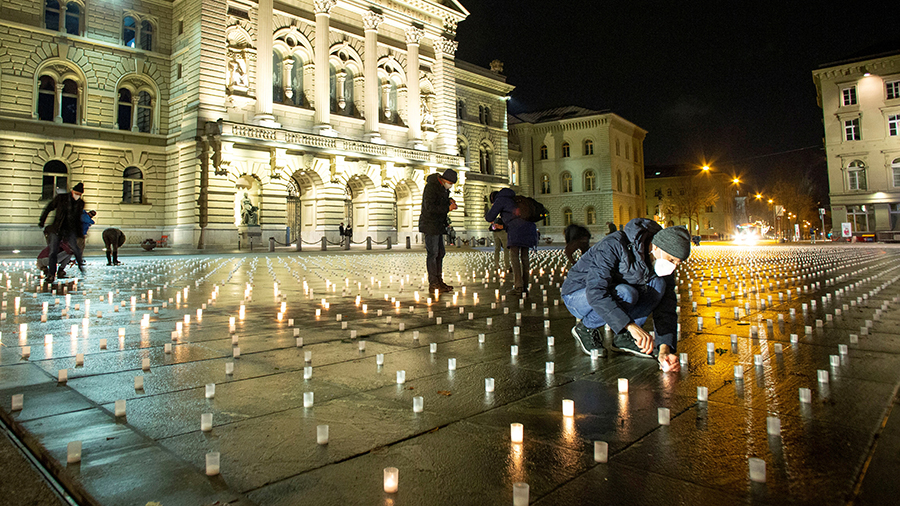
Volunteers light some of more than 11,000 candles, one for each victim of the pandemic in Switzerland, during a candlelight vigil in front of the seat of the Swiss federal parliament Bundeshaus in Bern on Tuesday. /REUTERS/Arnd Wiegmann
· The European Union (EU) expects its vaccine plants to produce 3.6 billion shots next year. Many EU countries have started administering booster shots to their population after reaching vaccination rates of up to 70 percent.
"We are going to produce in Europe much more than what is needed," EU officials told a press briefing.
· Travelers from France will be banned from going to the Philippines, as the country tries to prevent the spread of Omicron. The ban, which will run from 10 to 15 December, applies to everyone who has been in France in the past 14 days.
· Germany recorded its highest number of deaths since February, with 527 people dying in the last 24 hours. According to the Robert Koch Institute for disease control, the total number of new infections reported was 69,601 new infections were reported, 2,415 more than the previous week.
· Romania is set to ease some restrictions today, eliminating a night curfew and mandatory face masks outdoors. Wearing face masks will continue to be mandatory in public transport, indoor public spaces and crowded outdoor areas such as markets.
· "It was wonderful." The first person in the world to be given an approved vaccine, 91-year-old Briton Margaret Keenan, said on the anniversary of the event. "I cannot believe it now, what happened at the time... I'm so happy I got the jab."
FROM OUR GLOBAL COLLEAGUES
CGTN Europe: France shuts nightclubs to curb spread of Omicron COVID-19 infections
CGTN America: Over 133,000 cases of COVID-19 in children reported in U.S. last week
CGTN Africa: India's tour of South Africa reorganized due to COVID-19
