- Home
- China
- World
- Asia-Pacific
- Americas
- Europe
- Middle-East and Africa
- Politics
- Business
- Opinions
- Tech & Sci
- Culture
- Sports
- Travel
- Nature
- Picture
- Video
- Live
- TV
- Specials
- Learn Chinese

 North America;U.S.
Share







Copied
In this section of CGTN's #ZeroWasteChallenge, we asked our four volunteers from four continents to tell us about the food culture where they are.
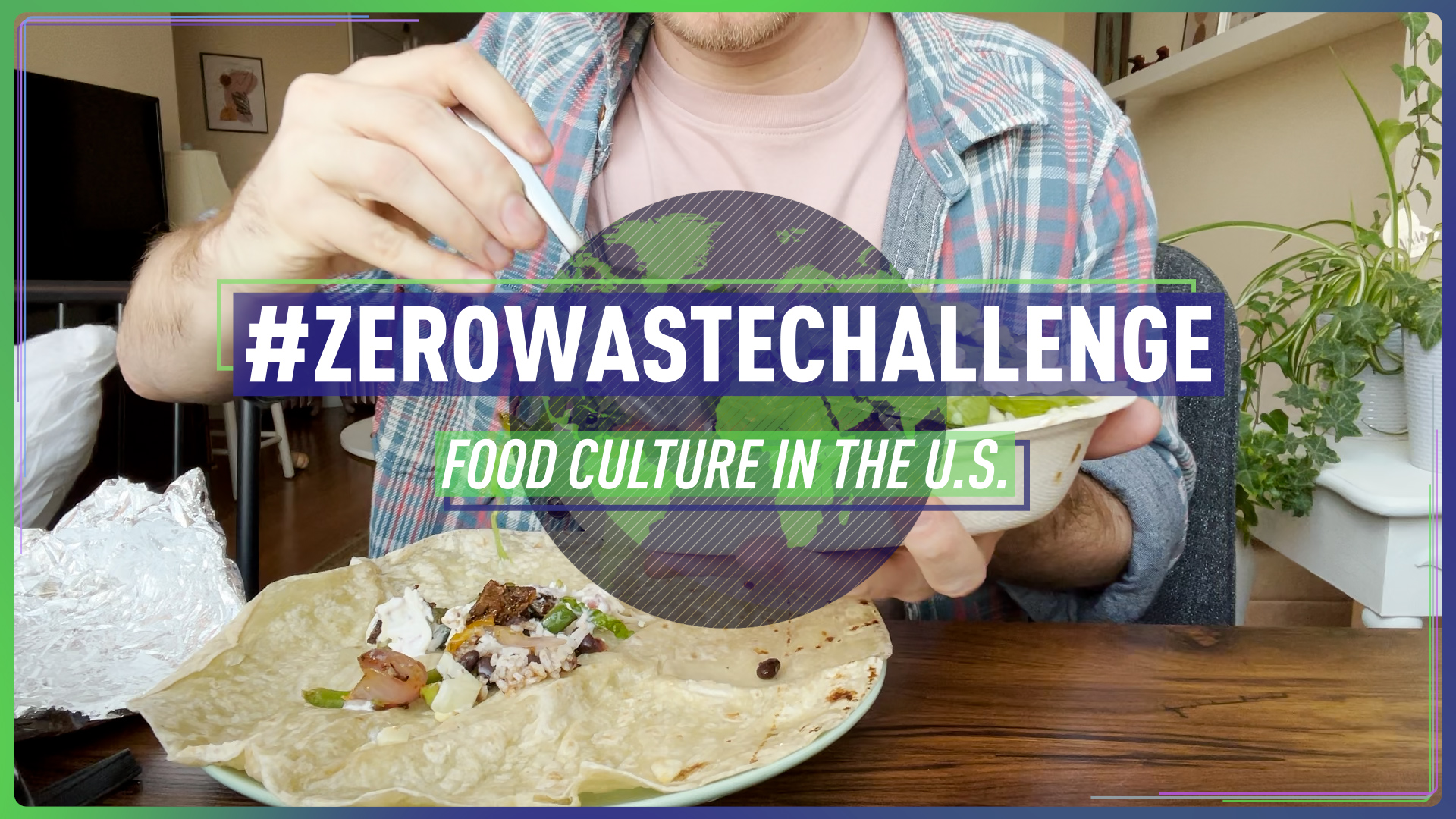
A 2018 report from the U.S. National Center for Health Statistics revealed that 36.6 percent of U.S. adults eat fast food at least once a day on average.
"There are rural areas where access to a supermarket or a place where you can get your own food is much more difficult to access than something like a McDonald's," explains Zach Danz, our #ZeroWasteChallenge volunteer in Washington DC. "It's just easier to go to a location like that and buy a meal there rather than drive up to an hour to buy groceries."
Food is culturally important – especially its quantity. "We Americans just love having a lot of food on our plate. Our portion sizes are gigantic – especially where I'm from, which is Texas," says Zach." And technology around food, our understanding about how to preserve food, has increased so much that we have more food available that's frozen or preserved somehow. And it's increasingly cheaper to produce."
Such plentiful production inevitably leads to wastage, and while Zach tries to be careful, he admits he also throws food away. "Sometimes it can be vegetables that have been sitting there for too long and we haven't had a chance to use. It can be a leftover meal from a restaurant that we just never got around to eating."
If the world needs to reduce waste, can Americans be convinced to cut down? Zach says it's a complicated picture. "Americans are so divided right now," he says. "It's difficult to turn back, especially if the only real change you see is that things become less convenient – people are resistant to changes like that. There are a lot of Americans who would be willing to make sacrifices for the greater good, but it will be very divisive."
This story is part of CGTN's #ZeroWasteChallenge as four people on four continents reveal how sustainable their country's culture is.
