- Home
- China
- World
- Asia-Pacific
- Americas
- Europe
- Middle-East and Africa
- Politics
- Business
- Opinions
- Tech & Sci
- Culture
- Sports
- Travel
- Nature
- Picture
- Video
- Live
- TV
- Specials
- Learn Chinese

 North America;U.S.
Share







Copied
As part of CGTN's Zero Waste Challenge we asked participants to describe their regular shopping experiences, with a particular eye on waste. What they reported back might help us all understand each other's cultures – and perhaps help save the planet...
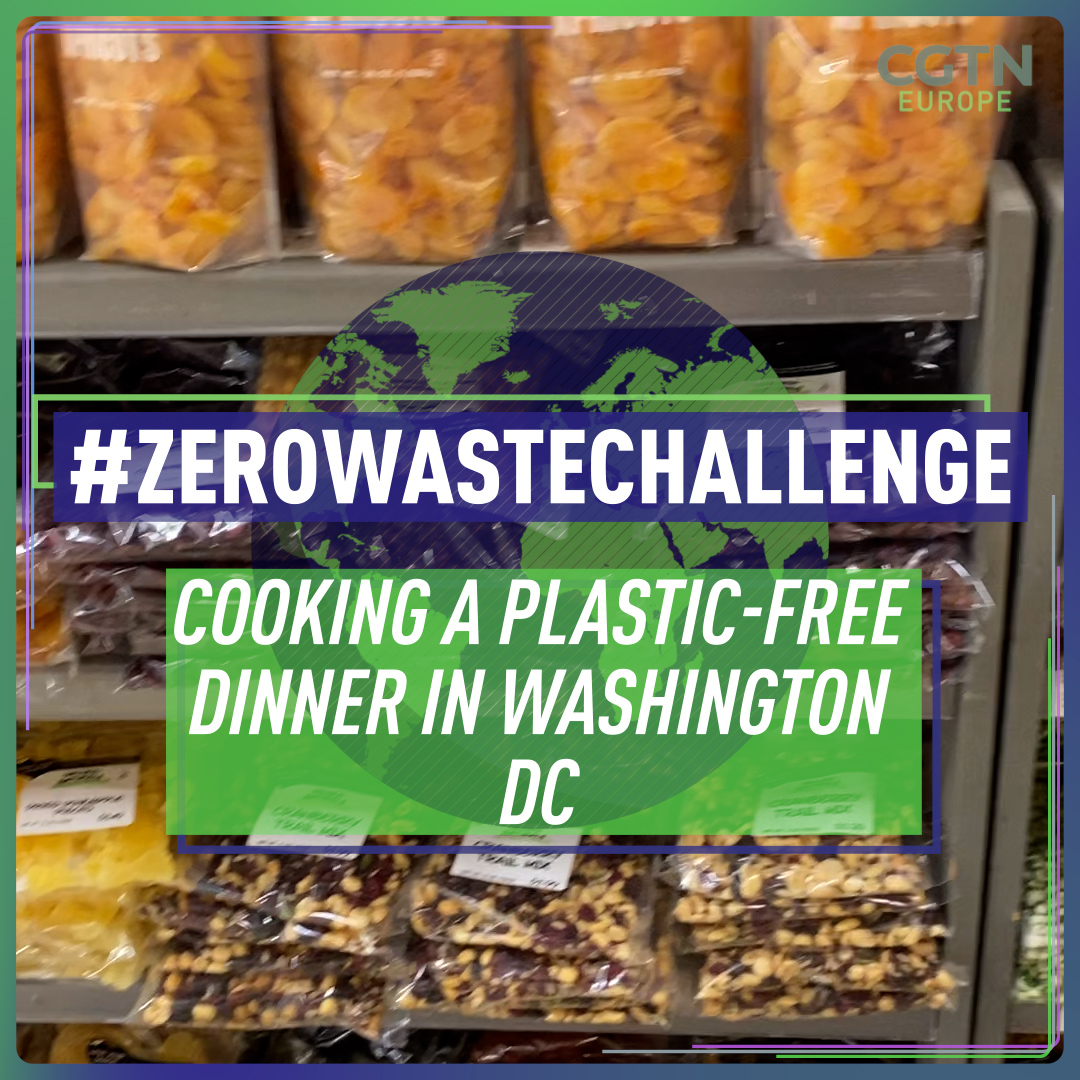
U.S.: Zach Danz in Washington DC
Zach Danz, who grew up in Texas but is now living in Washington DC, set himself his own personal challenge: "Going to a grocery store and trying to make a waste-free lunch for myself."
It proved a surprisingly tall order.
"It's already pretty much impossible trying to change it to plastic-free, and I failed – there were a couple of places that I didn't realize products had some plastic bits. That was the most shocking thing to me – that it's impossible, even if you're trying to cook sustainably, to do it totally plastic-free."
Zach acknowledges that so-called farmers' markets offer an opportunity for local unwrapped food – but not always, and not always affordably. "In a lot of big cities, you can find them, but they usually come maybe once a week, and they're much more expensive than going to any type of supermarket. It's a niche reserved for people who are well-off."
What makes that all the more annoying for Zach is that he has seen different ways of shopping. "I spent many years living in China, and you can go to an open market – it would be the cheapest and easiest option. Rather than the American style of going to the supermarket and stocking up on a bunch of stuff, I would often say 'What do I want to cook tonight?' and buy just the ingredients that I needed for that meal.
"Of course, I had a refrigerator and I would keep extra things just in case. But I also, if I brought my own bag, it would basically be a zero-waste meal. And that's not an option here in the United States, at least as far as I can find, that's easily accessible to many people."
This story is part of CGTN's #ZeroWasteChallenge as four people on four continents reveal how sustainable their country's culture is.
