- Home
- China
- World
- Asia-Pacific
- Americas
- Europe
- Middle-East and Africa
- Politics
- Business
- Opinions
- Tech & Sci
- Culture
- Sports
- Travel
- Nature
- Picture
- Video
- Live
- TV
- Specials
- Learn Chinese

 Asia;China
Share







Copied
As part of CGTN's Zero Waste Challenge we asked participants to describe their regular shopping experiences, with a particular eye on waste. What they reported back might help us all understand each other's cultures – and perhaps help save the planet...
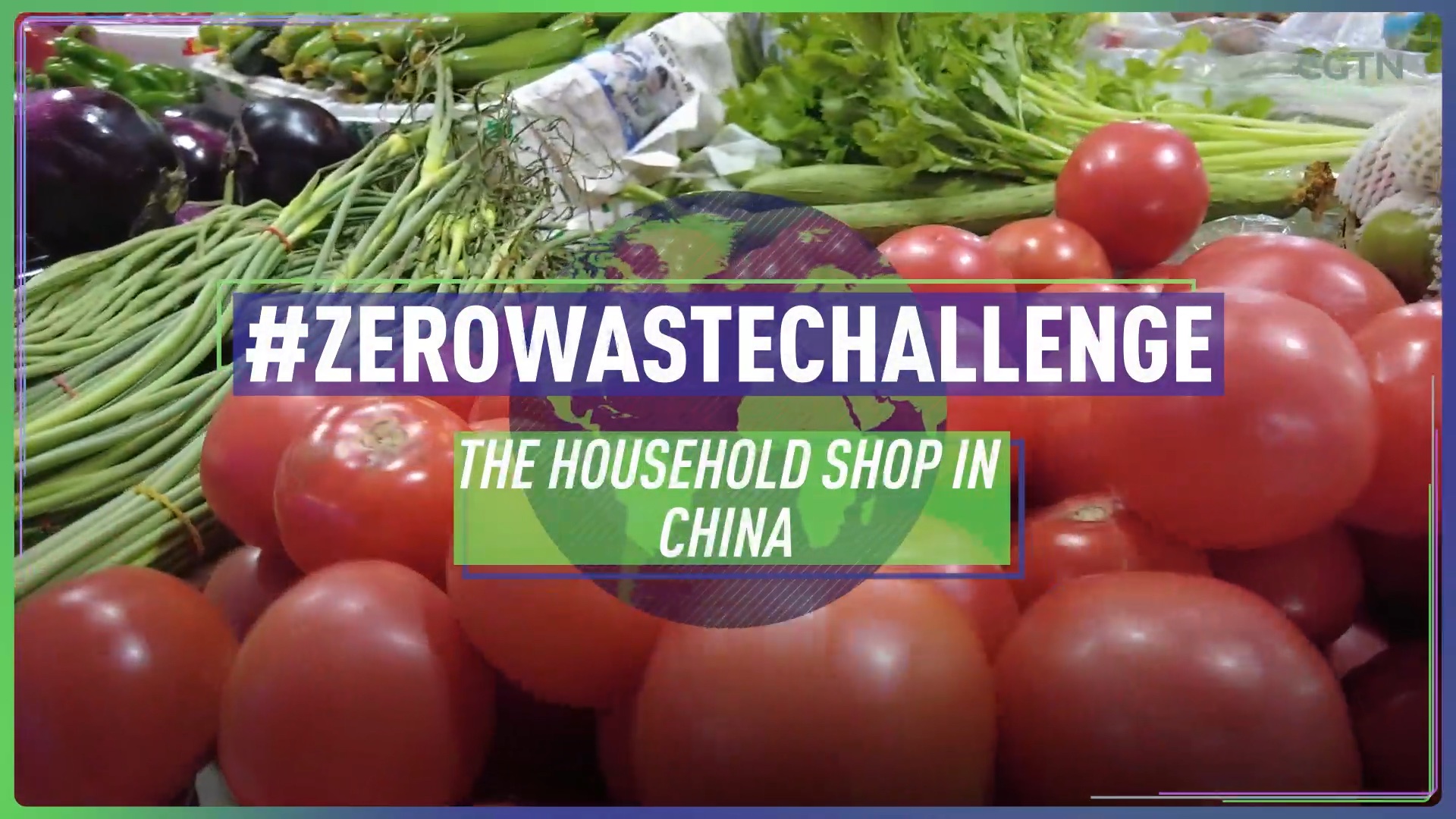
China: Yang Xinmeng in Beijing
"Supermarkets are usually on the lower floor in the high-end malls, so products are more expensive and are usually exported from other countries," explains Yang Xinmeng.
"Some younger people buy from a supermarket, but usually it's just snacks or fruits. The older generation will always go to the local market – like farmers' markets in Western countries. The products they sell are local, they're cheaper and they're not overpackaged.
"In the high-end supermarkets, the only thing I could find without packaging was Kiwi fruit. In the local market, everything is unpackaged, but when you want to buy something, vendors will come to you with a single-use plastic bag. So you have to learn to say 'No, I have my own bag.'
"A few years ago, China started to charge for single-use plastic bags. It's more expensive in high-end supermarkets, so people bring their own reusable bag.
"Local markets will survive at least a few more decades, I believe, because when talking about vegetables and fruits or daily necessities, they're cheaper and have more varieties. Supermarkets are in a shopping center, so usually when people get off work, they won't go to a shopping center, they shop close by."
This story is part of CGTN's #ZeroWasteChallenge as four people on four continents reveal how sustainable their country's culture is.
