- Home
- China
- World
- Asia-Pacific
- Americas
- Europe
- Middle-East and Africa
- Politics
- Business
- Opinions
- Tech & Sci
- Culture
- Sports
- Travel
- Nature
- Picture
- Video
- Live
- TV
- Specials
- Learn Chinese

 Europe;
Share







Copied
TOP HEADLINES
• Russia again reported a new daily record of 819 COVID-19 deaths on Saturday, taking the country's total to 169,683. It is the third successive day Russia has reported a record number of deaths.
• Germany has upgraded Israel, Turkey and the U.S. to having a high COVID-19 risk. Montenegro and Vietnam are also affected by the upgrade, while Portugal has been downgraded and is no longer a high-risk area, with the exception of Lisbon and the Algarve. SEE ACROSS EUROPE, BELOW
• The Dutch government could lift social distancing rules on September 20, but Prime Minister Mark Rutte said some pandemic restrictions are still needed for now, including keeping nightclubs and restaurants closed after midnight. SEE ACROSS EUROPE, BELOW
• Norway's government will end some restrictions related to the COVID-19 pandemic, including allowing universities to proceed with in-person teaching, but other limits will remain until September. SEE ACROSS EUROPE, BELOW
• The UK is to cut the cost of National Health Service COVID-19 travel tests and is reviewing the list of private providers to ensure pricing is transparent. All tests used for travel have to be purchased, with the travel industry saying the cost is too high. SEE ACROSS EUROPE, BELOW
• The Dutch Formula 1 Grand Prix will go ahead as planned on September 5 if stands are allowed to be filled at two-thirds of their original capacity. F1 is set to return to the Zandvoort circuit in the dunes west of Amsterdam for the first time since 1985.
• In the UK, hundreds of families who have lost loved ones during the COVID-19 pandemic will attend a‘picnics and reflection’event at Runnymede, Memorial Fields in Surrey today.
• European stocks scaled new highs on Friday and clocked their fourth consecutive week of gains on optimism over steady pandemic recovery. The pan-European STOXX 600 index inched up for the tenth straight session, matching its best winning streak since December 2006.
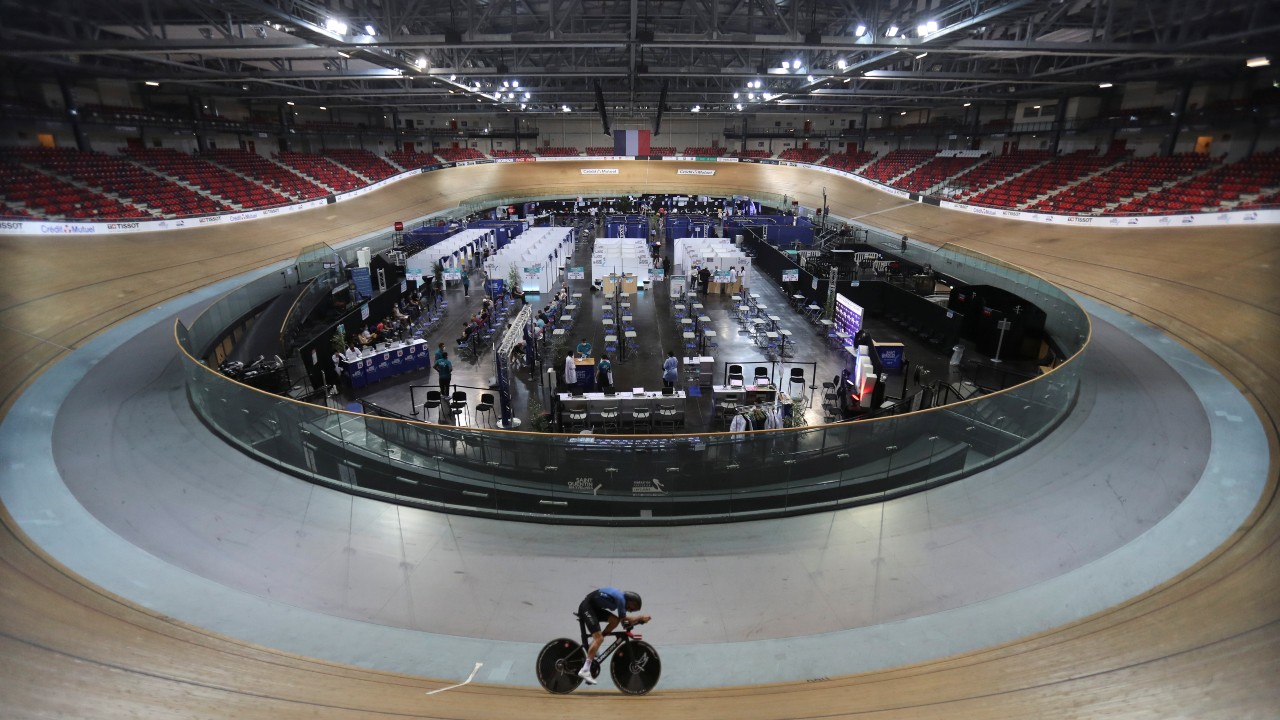
A cyclist trains as vaccinations take place at the indoor Velodrome National of Saint-Quentin-en-Yvelines in Montigny-le-Bretonneux, southwest of Paris, France. /Sarah Meyssonnier/Reuters
ACROSS EUROPE
Michael Voss in London
The UK government has announced that it is cutting the cost of PCR COVID-19 tests needed for foreign travel by $28. This follows complaints that high costs were deterring holidaymakers and slowing travel sector recovery.
Almost 90 percent of UK adults have now had their first dose of COVID-19 vaccine and more than three-quarters have had two doses, according to the latest government figures. There are concerns, though, that nearly a third of those under the age of 30 still haven't had a COVID-19 jab.
The total number of new daily cases remains high at 32,700, with a hundred more deaths reported within 28 days of a positive test.
The first Oxford AstraZeneca vaccines donated by the UK are en route to Africa, with about 170,000 doses going to Zambia and the Democratic Republic of Congo.
France
As French authorities vow to more strictly enforce the mandatory health pass for entering restaurants, trains and public places, more people are lining up to get vaccinated – albeit sometimes unwillingly.
While police were allowed to be lenient in the first week, they must now insist citizens show the pass in public places, proving they have been vaccinated or recently tested negative – and from October tests will no longer be free.
"We need to get vaccinated to be able to do things that we need to do, because doing an antigen test each time for the health pass is quite cumbersome," said Charazede Benamirouche at a vaccination centre in the northern city of Saint-Quentin.
"I feel forced to get the vaccination...to enjoy my freedom, to enjoy my life of a 31-year-old young woman," said Yasmina M'Baraka, a distribution centre worker getting her first jab.
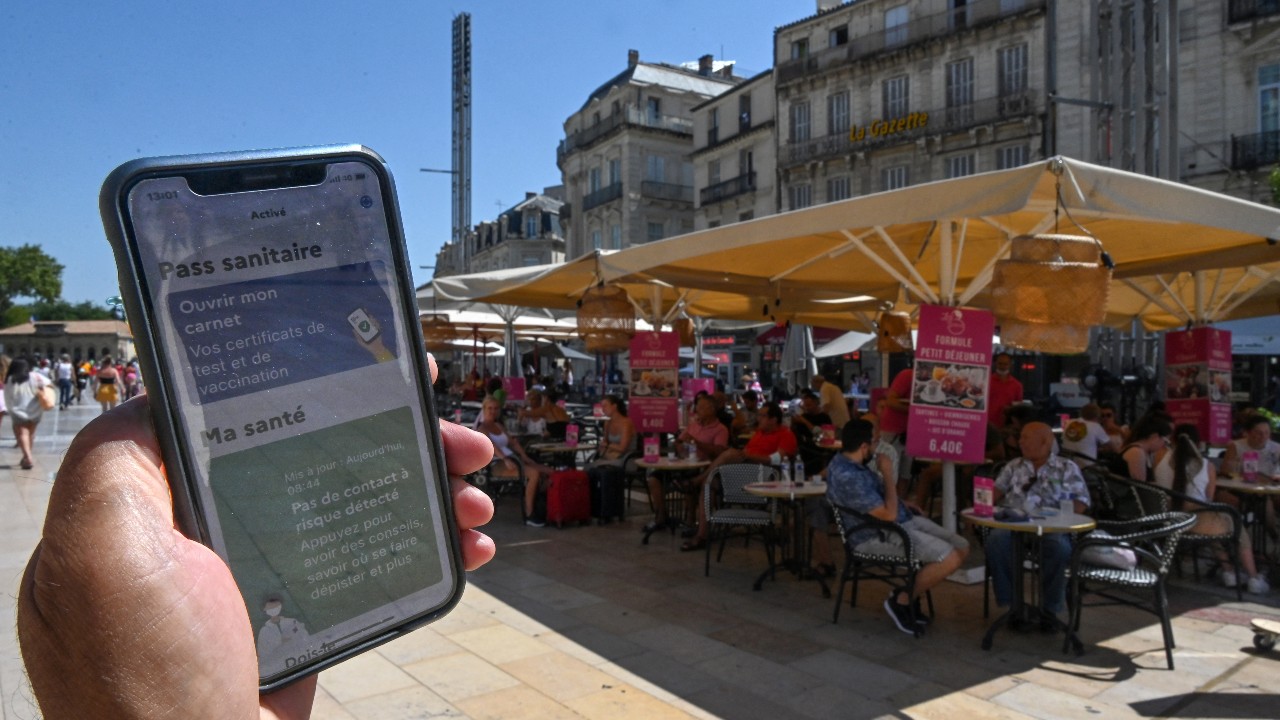
France's digital health pass, shown here outside a restaurant in Montpellier, will be more strictly enforced. /Pascal Guyot/AFP
Netherlands
Dutch Prime Minister Mark Rutte said the government is considering lifting social distancing rules on September 20 as COVID-19 cases in the Netherlands ease. In the week ended August 10, cases fell by 14 percent in the Netherlands to 103 per 100,000 inhabitants.
However, Rutte said some pandemic restrictions are still needed for now, including keeping nightclubs and restaurants closed after midnight. An attempt on June 26 to lift most restrictions, including on nightlife, had to be canceled two weeks later after cases in young adults surged.
"The beginning of the summer taught us that we really have to be cautious," Rutte said. However, he said colleges would be allowed to reopen at the end of August without students being required to observe social distancing rules in class.
Germany
The German government has upgraded Israel, Turkey and the United States to having a high COVID-19 risk, triggering a minimum five-day quarantine requirement for those who are unvaccinated. Montenegro and Vietnam are also affected by the upgrade, while Portugal has been downgraded and is no longer a high-risk area, with the exception of Lisbon and the Algarve.
The upgrade will take effect on Sunday, except in the case of Turkey, when it will come into force on Tuesday night given the large number of people in Germany with a Turkish background.
Travellers from high-risk countries must go into quarantine for 10 days unless they can show proof of vaccination or recovery from COVID-19. Self-isolation can be ended after five days at the earliest with a negative test.
Norway
Norway's government will end some restrictions related to the COVID-19 pandemic, but stopped short of announcing a full reopening of the economy. "We will open up where we can, and hold back where we must," Health Minister Bent Hoeie told a news conference.
In April the government launched a four-step plan to remove restrictions, completing the first three steps by mid-June, but twice postponing the fourth step because of concerns about the Delta coronavirus variant.
While some measures will now be relaxed, allowing universities to proceed with in-person teaching for instance, other restrictions will remain until early September, Hoeie said – including bars and restaurants being limited to table service, limits of 20 people on gatherings in private homes, and restrictions on adult recreational sports.
FROM OUR GLOBAL COLLEAGUES
CGTN China: Did the virus come from bat coronavirus RaTG13?
CGTN Africa: Rwanda launches door-to-door vaccination for vulnerable groups
CGTN America: The Heat: vaccine controversy
Sign up here to get the COVID-19 Europe bulletin sent directly to your inbox.
CGTN Europe has been providing in-depth coverage of the novel coronavirus story as it has unfolded. Here you can read the essential information about the crisis.
