- Home
- China
- World
- Europe
- Politics
- Business
- Opinions
- Tech & Sci
- Culture
- Sports
- Travel
- Nature
- Picture
- Video
- Live
- TV
- Specials


Share






Copied
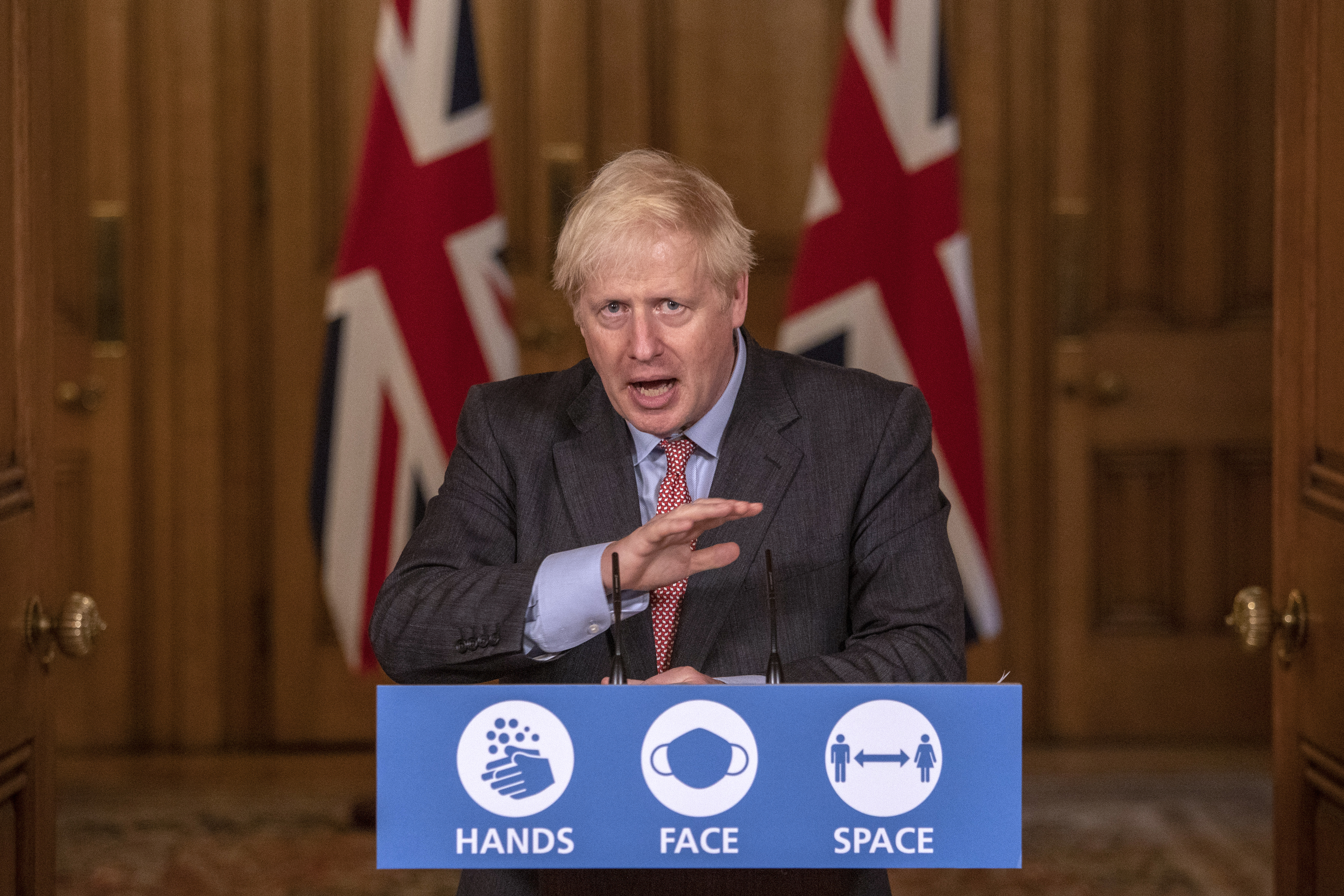
UK Prime Minister Boris Johnson. /AFP
UK Prime Minister Boris Johnson and European Commission President Ursula von der Leyen have issued a joint statement admitting that "significant gaps remained" in their efforts to agree a post-Brexit trade deal.
The statement, issued after the two held video-talks, said they "agreed on the importance of finding an agreement, if at all possible, as a strong basis for a strategic EU-UK relationship in future."
It said that although progress had been made by their negotiators "significant gaps remained, notably, but not only, in the areas of fisheries, the level playing field, and governance."
"They instructed their chief negotiators to work intensively in order to try to bride those gaps. They agreed to speak on a regular basis on this issue," the statement concluded.
Time is running out for both parties to agree to a deal, after Johnson put in place a deadline of 15 October to conclude talks prior to the end of the Brexit transition period on 31 December.
On Friday, Von der Leyen said that talks needed to "intensify" if a deal was to be agreed before that deadline, but Johnson says it is the EU that must now make up its mind.
He told the BBC: "I hope that we get a deal, it's up to our friends and partners to be commonsensical. They've done a deal with Canada of a kind that we want, why shouldn't they do it with us? We're so near, we've been members for 45 years. It's all there, it's just up to them."
However, while Von der Leyen admitted progress has been made she added that key areas of the deal remain open ended and suggested they may not reach a resolution.

She said: "We should not forget we have made progress in many many different fields, but of course the most difficult ones are still completely open."
The UK joined what became the European Union in 1973. A referendum held in 2016 saw people vote by 51.9 percent to 48.1 percent to leave. That officially happened at the end of January, but there is a "transition" period until the end of the year to allow time for a deal to be struck on future relations.
As part of the European Union, businesses in the UK could trade freely across borders within the EU. The talks have covered a range of issues including the terms of future trade and how to ensure neither side's firms get an unfair advantage, via things like weaker regulation or government subsidies.
Another of the key remaining stumbling blocks is fishing. A high-profile part of the Brexit campaign in 2016 was changes to the access given to UK waters as part of the EU. No agreement has been reached so far, and the UK's chief Brexit negotiator David Frost has warned it could prevent a deal, saying "these issues are fundamental to our future status as an independent country.”
Earlier this week the European Union launched legal action against the UK for what it claims is a breach of the original Brexit Withdrawal Agreement agreed last year.