- Home
- China
- World
- Europe
- Politics
- Business
- Opinions
- Tech & Sci
- Culture
- Sports
- Travel
- Nature
- Picture
- Video
- Live
- TV
- Specials

 Europe;Europe
Share






Copied
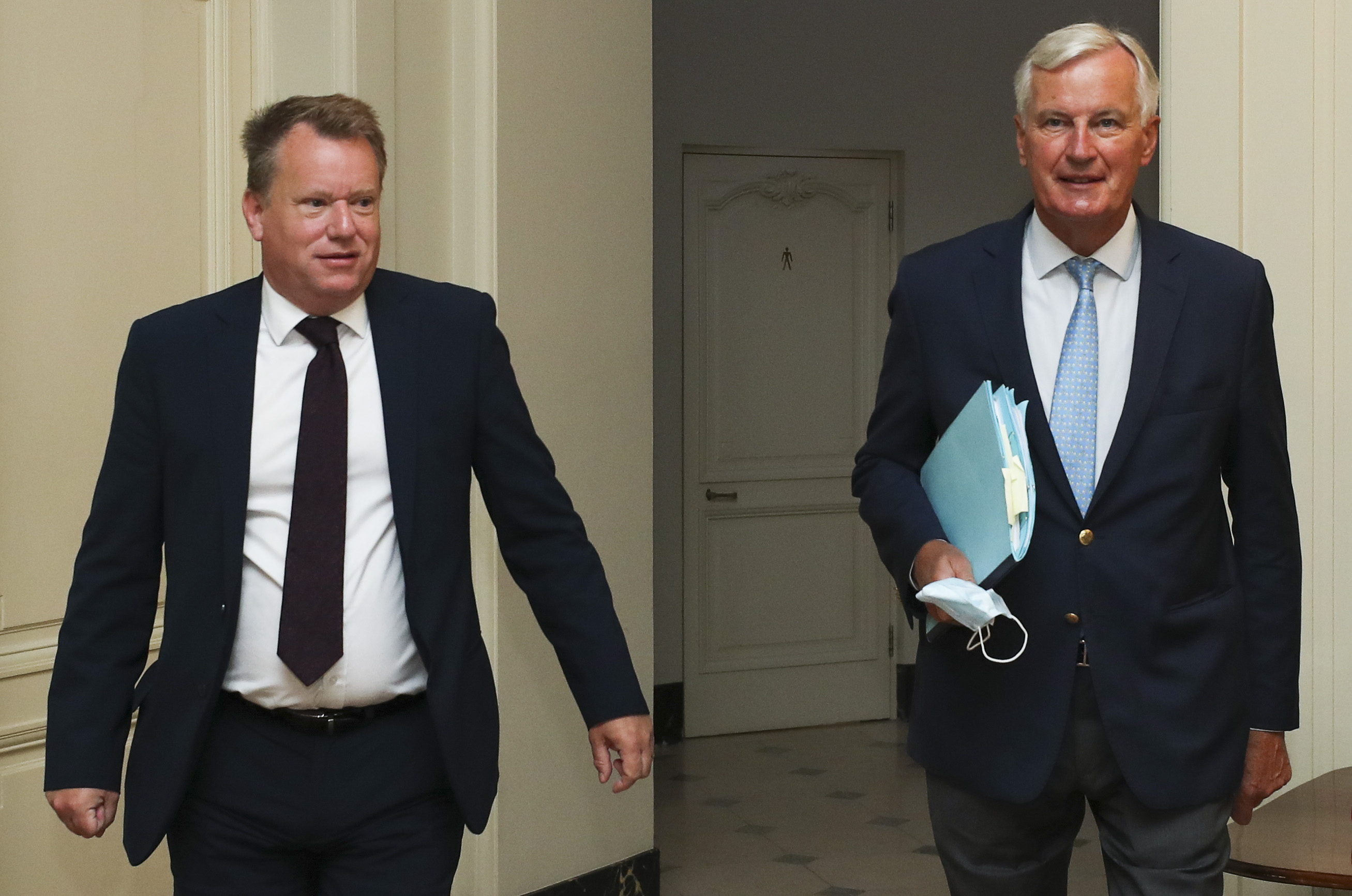
Michel Barnier (r) has said that it felt at times as though they were going backwards during the talks with the UK's David Frost (l). Yves Herman/AFP
The EU's Chief Negotiator Michel Barnier has warned that a post-Brexit trade deal now "seems unlikely" after the seventh round of talks with the UK ended in little progress.
Both sides have accepted time is running out, with a deal on the future trade agreement needing to be secured by the end of October at the latest.
Britain left the EU in January after 47 years of membership, and is currently in an 11-month transition period where it is following the bloc's rules and regulations.
UK Prime Minister Boris Johnson has ruled out any extension to the transition period and both sides agree a deal needs to be agreed by October in order for it to be ratified.
"Too often this week it felt as if we were going backwards more than forwards," Barnier told a press conference.
"Given the short time left, what I said in London in July remains true. Today at this stage, an agreement between the UK and the European Union seems unlikely. I simply do not understand why we are wasting valuable time."
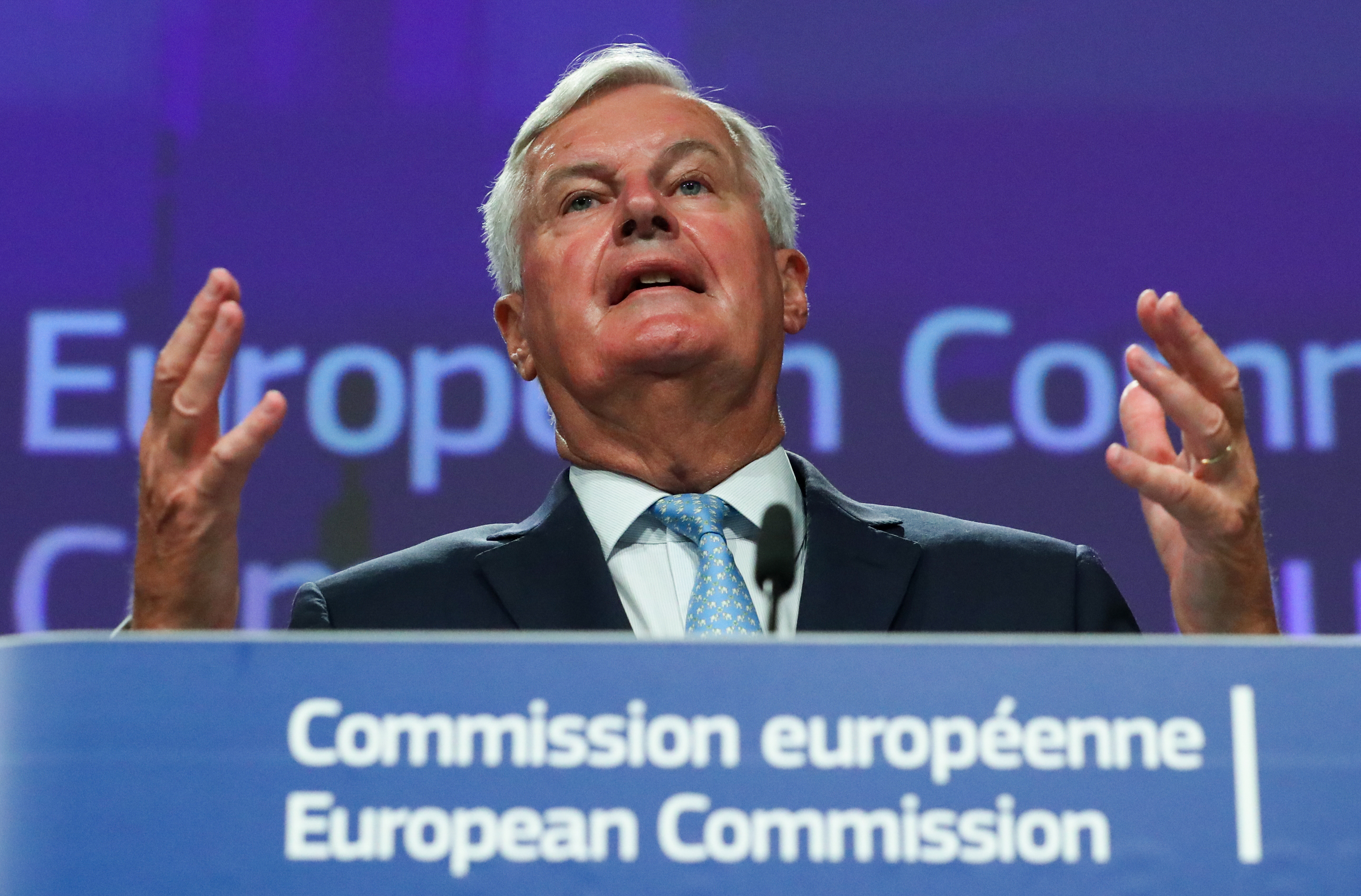
Barnier believes a lot of time is being wasted during the talks. Yves Herman/AFP
The key stumbling blocks have been fishing rights, state aid and rules on fair competition.
The EU's insistence on the level playing field – which would keep the UK aligned on some EU rules and standards to guarantee a high-level of single market access – has held up the talks, with the UK wanting freedom to diverge in some areas in order to strike trade deals elsewhere.
Barnier said "the need for a level playing field is not going to go away, even if the UK continues to exist on a low-quality agreement on goods and services only."
His UK counterpart David Frost agreed after the latest negotiations that there had been "little progress."
Frost said a deal could still be struck, but accused the EU of ruling out "any substantive work" unless the UK accepts the bloc's fishing policy and rules on state aid.
There remain two final rounds of negotiations in September, with an EU Council summit being held in mid-October which could prove decisive.
While discussions have been derailed by the coronavirus pandemic, EU policy analyst Pieter Cleppe thinks it now has increased the likelihood of a deal.
He told CGTN: "This is a time to say look, let's be adults. The UK has pretty equivalent standards in regulation, of course they can't have the same market access as other EU member states but as long as they're willing to continue to coordinate with us, and I think there's every sign the UK is willing to do that."
Weakened by the pandemic, there is the possibility that both sides are likely to try to avoid a messy no-deal scenario.