- Home
- China
- World
- Europe
- Politics
- Business
- Opinions
- Tech & Sci
- Culture
- Sports
- Travel
- Nature
- Picture
- Video
- Live
- TV
- Specials


Share







Copied
Western Europe has been experiencing the hottest temperatures of the year this week, with countries such as Italy, Spain and France reaching up to 41 degrees Celsius and cities going on 'red alert'.
Even countries traditionally milder like Germany and the UK have experienced some uncharacteristic temperatures, with London reporting 37.8˚ degrees this Friday - making it the third hottest day on record for the country.
The sweltering heatwave that has hit the continent is on trend with the last few decades, which have seen heatwaves become more frequent, longer in duration, and more dangerous.
In France, authorities warned against the risks of storms and forest fires after 100 hectares of forest were destroyed by a wildfire in the region of Nouvelle-Aquitaine in southwest France on Thursday. 100 people were evacuated.
Fourteen cities in Italy were put on 'red alert' by the Ministry of Health, which urged people to take extra precautions against the heat. Older people were particularly encouraged to drink more water and avoid leaving the house between 12 and 5pm , while their families and neighbors were encouraged to check on them and not leave them alone.
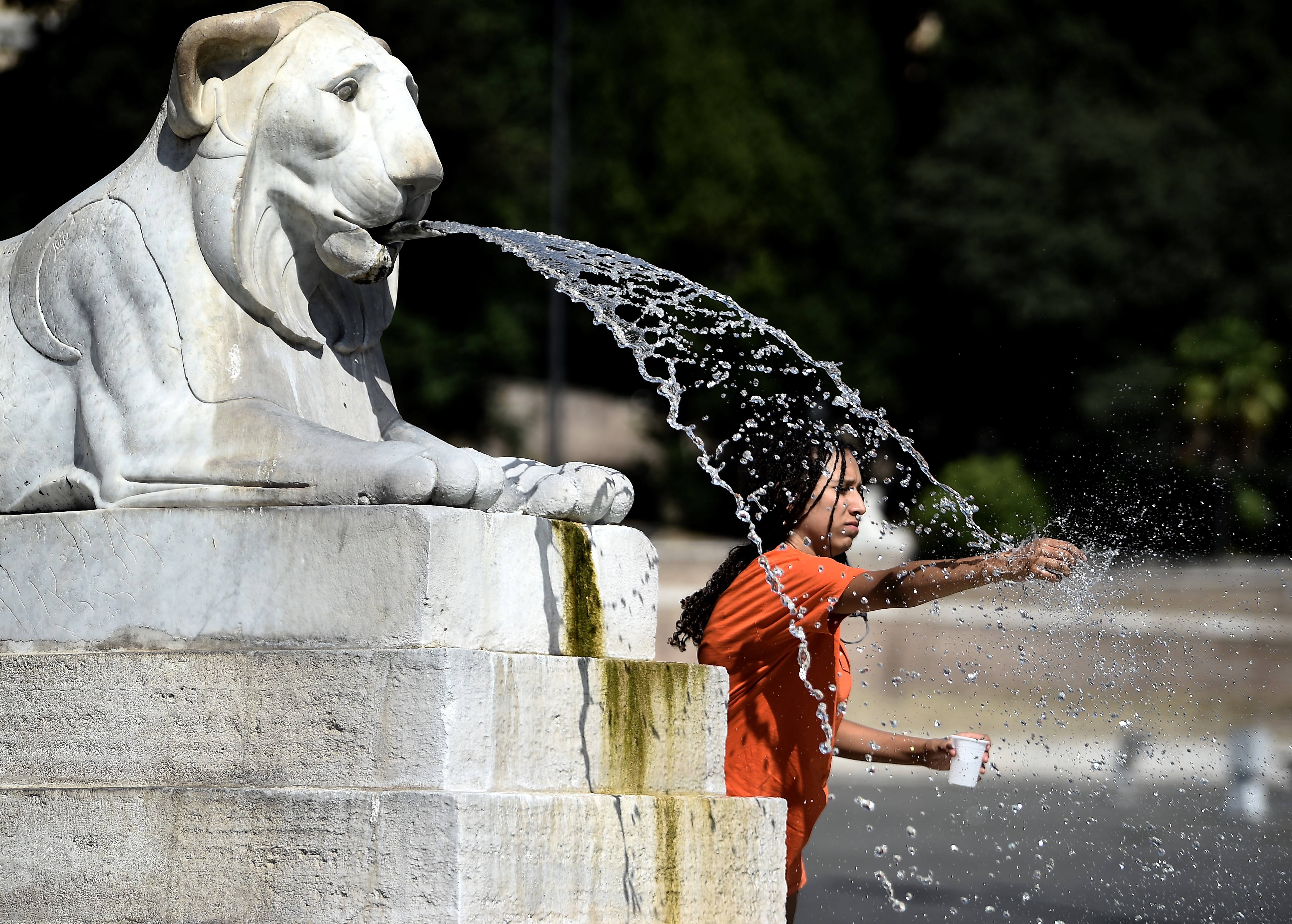
A woman cools off at the Barcaccia fountain by the Spanish Steps in Rome. Credits: Filippo MONTEFORTE / AFP
The elderly - already the most vulnerable to the coronavirus - are also the category most at risk to extreme temperatures, especially those who have previous health conditions. Those people, sheltering at home from the virus, don't have the chance to find cooling in shopping malls or libraries with air conditioning as usual. Cooling has also a high cost: once again, the most vulnerable are low-income families who are likely to have already been hit the hardest by the pandemic.
This double health threat of the heatwave and the virus complicates the efforts of governments to reduce the risk of infection of COVID-19. People have been crowding beaches, exposing themselves to a greater risk of contracting the virus.
In Cornwall, UK, where people packed the local beaches, COVID-19 cases have tripled in a week. The city council of Brighton on the English south coast, asked visitors to stay away, saying "large numbers make it impossible to maintain physical distancing."
Dutch authorities also tried to discourage beach-goers from crowding the popular Zandvoort, a coastal town near Amsterdam, and aim for more isolated beaches.

People at the beach in Marseille, southern France. French health ministry said on July 21, 2020 that COVID-19 transmission is increasing during the summer holiday season. Credits: CLEMENT MAHOUDEAU / AFP
Hospitals could also be once again put on further strain as people suffering from heat strokes and similar require treatment.
The World Health Organization (WHO) has cautioned Europe against a 'long, hot summer', advising the public, medical professionals and public health authorities 'to be prepared for heatwaves and to prevent and tackle the possible health consequences of heat exposure', worsened this year by the pandemic has the same groups are most vulnerable both to the heat and the virus.
There was hope during the winter that the summer heat could stop the virus from spreading as it does for seasonal viruses like the flu. At the moment there's very little evidence to back up this claim, and the virus continues to infect new patients. On the other side, one thing that has been proven to be effective in containing the virus, is face masks.
Many have suggested the pandemic is a chance to slow down our lifestyle and live more sustainably, with the rate of pollution in our atmosphere sharply decreasing during lockdown. It offers an opportunity to tackle the current climate crisis, especially as this interacts with the pandemic. With 40˚ it's really hard to keep a face mask on.
With the number of new cases rising every day, we can take relief knowing that at least the heatwave should be cool off in the coming weeks, as forecasters have announced. But the threats of COVID-19 and climate change won't disappear as fast.