- Home
- China
- World
- Europe
- Politics
- Business
- Opinions
- Tech & Sci
- Culture
- Sports
- Travel
- Nature
- Picture
- Video
- Live
- TV
- Specials


Share







Copied
TOP HEADLINES
• On the fourth day of EU recovery fund talks, German Chancellor Angela Merkel says "an agreement is possible" and that she is cautiously optimistic the bloc's 27 leaders will reach a deal. While French President Emmanuel Macron says there are "possible hopes of a compromise," but adds that "nothing has been agreed yet, so I will remain extremely cautious." One of the greatest obstacles to progress is the "Frugal Four" – Sweden, Denmark, Austria and the Netherlands – which, along with Finland, oppose $500 billion being offered in the form of grants (rather than as loans) to countries hardest hit by COVID-19.
• A coronavirus vaccine developed by scientists at Oxford University appears to be safe and effective at producing antibodies, key early trials show. Phase one trials involving around 1,077 people showed the injection led to the participants producing antibodies and white cells that are able to fight the coronavirus.
• A separate trial in China involving more than 500 people showed that most had developed a widespread antibody immune response. The Chinese vaccine, named Ad5-nCOV, is developed by CanSino Biologics and a military research unit. The results of both the UK and the Chinese trials have been published by The Lancet medical journal.
• The UK has signed deals for 90 million doses of coronavirus vaccines being developed by an alliance between the pharmaceutical companies BioNtech, Pfizer and Valneva.
• France is introducing fines for failure to wear masks in enclosed public spaces. People will risk a $154 penalty.
• Scientists from King's College London say they have found there are six distinct types of coronavirus, all defined by different clusters of symptoms.
• Italy's Lazio region, which includes Rome, is warning citizens that local lockdowns might have to be enforced if there are more clusters of coronavirus infections.
• Early research suggests a new treatment from Southampton-based biotech firm, Synairgen, could significantly reduce deaths. The process uses a protein called interferon beta, which the body produces when it gets a viral infection. The protein is inhaled directly into the lungs of COVID-19 patients, using a nebulizer, with the aim of stimulating an immune response. It is estimated that it can cut the odds of patients developing severe disease by 79 percent.
• Russia has reported 5,940 new cases, pushing its total infection tally to 777,486, which is the fourth largest in the world.
• Cyprus's health minister says there is concern that coronavirus-infected migrants might be seeping through the ethnically divided island nation's porous ceasefire line, according to AP. Minister Constantinos Ioannou pointed to "a problem" following migrants who have tested positive for the coronavirus crossing the north to seek asylum in the south.
• The Lancashire borough of Blackburn with Darwen in England has the country's highest infection rate – 79.2 cases per 100,000 people in the week leading up to 17 July were reported by Public Health England. In Leicester, the first place in the UK to have had a local lockdown, infections have fallen.
• Four million people have been told to stay at home in the Spanish region of Catalonia following a recent spike in cases.
• French authorities have reported 400 to 500 active coronavirus outbreak clusters, but there is no sign of an imminent "second wave," says health minister Olivier Veran.
• Denmark will allow sailors stranded at sea since the beginning of the coronavirus outbreak to come ashore and be reunited with family and friends. Travel restrictions have made it impossible for almost 200,000 seafarers to rotate crews.
• Russia says it is looking to produce 200 million coronavirus vaccines this year. The Russian Direct Investment Fund (RDIF) is working alongside a government research institute on one of several vaccine projects that are currently being developed in the country.
• Greece has introduced stricter rules for foreign seasonal workers in an attempt to better control imported COVID-19 cases. Government spokesman Stelios Petsas says that land entry to Greece will only be permitted via six northern border crossings.
• German reinsurance giant Munich Re said on Monday that the global coronavirus pandemic wiped around $800 million off its core business in the second quarter of 2020.
• The number of coronavirus deaths around the world has surpassed 605,000, and the U.S. is the worst-affected country. There are more than 14.4 million confirmed cases, according to data from Johns Hopkins University.
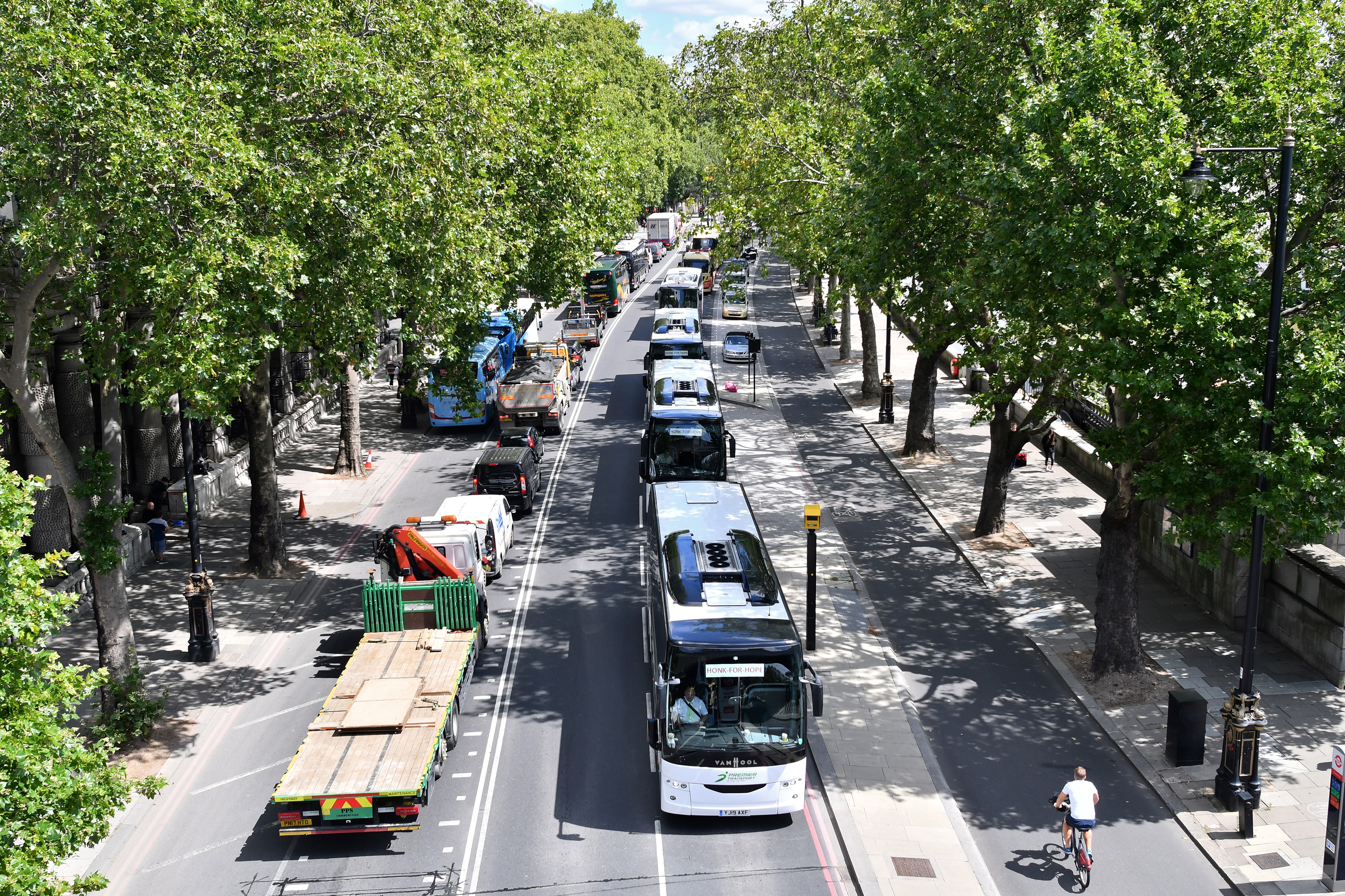
Empty coaches tail back as drivers take part in a demonstration called 'Honk for Hope' in London. They are calling for more funding for their industry, which is suffering as a result of the coronavirus pandemic. /Justin Tallis/ AFP
ACROSS EUROPE
Ross Cullen in Paris
France brings in stricter measures on Monday on the wearing of face masks.
They are now compulsory in all indoor public spaces, such as shops and shopping centers, banks, and covered markets. Office blocks will be assessed on a case-by-case basis, dependent on the employer.
The move is part of a drive from the government to combat a rising reproduction rate, an increase in cases and new clusters being detected. Wearing a face mask will continue to be optional outside, such as in the street, in parks, at the beach or on hiking trails.
Putting on a nose-and-mouth covering is already obligatory on public transport across France and in restaurants and cafes when you are moving around inside the establishment.
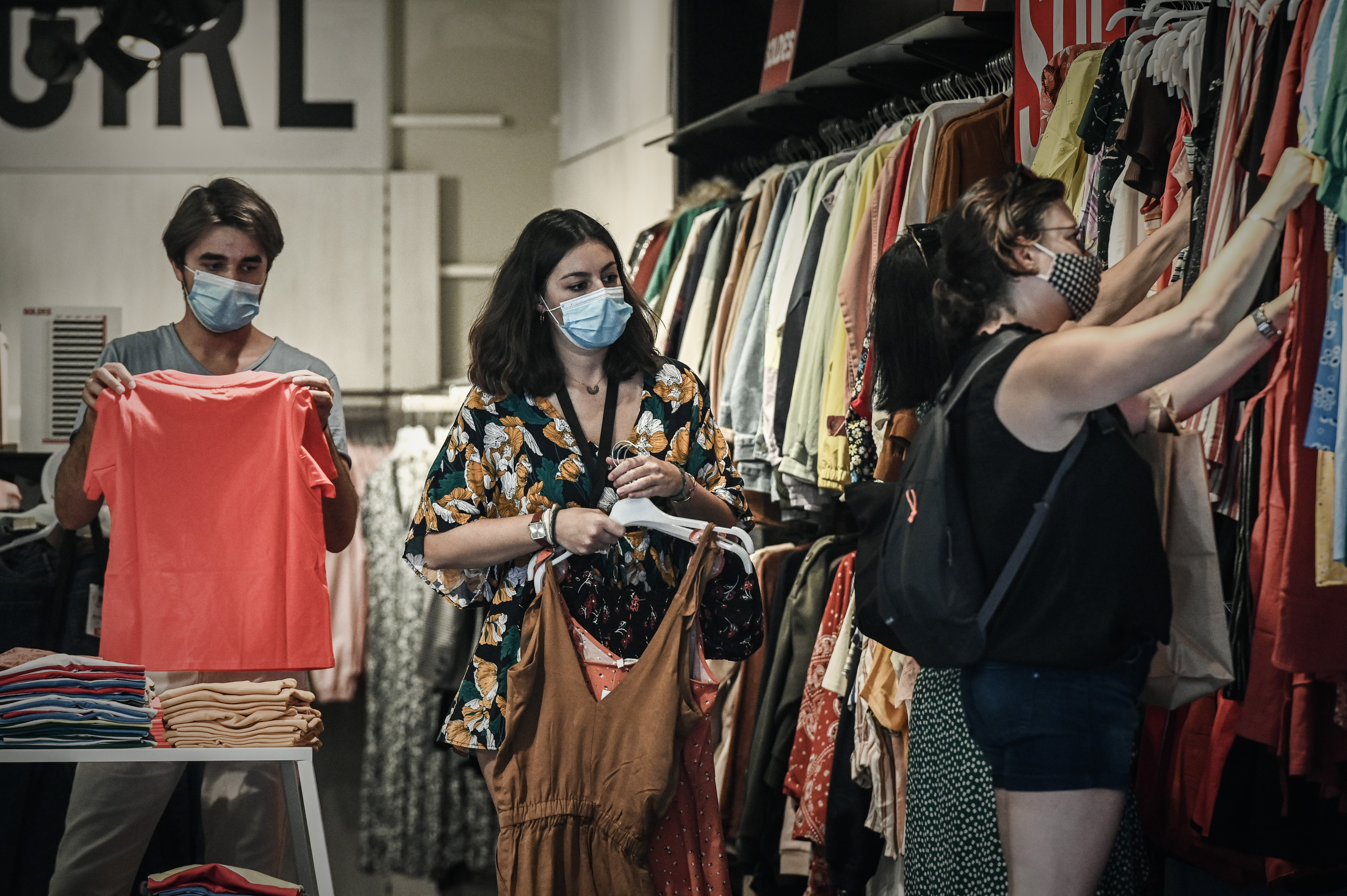
People wearing face masks at a store in Bordeaux. /Philippe Lopez/AFP
Toni Waterman in Brussels
Belgium
Concerns are growing that Belgium could be on the cusp of a second wave of coronavirus infections.
Fresh data out on Monday showed an average 154 new cases per day over the past week, a 66 percent increase from the week before. One of the country's top virologists, Marc Van Ranst, believes this is the beginning of a second wave.
The government has decided to put the brake on further lockdown easing, but it's quite ready to reimpose restrictions.
In anticipation of a long battle ahead, the government has extended a temporary unemployment scheme until the end of the year.
Brussels
Marathon talks continue as EU leaders try to strike a deal on a COVID-19 recovery fund and the bloc's next long-term budget.
After negotiating through the weekend, the so-called frugal four – Austria, the Netherlands, Denmark and Sweden – signaled a willingness to accept $450 billion of the fund being distributed as grants, while the remainder would come as low-interest loans.
But the concession won't come for free. In exchange, the frugals want additional rebates in the EU long-term budget, which is being negotiated alongside the recovery fund.
In an early morning tweet, Austrian Chancellor Sebastian Kurz said: "Tough negotiations have just ended, we can be very happy with today's results."
Besides the grant-to-loan ratio, other differences remain – including the fund's overall size, the governance of the money and controls over spending.
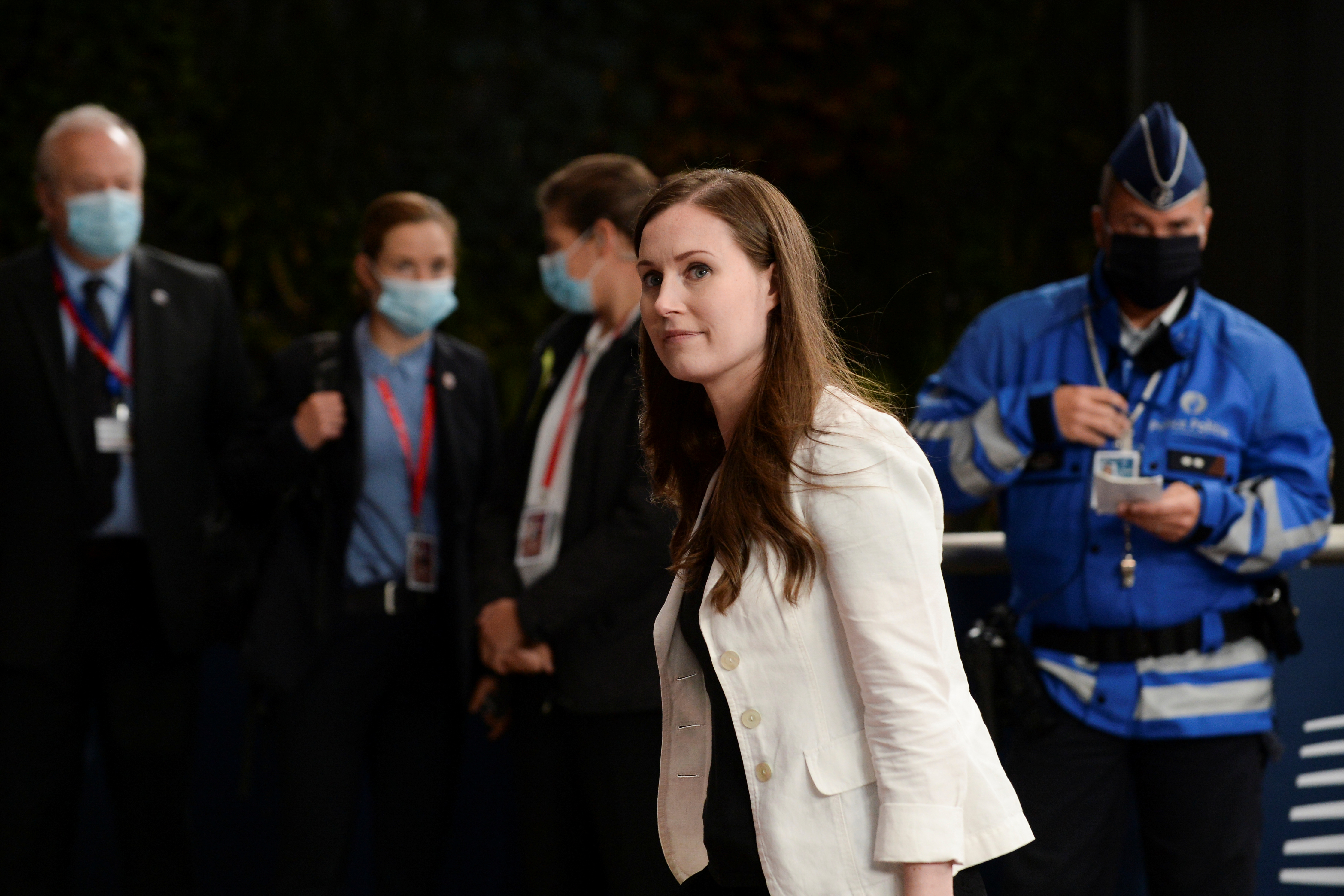
Finland's Prime Minister Sanna Marin leaves a meeting at the EU, as recovery fund talks enter a fourth day. /Johanna Geron/Pool/AFP
'We do not have to wait for a vaccine, we have to save lives now'
Tedros Adhanom Ghebreyesus, the director-general of the World Health Organization (WHO) said at the media briefing on Monday that "although people from all walks of life are affected by COVID-19, the world's poorest and most vulnerable people are especially at risk."
Ghebreyesus says it is particularly true for up to 500 million indigenous people who "lack political representation" and face "economic marginalization, and lack of access to health, education and social services."
He said that although COVID-19 was a risk for indigenous peoples globally, the WHO was "deeply concerned" about the impact of the virus on "indigenous peoples in the Americas, which remains the current epicenter of the pandemic."
More than 70,000 cases have been reported among indigenous peoples in the Americas as of 6 July, he said. At least six of these cases were reported among the Nahua people in the Peruvian Amazon.
The WHO boss said that "one of the key tools for suppressing transmission in indigenous communities – and all communities – is contact tracing." He added that even though mobile applications can be effective, in his words, "nothing replaces boots on the ground," where trained workers go door-to-door "to find cases and contacts."
While "we must continue to accelerate vaccine research," he said that strong leadership, community engagement and a comprehensive strategy to suppress transmission can all contribute to stopping COVID-19 while the wait for a vaccine continues. "We have to save lives now," he added.
FROM OUR GLOBAL COLLEAGUES
CGTN Europe podcast: Notes on a pandemic: Science rules
CGTN China: On a wing and a prayer – How to be an actor during the pandemic?
CGTN America: Can summer camps survive the COVID-19 pandemic in America?
CGTN Africa: Feature: Engaging the youth in COVID-19 interventions in Zambia
Sign up here to get the COVID-19 Europe bulletin sent directly to your inbox.
CGTN Europe has been providing in-depth coverage of the novel coronavirus story as it has unfolded. Here you can read the essential information about the crisis.