- Home
- China
- World
- Europe
- Politics
- Business
- Opinions
- Tech & Sci
- Culture
- Sports
- Travel
- Nature
- Picture
- Video
- Live
- TV
- Specials

 Europe;Belgium
Share







Copied
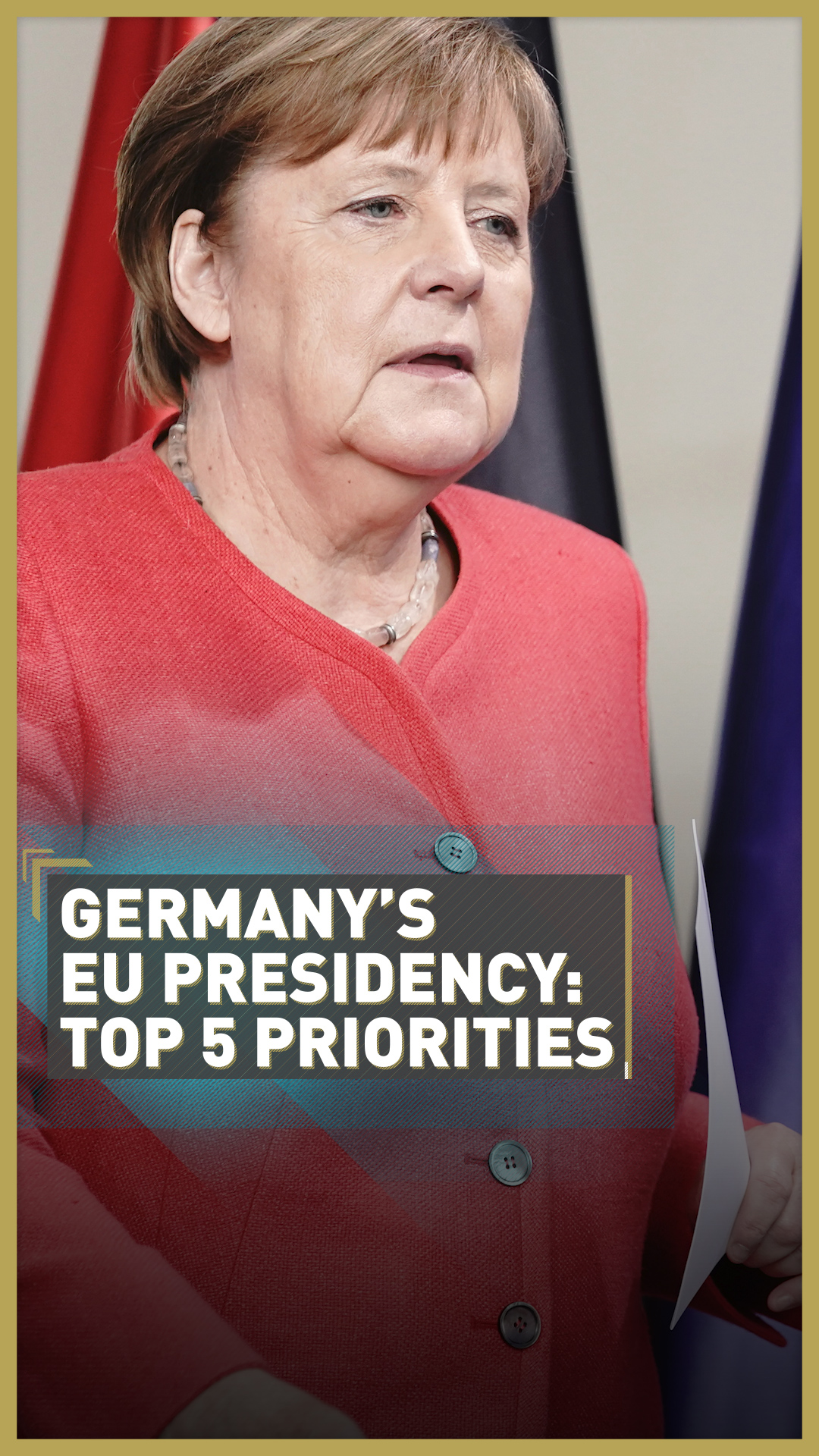
Germany has assumed the rotating European Union council presidency at a very crucial time. The agenda was already brimming before the coronavirus pandemic hit. Still, now there are massive issues with long-lasting implications that Chancellor Angela Merkel has to navigate by the end of the year. Here are the top five:
Coronavirus recovery
The fallout from the coronavirus pandemic, both economically and socially, will dominate Germany's presidency. Chancellor Merkel wants to avoid a further splintering of solidarity between the prosperous north and the more impoverished south. Swiftly clinching a deal on the coronavirus recovery fund is the top priority.
That will require convincing the more affluent countries that grants are the priority and pooled debt is acceptable, while also persuading others to reform their economies to make them more resilient. Merkel wants to strike a deal before the summer break so the money can start flowing and she can turn the attention to other pressing issues.
Long-term budget
As if the recovery fund wasn't enough, Germany also has the Herculean task of clinching a new, long-term budget. Even in the best of circumstances, finding consensus is a hard-fought battle.
Germany needs to convince the powers such as Germany and the Netherlands to hand over more money, while the likes of Portugal and Greece may have to deal with cuts to programs. Stressing that this is a one-off, extraordinary event could help get Berlin over the finish line.
That being said, Chancellor Merkel has already admitted that member states are "far apart" in negotiations on both the long-term budget and the recovery fund.
A green Europe
Germany is keen to ensure that Europe's recovery from the coronavirus crisis is a green one. Berlin could press for funds to be directly linked to environmental projects.
EU leaders have until the end of the year to agree on a 2030 climate target and Germany wants to increase the goal of reducing greenhouse gas emissions by then.
The task now is finding consensus among member states, especially the ones more reliant on manufacturing or coal-fueled power like Poland.
Post-pandemic Europe
Berlin wants to reduce the bloc's dependency on non-european countries, especially China, after the pandemic exposed several vulnerabilities around supply chains of key imports including critical medical supplies.
Strategic autonomy is something many countries can get behind, with digital and technological sovereignty at the fore.
Brexit
The second half of the Germany presidency will be crunch time for post-Brexit trade negotiations. Berlin is keen to avoid a hard Brexit, but Merkel has warned that Europe and Germany must prepare for such a scenario.
Talks have been progressing slowly and Berlin will try to speed things up, but it has made it very clear that there will be no agreement at any price. A deal has to be sealed by the end of October if it is to be ratified and in place by the end of the year.