- Home
- China
- World
- Europe
- Politics
- Business
- Opinions
- Tech & Sci
- Culture
- Sports
- Travel
- Nature
- Picture
- Video
- Live
- TV
- Specials

 Europe;Europe
Share







Copied
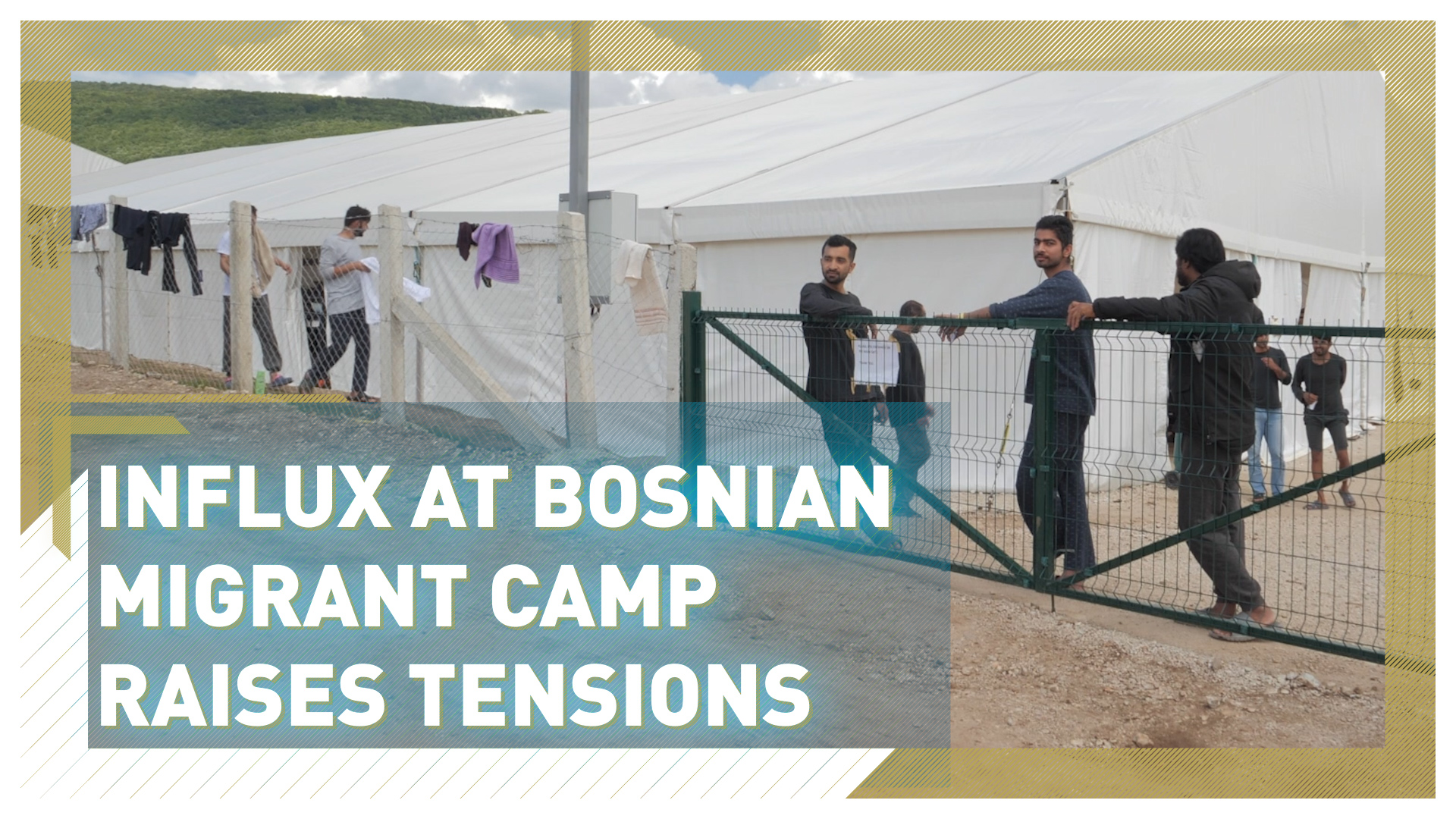
Tensions are rising at an overcrowded migration camp in western Bosnia where people continue to arrive in the hope of reaching the EU – but many locals want them out.
The village of Lipa became almost a ghost town after its Serbian population was driven away during ethnic cleansing in the 1990s Balkan war. Now the village is becoming populated with migrants after a camp was set up by international NGOs.
The capacity of the camp is meant to be 1,000 but there are already 1,200 people there and the authorities want to add more. It has become an issue between the local community and humanitarian groups with allegations of crimes by the migrants making the situation worse.
"If we follow the rules set out by international NGOs in our country, then I don't see a reason for our existence," said Ale Šiljedić, Senior Inspector of USK Cantonal Police.
"If that's the case we should all leave our apartments and give them to migrants and the international organizations and they can all live here."
Local police say that there are around 200 new migrants arriving in the region every day and aiming to get to the EU but currently the border with Croatia is firmly closed.
There are around 6,000 migrants in the small region in the west of Bosnia and while many are antagonistic about the camp, others are trying to help them.
Đuma Bešić, who works at a charity-run restaurant in the town of Velika Kladuša on the border with Croatia, says that Lipa is a village where Bosnians don't want to live and the police are treating the migrants badly.
She said: "Police don't let them gather in the street. They have to sit here or inside. No standing is allowed and only as many people as there are chairs but many more of them come. Sometimes there are 50 or 60 people here."
At the camp, Mohammad has traveled from Afghanistan and he says that he has not been made welcome.
"The biggest problem is that the food is not good and here the security is not good for us," he said.
There are officially around 10,000 migrants stranded along Bosnia's western border with Croatia which is almost 80 percent higher than just a few months ago.