- Home
- China
- World
- Europe
- Politics
- Business
- Opinions
- Tech & Sci
- Culture
- Sports
- Travel
- Nature
- Picture
- Video
- Live
- TV
- Specials


Share







Copied
MAIN HEADLINES:
· Spain starts easing its restrictions, allowing the public to go out for exercise for the first time since the start of the lockdown 49 days ago. The government have warned people they must still respect social distancing and remain close to their homes.
· Spanish Prime Minister Pedro Sánchez announced a $17.57bn (€16bn) fund to help the country economic recovery.
· Austria allows thousands of shops to reopen, including hairdressers, beauty salons and shopping centers. Individual sports that don't involve contact - such as golf and tennis - are also allowed.
· The Financial Times reports that plane engine manufacturer Rolls Royce will cut up to 8,000 jobs, equal to 15 percent of its entire workforce, as a result of the loss of income that hits the air industry.
· UK government pledges $95m (£76m) to support victims of domestic abuse through the pandemic. Across Europe, lockdowns have put victims of domestic violence more at risk of being abused.
· 6,500 people signal their interest in participating in a trial in the UK to test if blood plasma from coronavirus survivors can treat patients infected with COVID-19.
· UK government meets its target of 100,000 tests per day by the end of April, but critics say the numbers are misleading as kits sent to people's homes have not been completed yet.
· Irish PM Leo Varadkar warns that Ireland needs two more weeks of lockdown before the country can think about easing measures.
· Italian Prime Minister Giuseppe Conte has apologised to businesses and citizens for the delay in payments that were promised as financial support during the crisis.
· French ministers consider a bill that extends the country's state of emergency until July. It is currently due to expire on 24 May.
· Singapore will start easing its lockdown restrictions over the next few weeks, reopening activities such as barbers and laundry services, as a second surge in cases declines.
· The U.S. has given emergency approval for remdesivir to be used to treat COVID-19. The antiviral drug was originally developed to treat Ebola and has now proven to be able to speed up recovery in patients infected with coronavirus.
· India has made contact tracing apps mandatory for all workers in the private sector, after having already made the app compulsory for government employees.
FROM OUR EUROPEAN CORRESPONDENTS:
Andrew Wilson in London
Critics have challenged the UK government's claim that it carried out 122,347 coronavirus tests on Thursday saying that a proportion were simply mailed on that day. Officials say they're hoping to reach 200,000 a day within a fortnight.
Preparations are underway behind the scenes for when the lockdown might be lifted. The Health department's deadline for a new "test, track and isolate" system backed by apps and contact-tracers is 18 May. It's also a provisional start date for 80 percent of the rail service to resume.
New figures suggest that more than 70 percent of patients with coronavirus admitted to critical care are men. The figures also suggest that 26 percent of patients in critical care with Covid-19 are black or Asian compared to 66 percent of white ethnicity. The Office for National Statistics has revealed that people in the poorest areas of England were dying from the virus at twice the rate of those in the richest.
Wealthy businessman, Simon Dolan, says he will sue the government over the legality of the lockdown, unless it reverses some of the measures and reinstates freedom of movement. He says he fears the lockdown will kill more people than it saves.
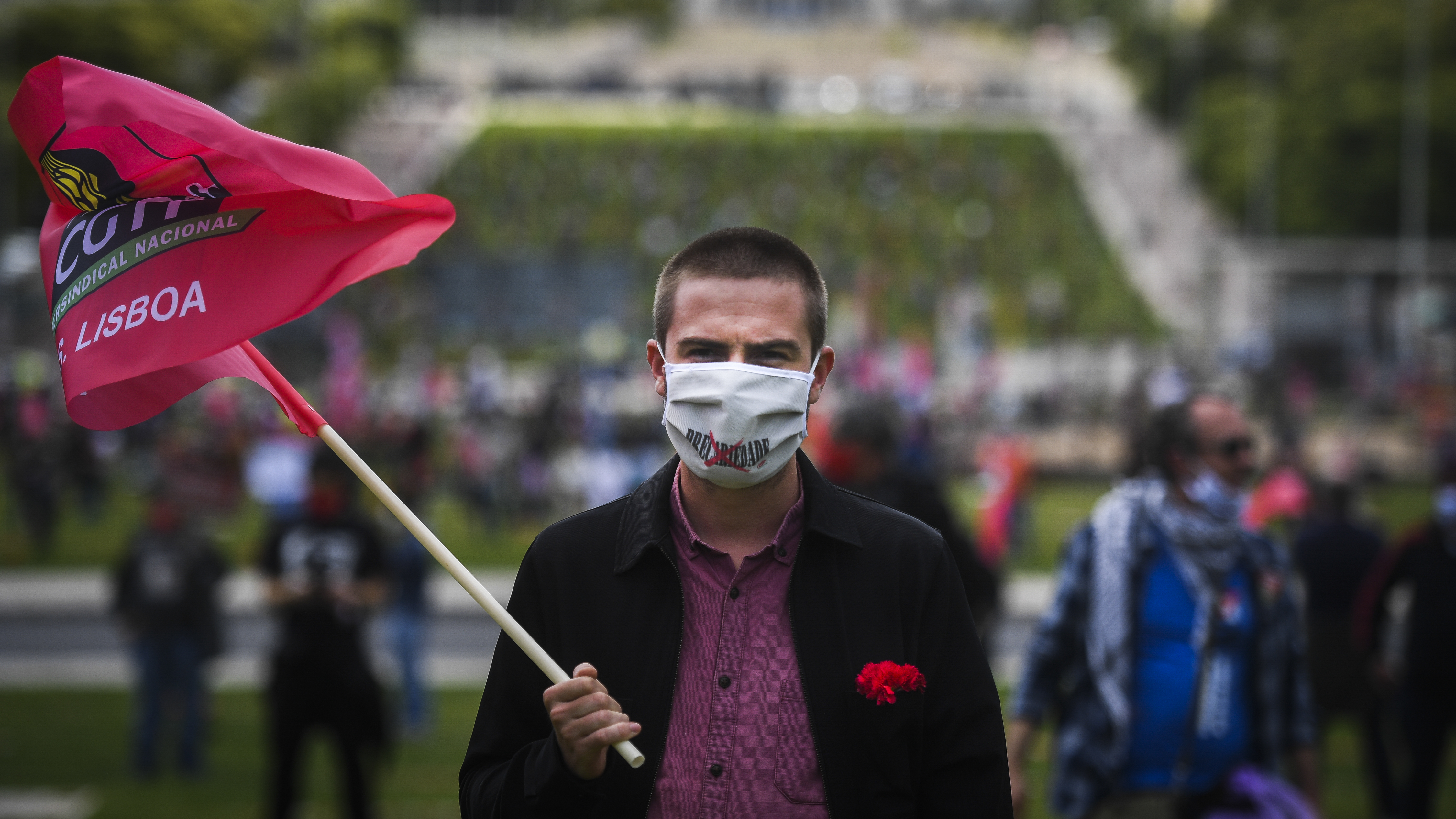
A May Day demonstration in Lisbon, Portugal. //PATRICIA DE MELO MOREIRA / AFP
Guy Henderson in Berlin
Scuffles between police and protesters is a regular occurence in Berlin on May Day. Despite the national ban on gatherings of more than 20 people, crowds descended into the German capital's Kreuzberg district in their hundreds, ignoring social distancing measures – and in some cases calling for an end to the lockdown. Police say arrests were made after a German film crew was attacked.
Germany is moving towards a new post-lockdown norm fairly swiftly now. Playgrounds are full of children again although strict social distancing measures remain in place – namely, gathering in groups of no more than two people in public, except families and those in the same household.
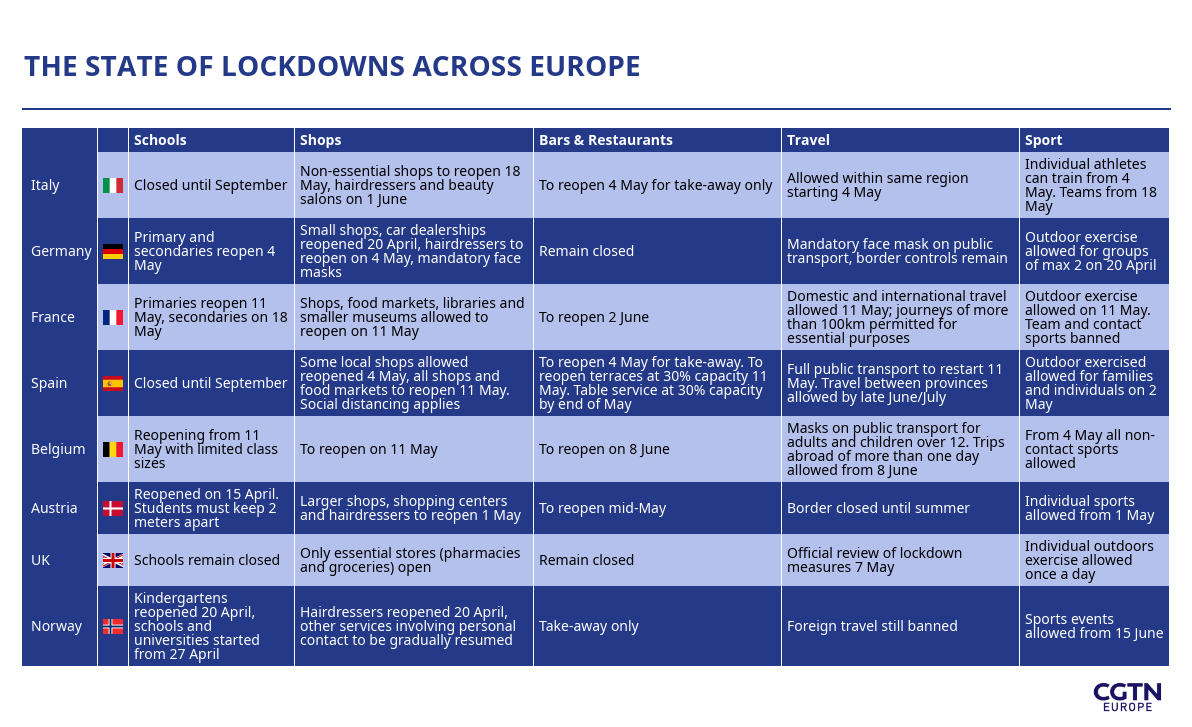
Italy
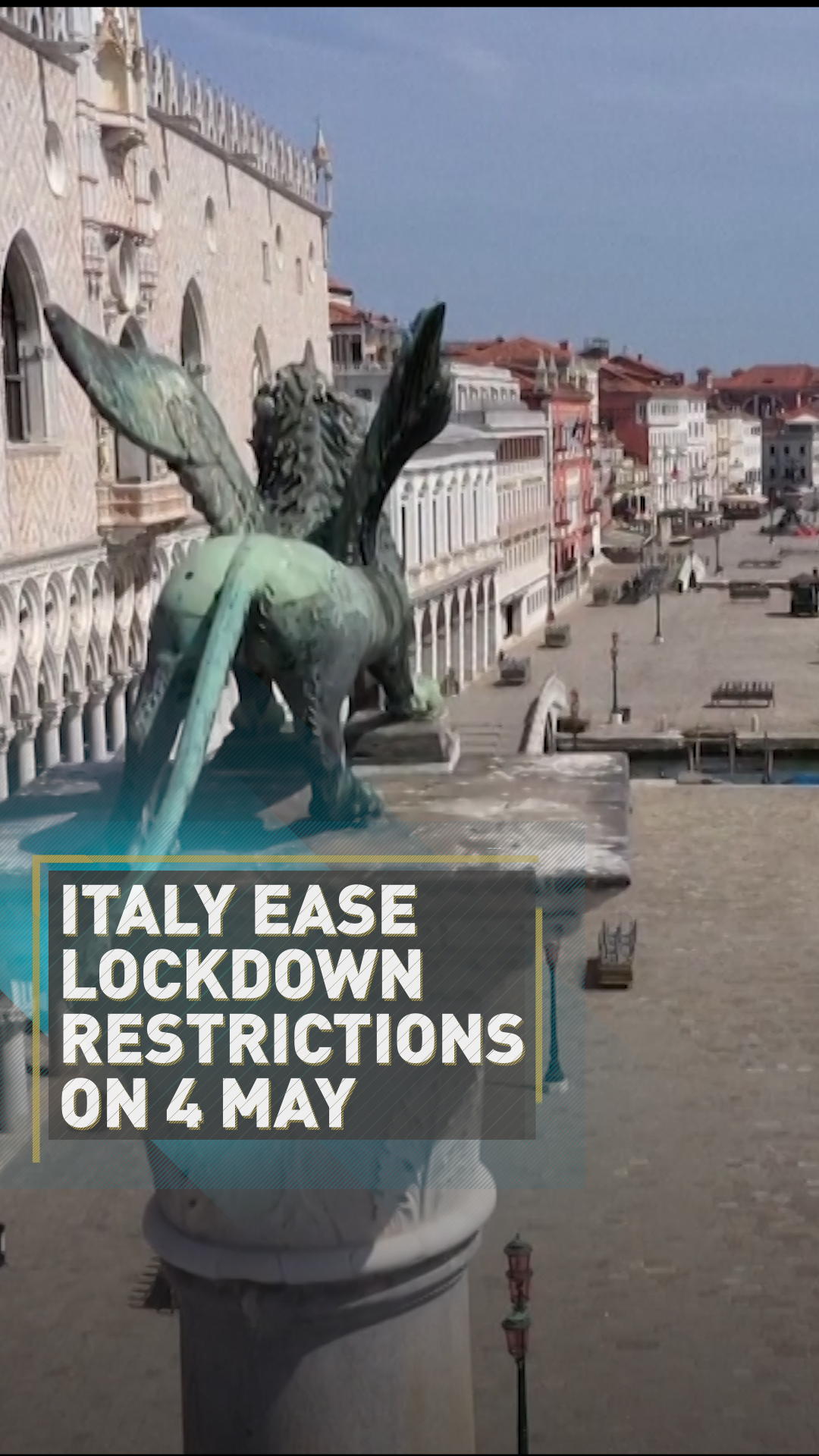
The country will start easing its restrictions on Monday, when 4.4 million workers will go back to work and people will be allowed to leave their houses and travel within their region to visit their families. The government controversially described as 'next of kin', leaving many wondering if they'd be able to see their friends and partners.
The Italian Prime Minister Conte has warned that the gradual lifting of the lockdown must be done carefully, saying the risk of a second surge of the contagion remains high. The region of Calabria has decided to reopen its bars and restaurants, in defiance of the central government. The local medical establishment has criticized this decision and some individual shops in the region have decided to remain shut.
Serbia
Serbia has eased lockdown measures over the May Day bank holiday weekend after a growing number of protests from the public. Original plans had been to continue the strict measures implemented in April by President Aleksander Vukic but after people joined opposition protests from their balconies the government have introduced a 5pm curfew instead.
This decision goes against medical health expert warnings not to ease restrictions as Serbia has had 8,724 confirmed cases of COVID-19. Some businesses have been allowed to return this week including hairdressers as long as they stick to the new social distancing rules. It's part of the government's plan to restart the economy as public transport resumes in Belgrade on 8 May and kindergartens will welcome children back on 11 May.
Members of the Greek Labour Union (PAME) respect social distancing while protesting on May Day in front of the Greek Parliament. //Aris MESSINIS / AFP
Spain
With a declining number of COVID-19 cases, Spain has started easing its lockdown restrictions. After permitting children to leave the house last week for the first time, adults are now allowed to exercise outdoors once a day. Walking, jogging, and cycling are permitted at different times according to different age groups, and on the condition that people remain close to their homes and respect social distancing.
On Tuesday Spanish Prime Minister Pedro Sanchez shared a four-phase plan to get the country back to a 'new' normal by the end of June. On Monday hairdressers and other services that work by appointment will be allowed to reopen, while bars and restaurants will remain closed for another week.
Spain has more than 200,000 confirmed cases of COVID-19 and reported more than 20,000 confirmed deaths.
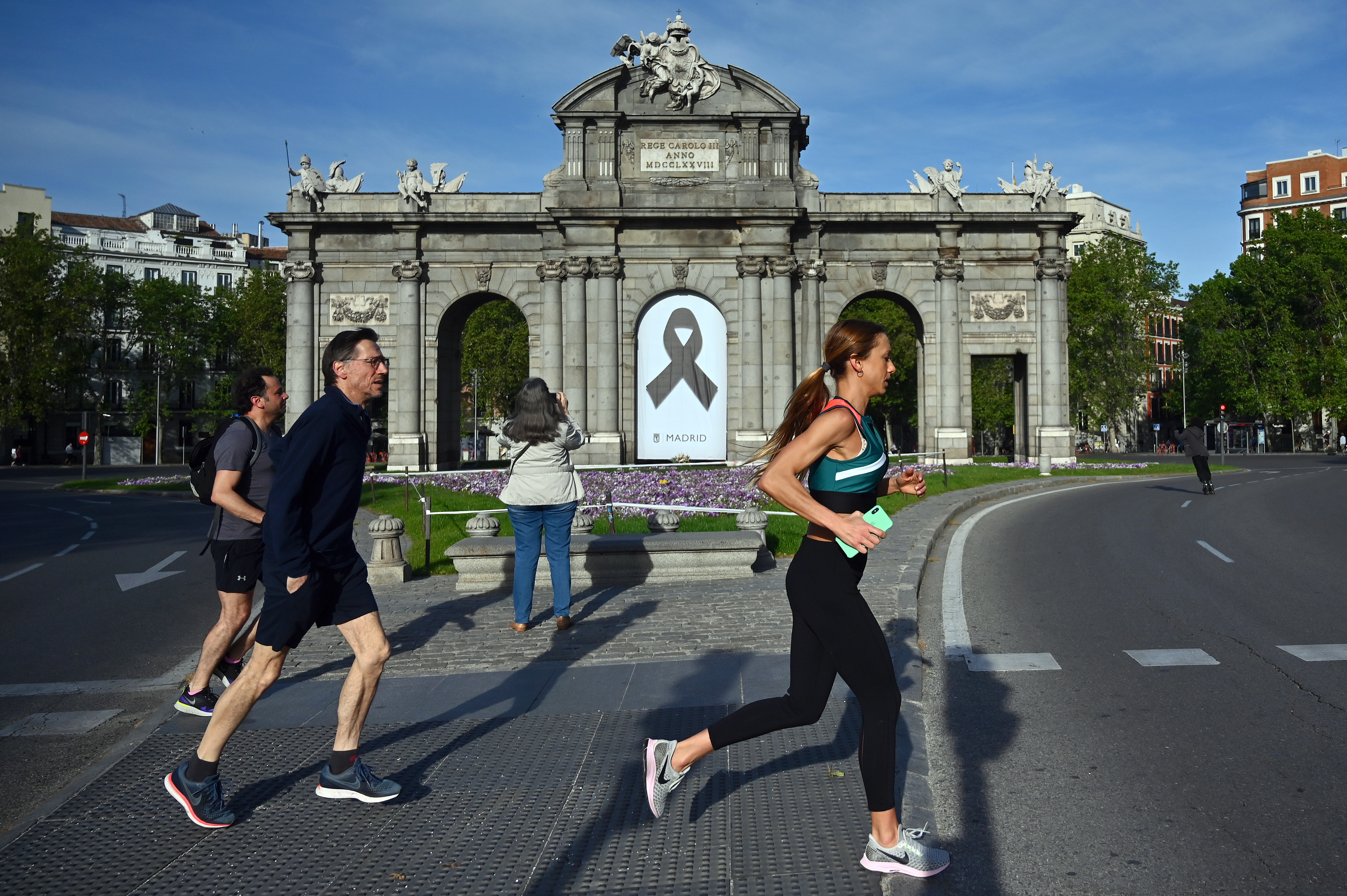
Runners were allowed to take the streets of Madrid after seven weeks of strict lockdown. //Gabriel BOUYS / AFP
FROM OUR GLOBAL COLLEAGUES:
CGTN China: Chinese mainland reports 1 new imported COVID-19 case
CGTN America: All schools in New York closed for the rest of academic year
CGTN Africa: IMF approves $411 Million in emergency funding for Ethiopia
MORE FROM CGTN:
Check out The Pandemic Playbook, CGTN Europe's major investigation into the lessons learnt from COVID-19
Sign up here to get the COVID-19 Europe bulletin sent directly to your inbox
Source(s): Reuters