- Home
- China
- World
- Europe
- Politics
- Business
- Opinions
- Tech & Sci
- Culture
- Sports
- Travel
- Nature
- Picture
- Video
- Live
- TV
- Specials

 Europe;United Kngdom
Share






Copied
In late-March, I was not quite myself. In fact, I was rather unwell. I did not seem to be showing typical COVID-19 symptoms, but since I certainly was not fit enough to go to work – not least because everyone's anxiety about sniffles and wheezes was heightened – my family and I were quarantined.
Back at work 10 days later – as journalists we are key workers providing a public broadcast service – I continued to take precautions such as social distancing and wearing a mask and gloves when out and about. But I did quietly convince myself that I had likely had a mild version of the coronavirus and, with that, had gained a degree of immunity. Or had I? If only there was a way I could find out for sure.
Fast-forward to this week and the opportunity came up to take an antibody test as part of my latest report.
There are two broad types of test available: antigen tests and antibody tests. But questions have arisen about how accurate they are, and the World Health Organization has warned these types of tests should not be used to provide so called "immunity passports."
Antigen/diagnostic swab tests are already on the market and tell us whether a person is currently infected with the disease. These tests are mostly being used on seriously ill people who are already in hospital, but the government plans to scale this up to include NHS workers, with critical-care doctors and nurses first in line. This type of test needs to be processed in a lab.
Curious about why she had lost her sense of smell, retired interior designer Melanie Fishman paid $170 for an antigen test at a private London clinic to find out for herself.
"I was quite relieved when I skipped out of the clinic, oh, positive! Because all the other people – even though everybody kept away from each other, we all got the results at the same time – about eight of us being tested at that time, most of the others were NHS workers and doctors, out of them I was the only positive, and I thought, oh, I have got some immunity," she said.
Email correspondence with the consultant from the Queen Anne Street Medical Centre in Central London, reassured her the test had been accurate and reliable.
"It was a good test, it was up to 95 percent in some respects and 98 percent in others – sound like good figures to me," she said. However, later, reading around the subject, Fishman began to doubt the efficacy of the test.
"I could be positive for a day, a week, a lifetime – I don't think anybody knows. They are only as good as when you had the test. Now, is it worth the paper it is written on? I am not sure. I am probably more confused now than I was before I had the test," she said.
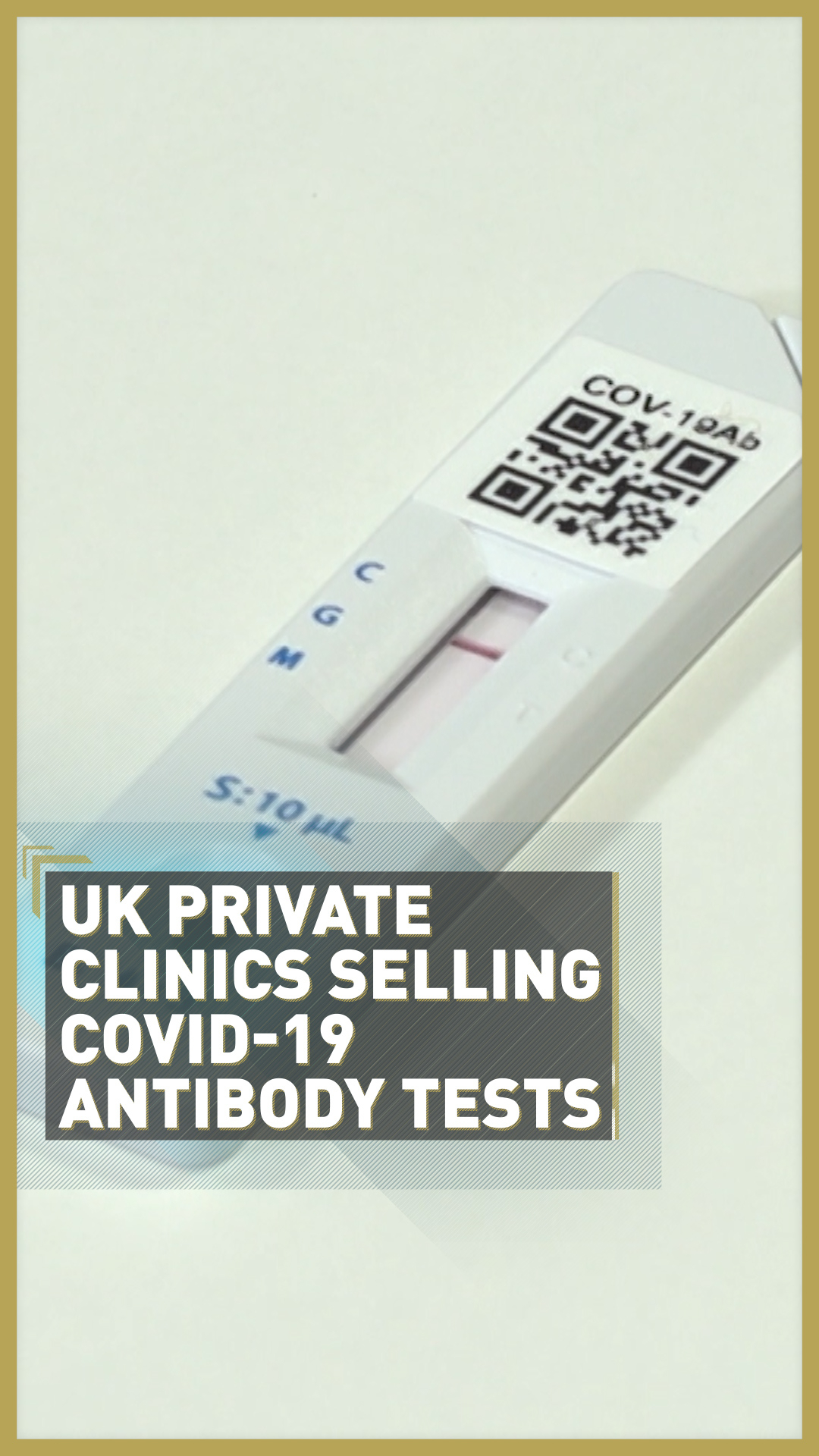
There is a lot of buzz, too, about antibody tests, as laboratories across the world race to create the most accurate testing possible. They are quick finger-prick blood tests that take around 15 minutes to show results. They use a small device, a bit like a pregnancy test, to analyze a drop of blood.
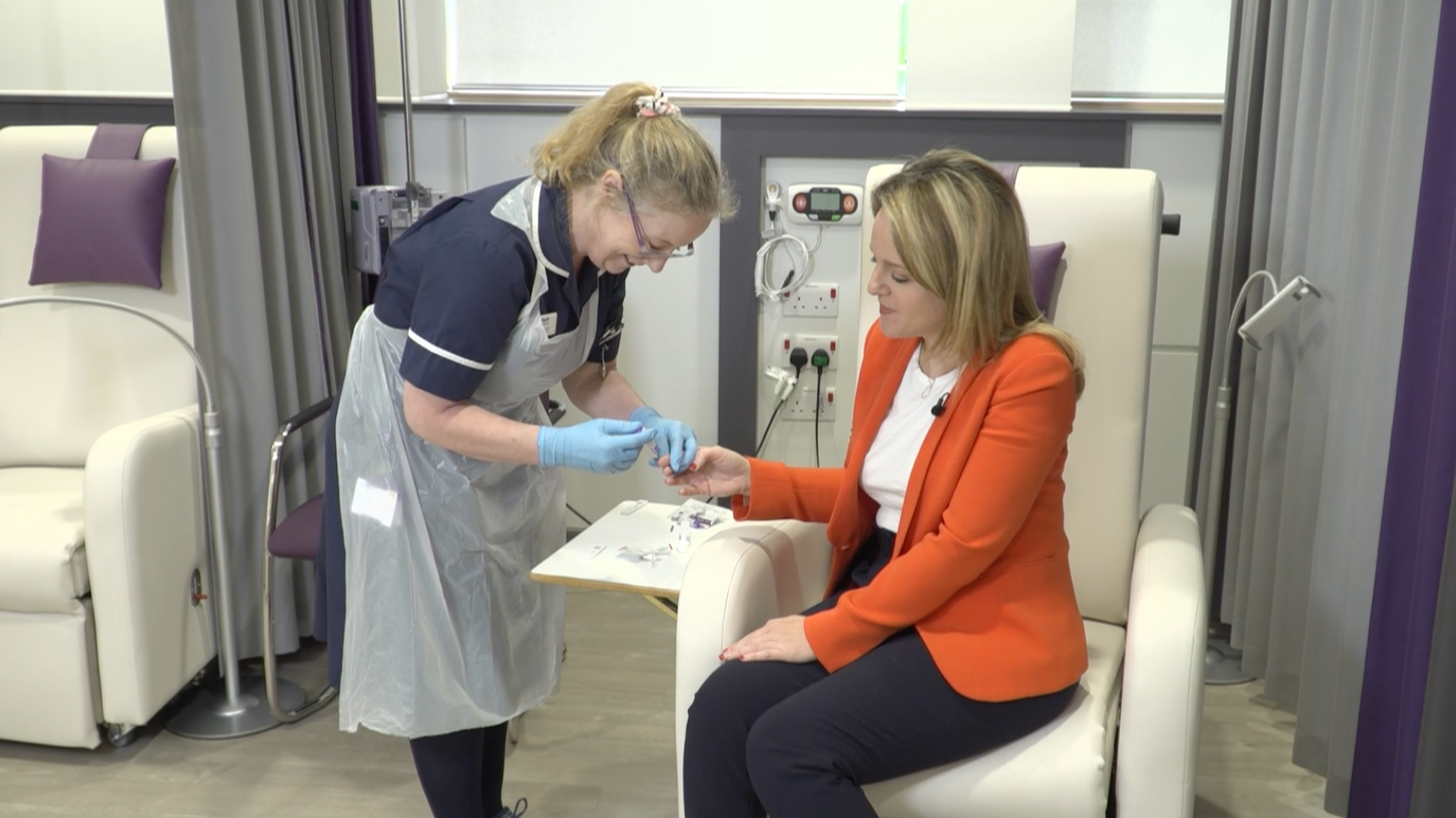
The test consists of a pin-prick of blood taken from a finger and results show up 15 minutes later. /CGTN Europe
The test I took was a Sugentech test from South Korea that costs around $10. A nurse took a pin-prick of blood, which didn't hurt a bit. She then dripped some on to a small plastic device, along with a liquid so that the test could develop. If two lines appeared after 15 minutes, then it would show I had the antibodies – and these could stay in my system for up to two years. One line would mean I am still vulnerable to the coronavirus.
Antibody tests are meant to tell us who has been exposed to the coronavirus and have been identified as potentially key to restarting the world's economies. Many versions are currently being validated and, if successful, they will be made available first to NHS staff who are self-isolating to determine whether it's safe for them to go back to work.
The UK government is considering ordering millions of antibody tests developed by researchers in Britain, but has not begun widespread antibody testing yet because they say they have not found one reliable enough.
A study by the University of Oxford, published last week, showed the anonymized results of nine tests the government had bought. All were deemed too weak to use. Their sensitivity – ability to correctly spot people who had had the disease – ranged from 70 percent to just 55 percent.
But there are plenty of these tests on the market and some businesses are buying in bulk online.
A financial services firm operating in the City of London, which did not wish to be named, told me they spent £30,000 ($37,000) on 500 tests for their staff. The majority of the team is currently working from home, but bosses wanted to reassure the 50 people still coming into the office that precautions were being taken and their wellbeing was a priority. They test each other every other week in the hope of the all-clear, so business can continue as usual.
Top UK doctor, Karel Sikora, medical director at The Rutherford Cancer Center in Reading, UK, has taken testing a step further with a localized initiative to test his staff – the results of which he plans to share with the government.
"The idea was to work out how many of our staff have had coronavirus infection. Half of people who get infected have no symptoms at all, you see. So we decided to get kits to decide how many staff have been exposed. We know the virus has left its calling card here," Sikora said.
"The hope for many groups, especially those who respond to occupational health in factories or somewhere, is: can you screen staff for antibodies and find those who don't really need to socially distance? They are already positive, they have had the infection and they are not a harm to themselves or others – they can just go about their business," he added.
Sikora bought 1,000 Sugentech kits from South Korea, validated in Germany and London, to screen staff at his cancer clinic so they and their patients feel safe.
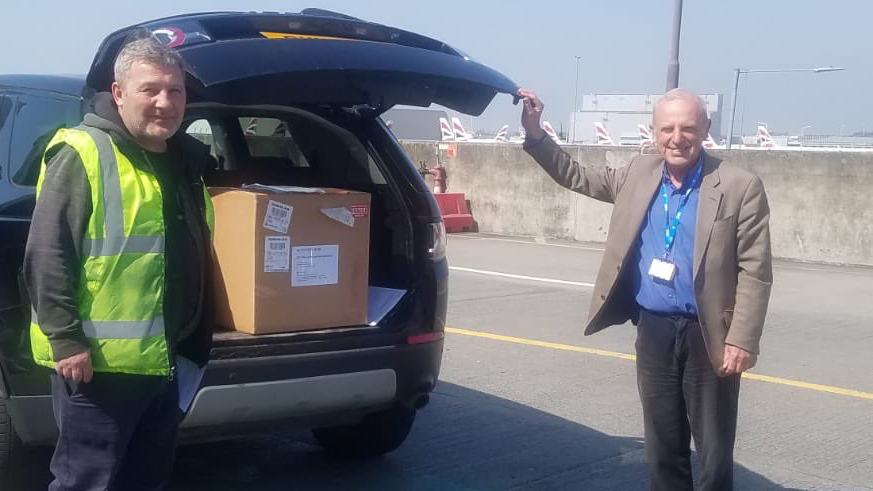
Karel Sikora, medical director at The Rutherford Cancer Center, ordered 1,000 testing kits for his staff which were flown in from South Korea. @ProfKarolSikora /Twitter
"We thought we'd do an exploratory study in all our staff, with their consent, to try to determine how many have been infected and it is low – something like 8 percent – lower than I thought. I was hoping for more. We are going to test again in four weeks' time to see how many people convert from negative to positive within the space of four weeks," he said.
However, there are still big questions around general and seasonal immunity.
"The kits are reliable, the problem is the timing – antibodies don't start rising until at least 10 days after infection, timing is more critical than with a pregnancy test," Sikora said.
Scientists working on what these blood tests really tell us, think they could be key to evaluating future risk and help get people back to work – even less-than-perfect antibody tests could help Britain's economy gear back up. But by dithering, the UK is losing valuable time.
"These sorts of kits, done in populations can sort the problem we need to address now – to get us out of lockdown," Sikora said.
Meanwhile, my 15 minutes are up, and there is only one line on the test. That means I have not been exposed to the coronavirus. It is slightly disappointing not to have an explanation for feeling unwell those weeks ago, but mainly because now I definitely don't have any degree of immunity to COVID-19. I am still as vulnerable as anyone else.