- Home
- China
- World
- Europe
- Politics
- Business
- Opinions
- Tech & Sci
- Culture
- Sports
- Travel
- Nature
- Picture
- Video
- Live
- TV
- Specials

 Europe;Europe
Share







Copied
TOP HEADLINES:
- The UK will begin human trials today of a potential coronavirus vaccine developed at the University of Oxford. If successful, doses could be available by fall this year, a member of the Oxford team said.
- Germany has also authorized the first clinical trials on human volunteers of an experimental coronavirus vaccine developed by German firm Biontech and US giant Pfizer. The tests are set to begin at the end of April.
- European Union leaders will move on Thursday towards joint financing of a recovery by asking the European Commission to propose a large enough fund to target the most affected sectors and regions.
- Economic activity in the eurozone all but ground to a halt in April as lockdown measures severely affected businesses, a survey showed on Thursday.
- UN Secretary-General Antonio Guterres has warned the pandemic could become a human rights crisis as it could give some countries an excuse to adopt repressive measures for reasons unrelated to the coronavirus.
- Britain's economy has suffered the biggest slump on record due to COVID-19 and government borrowing is soaring to the highest levels in peacetime history, increasing pressure on the government to set out a lockdown exit strategy.
- The Swiss government has forecast the country's economy will shrink 6.7 percent this year – the worst in 45 years – saying it expected the recession triggered by COVID-19 to be worse than initially feared.
- Russia may need to borrow an additional 1.5–2 trillion roubles ($20–26.7 billion) to support its economy, first deputy prime minister Andrei Belousov said.
- Italy's region of Lombardy, at the epicentre of Europe's worst coronavirus outbreak, is beginning an antibody testing programme as it prepares to start opening up its economy after weeks of lockdown.
- Greece has extended its lockdown by a week to 4 May, saying any relaxation would be staggered over May and June.
- Croatia will start opening shops and running public transport next week in a staged easing of lockdown measures introduced over a month ago.
- Romania's president Klaus Iohannis has said the pandemic is still on the rise in the country, adding that social distancing and hygiene measures must be "religiously" observed.
- Volkswagen is making masks in China for distribution to its plant employees in Europe, the German auto maker said on Thursday as it prepares to restart European production.
- Jaguar Land Rover is planning to restart some European production from 18 May, beginning with one of its three British car factories in Wolverhampton and its plant in Slovakia.
- Another 4.4 million Americans filed for unemployment benefits in the week ending 18 April, increasing total layoffs since the virus hit to 26 million people, the Labor Department reported on Thursday.

ACROSS EUROPE:
By Andrew Wilson in London
Government scientific advisors are expected to suggest today that people should feel free to cover their faces but not wear medical face masks.
The government has officially declared the virus has peaked in the UK, but the peak is likely to be prolonged.
The UK is going to have to live with social distancing for at least the rest of the year, according to the chief government medical advisor Christopher Whitty. It will be up to ministers to work out which measures can be eased and which have to stay in place.
While health secretary, Matt Hancock, has promised a "very large scale" contact-tracing program to allow social distancing to be gradually relaxed. This could involve a national antibody census to regularly test 300,000 people over the next year to build up a picture of how the virus has spread through Britain.
The government still says it's aiming to run 100,000 tests a day by the end of this month, enough it says to introduce a national contact-tracing scheme.
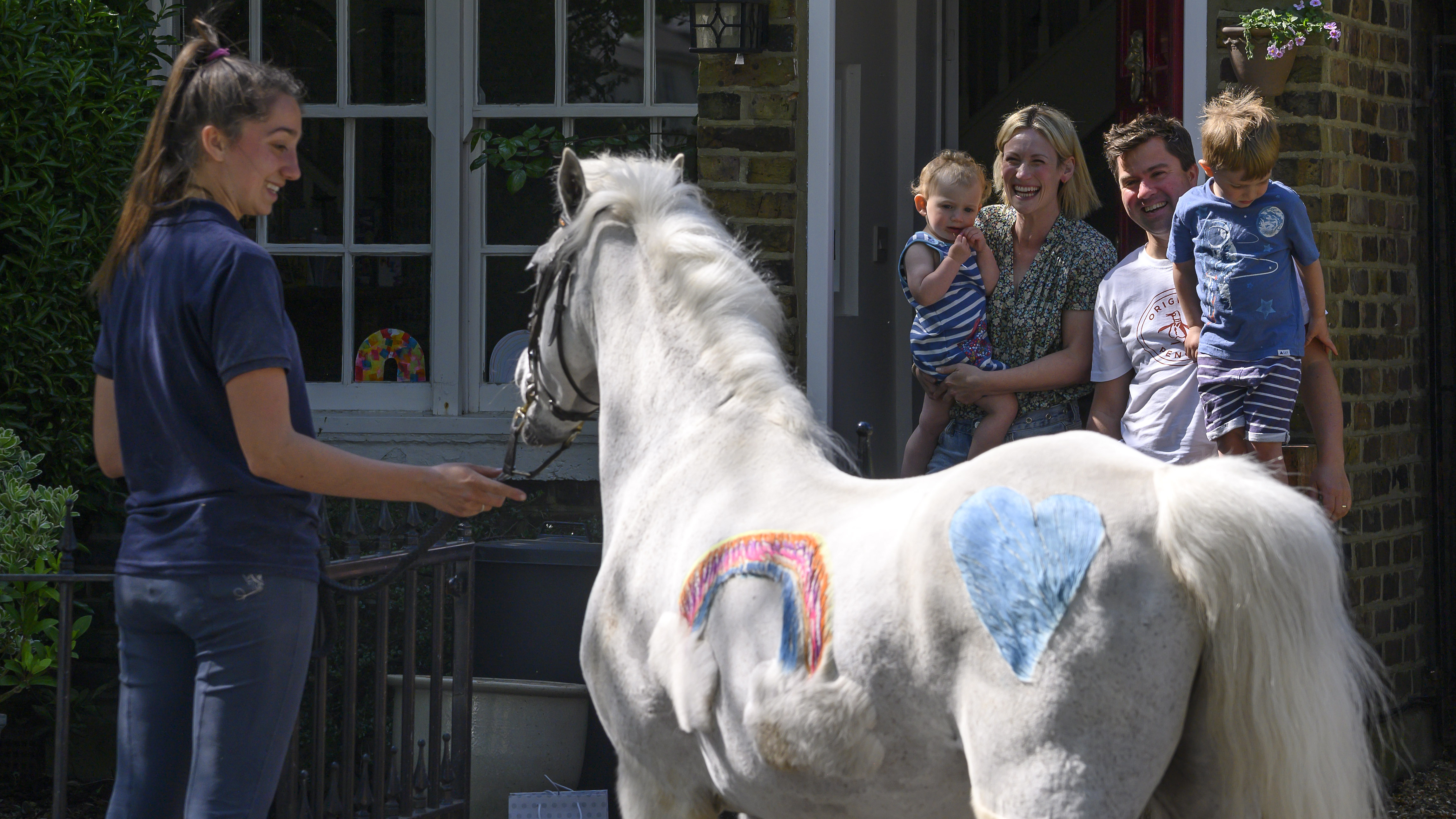
The UK's chief medical advisor has said people will have to live with social distancing for at least the rest of the year. Justin Tallis/AFP
By Isobel Ewing in Budapest
The Hungarian government says it predicts the outbreak in the country will peak in the first week of May and from then on restrictions on daily life can gradually be reduced.
"This means that after that, the situation may slowly begin to consolidate and we hope that our normal lives can be restored by mid-summer," ministerial advisor Lajos Kollar said.
The salaries of all Hungarian footballers will be cut by up to 70 percent, according to a new government decree. The docked pay will remain in place until the government decides to end Hungary's state of emergency.
A quarrel between the government and the municipality of Budapest continues over who is responsible for the cluster of COVID-19 cases in a retirement home, which has reported 28 deaths.
The government says that during three separate random inspections of the facility a doctor was not present, despite several residents still being infected. The mayor's office has previously said the facility has a doctor on duty full-time, whose job it is to constantly monitor the health of the residents.
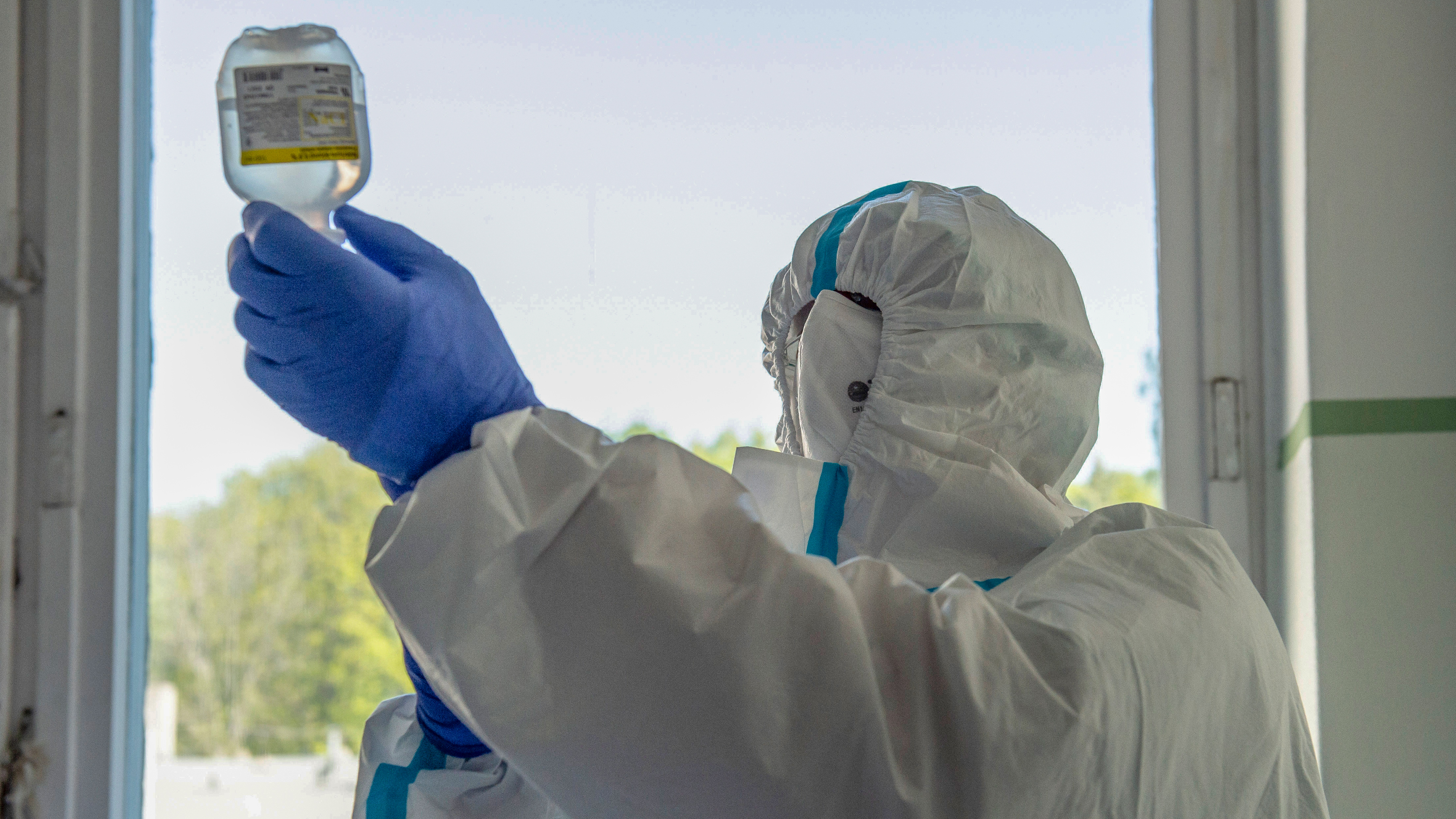
Hungary predicts its outbreak will peak in the first week of May. /Karoly Arvai/AFP/Pool
By Ross Cullen in Paris
The National Academy of Medicine says the wearing of face masks should be made compulsory in France immediately.
In a press release, the institution remarked that the authorities should not wait until 11 May – the current planned end of lockdown – to bring in some form of obligation on the public to wear masks.
The academy said that by waiting until 11 May, there is an 18-day period during which the country could suffer dozens of deaths, hundreds of hospitalizations and thousands of infections that could have been avoided if the public are forced to wear masks when they leave their houses.
By Ira Spitzer in Berlin
Speaking to the German parliament on Thursday, Chancellor Angela Merkel called the coronavirus pandemic Europe's "biggest challenge since World War II."
She said Germany's coronavirus measures had so far been a success but also expressed concern that the country's gradual easing of restrictions might be going too fast.
The Bundesliga football league is set to unveil a plan that would allow matches to resume in May without spectators. That would allow clubs to maintain some of their income from lucrative television and sponsorship deals. It would be the first major European league to return to action since lockdown measures were imposed.
German virologist Christian Drosten has warned that Germany could jeopardize its success in containing the virus through negligence, as many shops reopen throughout the country this week.
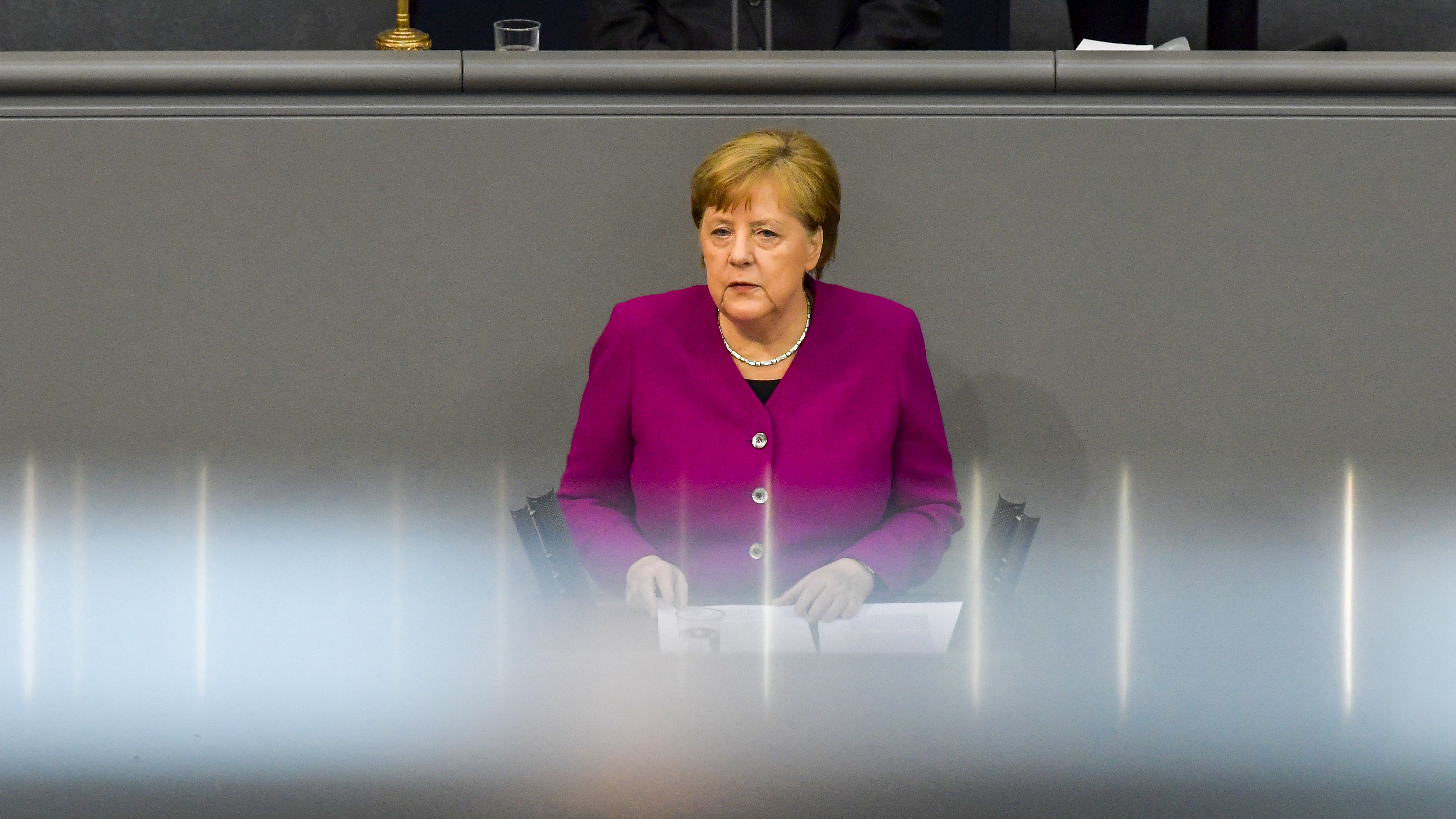
Angela Merkel said Germany is still at the beginning of the crisis. /Tobias Schwarz/AFP
By Rahul Pathak in Madrid
Spain's prime minister, Pedro Sanchez, has managed to push through another extension to the national lockdown.
The state of alarm which began on 14 March will now end on 10 May, meaning Spain will have been shut down for eight consecutive weeks.
Despite winning Wednesday's vote in Congress after an 11-hour debate, the prime minister still came in for some heavy criticism.
The leader of the right-wing Vox party said Spain was now "a giant Chavista prison" adding that "the government wanted to abolish democracy."
But after winning Wednesday's vote, Sanchez will hope for similar success at the EU summit on Thursday when he presents his plan for a 1.5 trillion euro ($1.6 trillion) recovery fund.
Spain proposes the fund should give money to EU countries in grants and not loans, to avoid an increase in debt.

FROM OUR GLOBAL COLLEAGUES:
- Xi Jinping says SOEs key to resuming production, calls for more innovation
- Trump signs executive order limiting immigration
- WHO urges U.S. to reconsider funding, says virus to stay for long
CGTN Europe has been providing in-depth coverage of the novel coronavirus story as it has unfolded. Here you can read the essential information about the crisis.
Subscribe here to get the COVID-19 Europe bulletin sent directly to your inbox.